
Central heat pumps
How a Central Heat Pump Was Integrated into a LEED Eco-Renovation Project
The gist
Learn how a central heat pump was successfully integrated into a LEED-certified renovation project in Montreal, offering energy savings, improved air quality, and environmental benefits.
In detail
LEED Renovation and the Integration of a Central Heat Pump: An Eco-Responsible Choice
In a world where environmental awareness is more present than ever, integrating a central heat pump into a LEED (Leadership in Energy and Environmental Design) renovation project becomes a smart choice. At AirGreen, we had the privilege of participating in such a project in Montreal, where the goal was to install an environmentally friendly heating, ventilation, and air conditioning (HVAC) system that met the rigorous requirements of LEED certification. In this article, we will explore how we integrated a central heat pump to improve energy efficiency while meeting environmental standards.
The Challenges of LEED Renovation and Integrating the Central Heat Pump
1. Understanding LEED Certification Requirements
LEED certification is a globally recognized system that assesses a building's environmental performance. To achieve this certification, it is essential to meet strict criteria in energy efficiency, resource optimization, and reduction of greenhouse gas emissions. For our renovation project in Montreal, the goal was to modernize a building while incorporating energy-efficient heating and cooling technologies. This is where a central heat pump comes into play. These systems are known for their energy efficiency and ability to use renewable energy sources while providing optimal comfort.
2. Choosing the Right Central Heat Pump Model
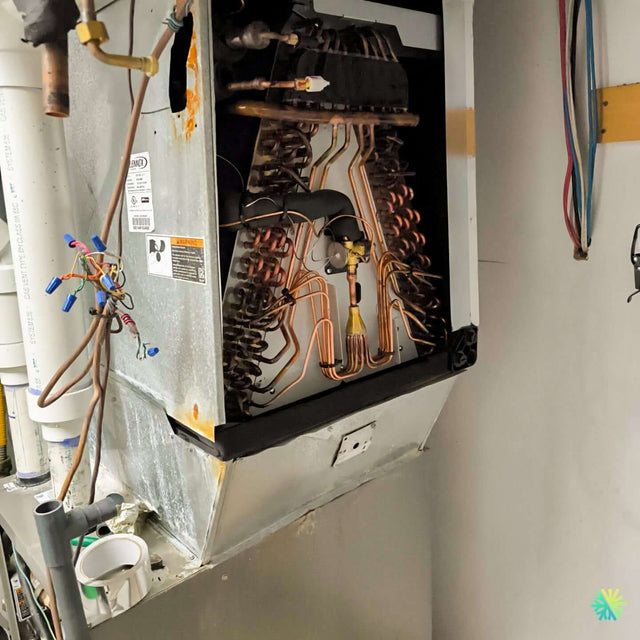
For this project, we chose a central heat pump from Bosch, model BIVA IDS Premium R-454B, which perfectly meets the LEED certification criteria. This model was selected for its high performance and use of an eco-friendly refrigerant, R-454B, which complies with new environmental standards for reducing the global warming potential (GWP). Its ability to perform efficiently across a wide range of temperatures makes it an ideal choice for the Montreal climate.
In terms of sizing, the chosen heat pump had a capacity of 36,000 BTU, sufficient to meet all the heating and cooling needs of the property. This ensures a stable temperature even during periods of intense cold or extreme heat while minimizing energy consumption.
3. Installation Challenges in a Renovation Project
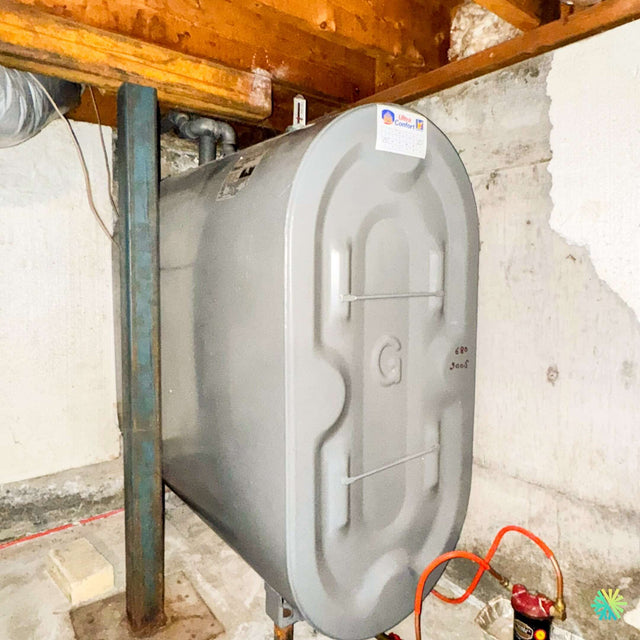
Installing a central heat pump in a LEED renovation project presents several challenges. Unlike new construction, where HVAC systems can be installed from the beginning, renovation projects require more precise adaptation to existing infrastructure. The building in question already had old ducts that had to be reassessed and adapted to maximize the efficiency of the new system. Additionally, the central heat pump system had to be integrated while ensuring compliance with strict ventilation and indoor air quality standards, which are critical for LEED certification.
Another challenge was meeting the deadlines. The project had to be completed in a relatively short time frame while ensuring quality and compliance with LEED standards. To achieve this, we deployed a specialized team experienced in eco-renovations and worked closely with the project's architects and engineers to ensure every detail was met.
The Benefits of a Central Heat Pump in a LEED Renovation
1. Energy Efficiency and Reduced Energy Consumption
One of the main benefits of installing a central heat pump in a LEED renovation project is its ability to significantly reduce energy consumption. The heat pump uses a heat transfer technology that provides both efficient heating and cooling, which is crucial to meet LEED's energy efficiency requirements. In this project in Montreal, we observed a 30% reduction in energy consumption compared to traditional HVAC systems with furnaces and central air conditioners.
2. Improved Indoor Air Quality
Another major benefit of the central heat pump is that it helps maintain excellent indoor air quality. By using high-quality filters and optimizing air circulation, this system helps reduce excess humidity and ensures healthier indoor air, which is a priority in LEED projects.
3. Compliance with Environmental Standards
Integrating a central heat pump with an eco-friendly refrigerant like R-454B helps meet the environmental goals of LEED certification. This refrigerant has a low global warming potential (GWP), which reduces the environmental impact of the system while ensuring optimal performance. By using this technology, the project not only met the strict LEED requirements but also contributed to reducing the building's carbon footprint.
4. Long-Term Operational Cost Savings
Although the initial investment for a central heat pump is higher than that of a conventional heating and cooling system, the long-term energy savings and reduced maintenance costs more than offset these expenses. The client benefits from a system that offers superior performance and greater reliability, with much lower operating costs over several years.
Conclusion: The Future of Eco-Renovations in Montreal
Integrating a central heat pump into a LEED-certified renovation project is not just a smart solution; it also reflects a commitment to sustainability and reducing environmental impact. At AirGreen, we are proud to contribute to projects like this, which combine energy efficiency with environmental responsibility.
By choosing equipment like the Bosch BIVA IDS Premium R-454B, property owners can not only meet LEED certification criteria but also realize substantial savings on their energy bills in the long run. The future of eco-renovations lies in adopting innovative, environmentally friendly technologies, and at AirGreen, we are here to guide you through every step of your project.
You made it to the end.Share it with someone it could help.
Related questions
Can You Really Achieve a Return on Investment in Under 5 Years? Real Case StudiesTips to Benefit from LogisVert Grants Without Administrative ErrorsCentral Heat Pump + R-40 Insulation: The Winning Formula for a Zero-Waste HomeHow to Extend the Life of Your Central Heat Pump by 10 Years? Simple Habits to AdoptIs Annual Maintenance Really Worth It? Our Data Proves ItComplete AirGreen Checklist: Monthly, Seasonal, Annual Maintenance — Printable and PracticalCentral Heat Pump or Electric Baseboards + Wall-Mounted AC? We’ll help you decideWhat Is the Best Place to Install Your Outdoor Unit? Comparative Studies
AirGreen Climatisation & Chauffage
From reading to your home.
An AirGreen advisor assesses your situation on site, free of charge, and gives you a quote within 24 hours.
- RBQ licence 5645-9605-01Subclasses 15.8, 15.10 and 16
- Free on-site estimateAn advisor assesses your needs
- Quote within 24 hoursClear and detailed
Contents
AirGreen glossary