
AirGreen lexiconCentral heat pumps
Definition
Power, BTU, SEER…: Pro Tips for Properly Sizing Your Central Heat Pump
Simplified diagram
In one sentence
Related terms in this article
Proper sizing: the key to long-lasting comfort and substantial energy savings
At AirGreen, we know that choosing a central heat pump isn’t just about picking a popular brand or jumping on a promotion. An efficient and long-lasting HVAC installation always begins with one crucial step: correct equipment sizing. Often overlooked, this step has a major impact on your comfort, energy consumption, and the longevity of your system.
In this article, we share our on-site expertise and guide you through the essential concepts such as BTU, SEER, HSPF, tonnage, and more—explaining how to apply them in real life to make the right decision—whether you're in Montréal, Laval, Longueuil, the North Shore or the South Shore.
Why proper sizing is essential for an HVAC installation
An oversized system leads to short cycling, which causes:
-
Premature wear on the compressor.
-
Unnecessarily high power consumption.
-
Poor humidity control throughout the home.
An undersized system, on the other hand:
-
Fails to heat or cool the home efficiently.
-
Operates under constant stress.
-
Leaves you with a persistent feeling of thermal discomfort.
At AirGreen, we’re often called in to fix improperly sized systems installed by other contractors. These recurring situations have allowed us to perfect our evaluation process.
BTUs: the first number you need to understand
BTU stands for British Thermal Unit — a unit measuring the heating or cooling capacity of a system.
-
1 square foot = about 25 to 30 BTU on average (depending on insulation, sun exposure, ceiling height, etc.).
-
A 2000 sq. ft. home will generally need 50,000 to 60,000 BTU for optimal comfort.
But be careful: this general estimate must be refined through a complete thermal analysis, which our certified technicians carry out during each on-site evaluation.
SEER and HSPF: understanding energy efficiency
These two ratings are crucial to anticipate energy savings:
-
SEER (Seasonal Energy Efficiency Ratio): measures cooling efficiency. The higher the number, the more efficient the unit.
-
Ex: A SEER 20 unit uses 30% less energy than a SEER 14 unit.
-
-
HSPF (Heating Seasonal Performance Factor): measures heating efficiency.
-
Ex: An HSPF of 10 is considered very efficient for Québec’s climate.
-
We always prioritize high SEER and HSPF models, from trusted brands such as Bosch, Lennox, Fujitsu, Trane or Gree, all well-suited to our region.
Case Study: Central Heat Pump Installation – Bosch IDS Premium in Laval
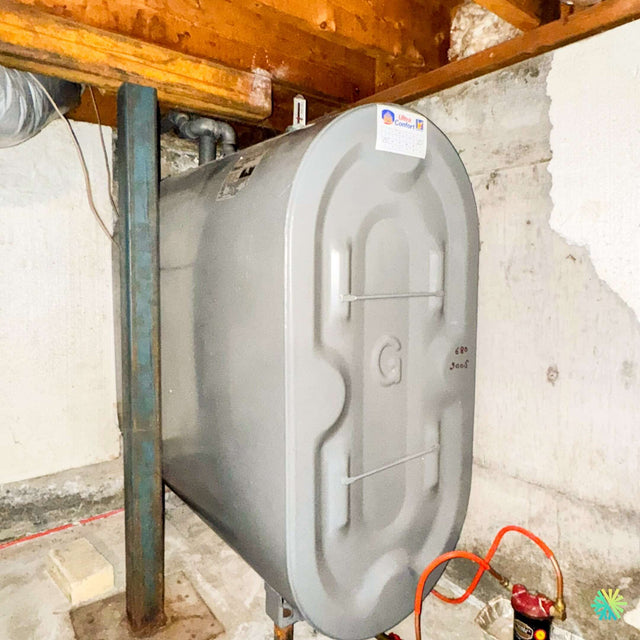
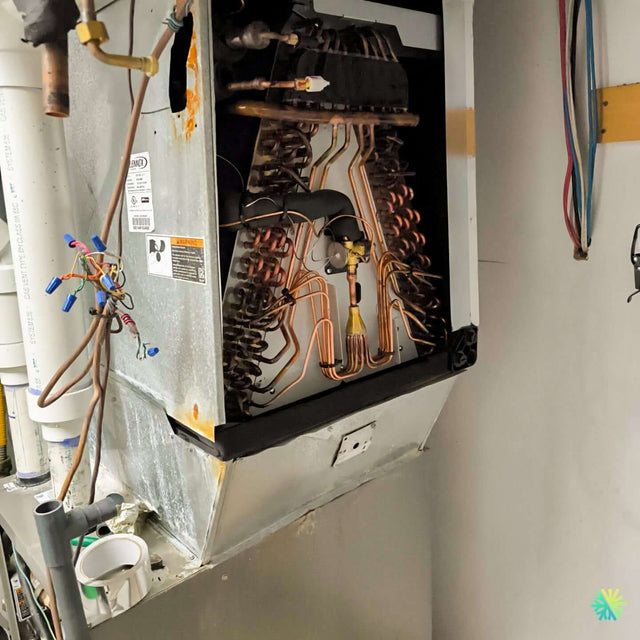
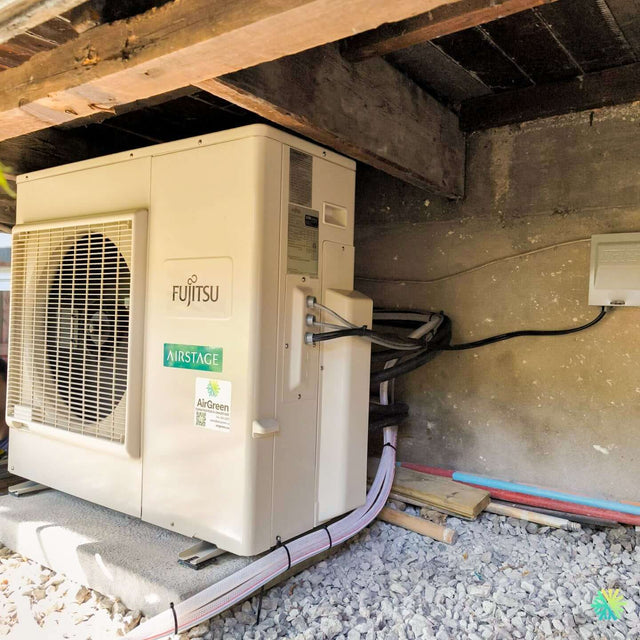
Recently, a residential client in Laval (Duvernay district) reached out to replace their old oil heating system with a Bosch BOVA-36 central heat pump, a 36,000 BTU high-efficiency model with SEER 20 and HSPF 10.
Technical challenges:
-
South-facing home with large windows and a mezzanine.
-
Aging ductwork that required airflow adjustments.
-
Client’s goal: cut electricity bills by 30%.
Our solution:
-
Full thermal analysis using manual calculations and on-site inspection.
-
Recommendation of a unit that was neither under- nor oversized, perfectly balanced.
-
Optimization of the duct network with motorized dampers for better zone control.
Result: improved comfort, a 35% reduction in energy bills, and eligibility for the $5,000 (at the rate then in effect) LogisVert grant.
Tonnage: don’t let the name fool you
The term “tonnage” is another way of expressing BTUs. 1 ton = 12,000 BTU. So, a 3-ton unit offers 36,000 BTU of capacity.
But a 3-ton heat pump isn’t automatically suitable for every average-sized home. Here are a few examples from our recent projects:
-
Montréal (Rosemont): renovated triplex → 3.5 tons (42,000 BTU) required.
-
South Shore (Brossard): well-insulated bungalow → 2.5 tons sufficient (30,000 BTU).
-
North Shore (Blainville): three-story cottage with basement → 4 tons recommended (48,000 BTU).
Our professional criteria for proper sizing
At AirGreen, we use a combination of CSA standards, technical calculations, and hands-on site assessments to determine proper sizing:
-
Habitable square footage and building layout.
-
Thermal insulation (walls, roof, floors, windows).
-
Sun orientation and amount of window exposure.
-
Air leakage rate (tightness of the building envelope).
-
Building use (residential, multi-unit, commercial).
-
Preferred indoor temperature settings.
We never use a cookie-cutter approach. Each customer receives a tailored analysis, which clearly sets us apart from general HVAC installers.
Common mistakes to avoid
1. Relying only on square footage: Two homes with the same area can have very different thermal requirements.
2. Following the advice of a non-technical salesperson: Proper sizing isn’t a guess — it requires calculation.
3. Installing an oversized unit “just in case”: This leads to overconsumption and constant discomfort.
Practical tips to choose the right central heat pump
-
Always ask for a full thermal analysis before signing a contract.
-
Check the SEER and HSPF ratings and match them to your specific needs.
-
Find out about the available grants: LogisVert grants $120 per 1,000 BTU/h at -8 °C for an ENERGY STAR cold-climate heat pump. Several of our clients in Longueuil and Montréal have already received between $4,000 and $6,500, back when Chauffez vert (closed since March 31, 2026) was added to LogisVert.
-
Evaluate the installation service quality, not just the product price.
Why trust AirGreen with your project?
Our team completes several hundred central heat pump installations each year throughout Greater Montréal. Our reputation is built on:
-
Rigorous technical evaluations.
-
Top-quality installations with no shortcuts.
-
In-depth knowledge of Québec HVAC standards.
-
Expertise with top-tier products (Bosch, Lennox, Fujitsu, Gree, Trane).
-
A responsive, local, and human-centered after-sales service.
In Summary
Properly sizing a central heat pump is a critical step—one that we at AirGreen handle with precision and passion. Thanks to our technical know-how, hands-on field experience, and commitment to each customer, we guarantee a durable, high-performance installation that’s tailored to your real-world needs.
Contact us today for a free thermal evaluation in Montréal, Laval, Longueuil, or anywhere on the North Shore or South Shore. Together, let’s ensure your home stays comfortable year-round.
You made it to the end.Share it with someone it could help.
AirGreen Climatisation & Chauffage
From reading to your home.
An AirGreen advisor assesses your situation on site, free of charge, and gives you a quote within 24 hours.
- RBQ licence 5645-9605-01Subclasses 15.8, 15.10 and 16
- Free on-site estimateAn advisor assesses your needs
- Quote within 24 hoursClear and detailed
Contents
AirGreen glossary