
Installation of a Gree Concealed Duct System on the South Shore
Discover how AirGreen’s expert installation of a Gree Concealed Duct System on the South Shore provides quiet, efficient, and discreet climate control, tailored to your space.
- City
- Region
- Equipment
- Brand
- Challenges
- Published
The job on one screen
The article, chapter by chapter
A Seamless Solution for Ultimate Comfort
Imagine living in a home where you experience perfect temperature control all year round, without bulky units stealing precious space or unwanted noise interrupting your daily routine. This vision became a reality for our latest clients on the South Shore, thanks to the expert installation of a Gree Concealed Duct System by the AirGreen team. Here's the story of how we brought unparalleled comfort and efficiency into their home.
Why the Gree Concealed Duct System?
When our clients reached out to us, they were searching for a heating and cooling solution that would be both efficient and unobtrusive. They desired a system that could deliver comfort without sacrificing aesthetics or functionality. The Gree Concealed Duct System was a perfect fit, meeting all their criteria with impressive specs and features.
The Highlights of This Project
- Location: South Shore (Rive Sud) – a vibrant area where comfort is key, especially during fluctuating seasons.
- System Type: Concealed duct air conditioning and heating system, providing discreet climate control.
- Brand & Model: Gree Concealed Duct – a trusted name in HVAC innovation.
Breaking Down the Installation Process
Step 1: Custom Planning and Design
Every successful HVAC project starts with a solid plan. Our specialists carefully assessed the layout of the home, taking into consideration factors like ceiling height, wall structure, and existing ducts. The goal was to seamlessly integrate the concealed duct system into the home’s framework, minimizing disruptions and maximizing efficiency.
Step 2: Strategic Placement of Outlets
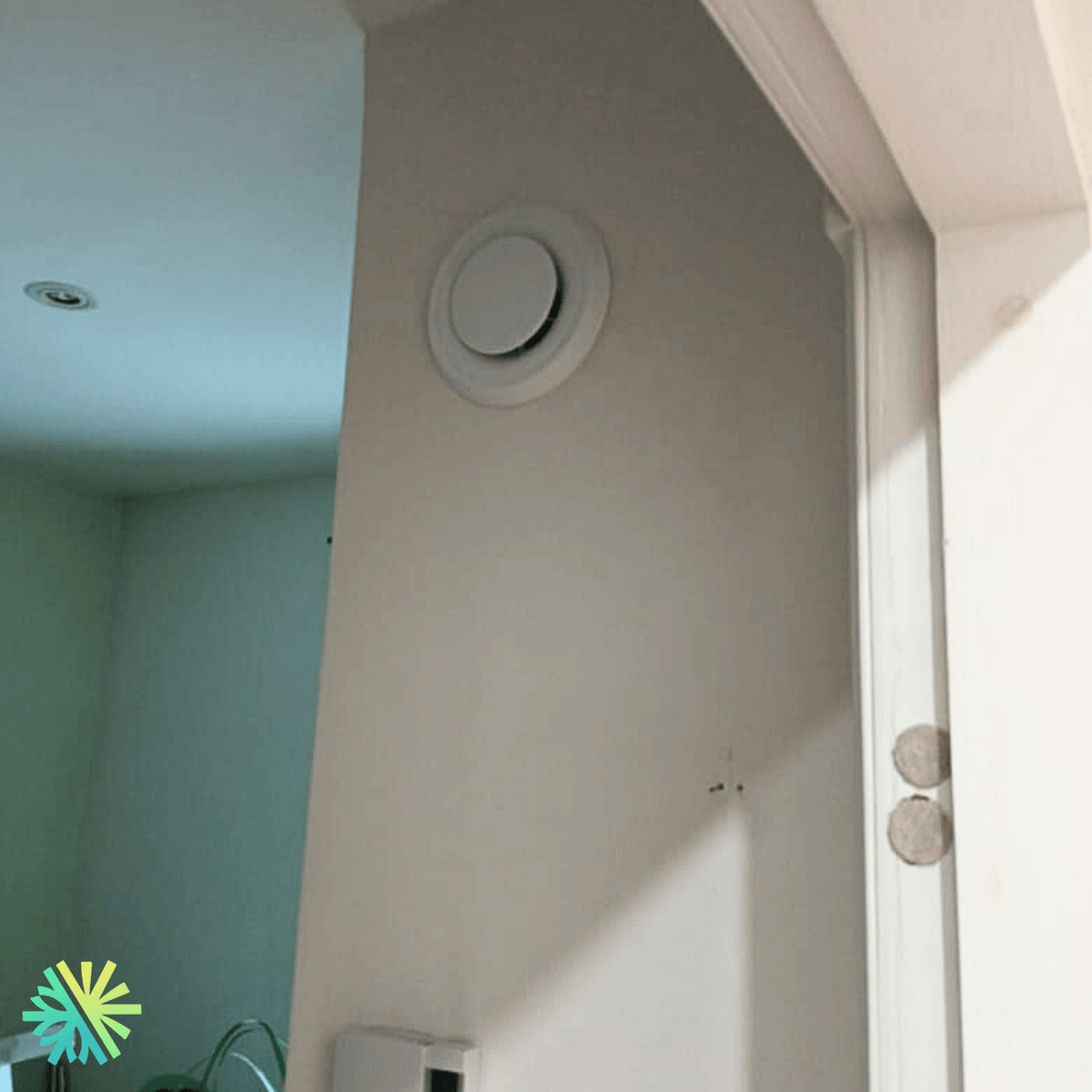
For this particular home, we installed an 18,000 BTU compressor unit paired with three discreet 6,000 BTU air outlets. Each outlet was strategically positioned to ensure even air distribution, targeting key living areas where the family spends most of their time.
- Living Room: One outlet was installed here, ensuring that the family can enjoy their evenings in perfect comfort.
- Master Bedroom: A second outlet provides a cool, serene environment for restful nights.
- Home Office: The third outlet maintains a consistent, productive atmosphere, free from temperature fluctuations.
This strategic approach ensures that no area of the house is left too warm or too cool, with the Gree system maintaining a balanced and comfortable indoor climate throughout.

1. Superior Performance with Low Static Pressure
The Gree Concealed Duct System is renowned for its low static pressure, which is a game-changer in maintaining smooth and efficient airflow. This feature guarantees that every room gets a steady stream of conditioned air without overburdening the unit or increasing energy costs.
2. Whisper-Quiet Operation
In today’s world, where peace and quiet are luxuries, this system delivers. The sound levels, ranging between 33 and 41 dB(A), are barely noticeable. It's so quiet that you might even forget it's running—perfect for a restful night’s sleep or an undisturbed workday.
3. Compact Yet Effective
With dimensions of just 35.38 x 7.88 x 24.25 inches, this unit’s compact size was ideal for our clients’ home. We skillfully concealed it in a low-clearance ceiling space, proving that big comfort can come from a small package. Even in tight areas, the Gree Concealed Duct System fits seamlessly without sacrificing its top-tier performance.
Green Technology for a Sustainable Future
One of the standout elements of this system is its use of R-410A refrigerant, which is eco-friendly and safe for the environment. Coupled with its Energy Star certification, the Gree Concealed Duct unit operates efficiently, helping our clients reduce their carbon footprint while keeping their energy bills in check.
Advanced Condensation Management
To ensure hassle-free operation, this system comes equipped with an integrated condensate pump. The pump efficiently handles water discharge, preventing potential leaks and water damage. An added layer of protection is provided by the sentry float switch, which guards against overflows, keeping the system running smoothly for years to come.
The Installation Challenges We Overcame
Every installation presents unique challenges, and this one was no different. Our team had to work around some tight attic spaces and ensure that the ductwork remained hidden while still delivering optimal airflow. It took a mix of engineering ingenuity and precision craftsmanship to get everything just right, but the end result was worth the effort.
Why Trust AirGreen for Your HVAC Needs?
At AirGreen, we believe in going beyond the standard HVAC installation. Our certified technicians are not only experts in the latest climate control technologies but are also dedicated to delivering a superior customer experience. We work closely with our clients, ensuring their needs are met and expectations exceeded. Plus, we remain available for any questions or support long after the installation is complete.
- Personalized Service: Every home is different, and we tailor our solutions accordingly.
- High-Quality Equipment: We only work with the best, and Gree is a brand we trust for its reliability and efficiency.
- Satisfaction Guaranteed: We’re committed to doing the job right, the first time.
Wrapping It Up: A Future-Proof HVAC Solution
The Gree Concealed Duct System has transformed our clients' home into a true sanctuary, with its quiet operation, energy efficiency, and powerful climate control. If you’re considering upgrading your HVAC system, why not experience the AirGreen difference?
Ready to invest in your comfort? Contact us today for a consultation and let us show you what a well-designed concealed duct system can do for your space.
The job tools
Two quick checks with real numbers: what heat costs, and what your current heaters add up to in BTU/h.
Conversion: 1 W = 3.412 BTU/h. An indication, not a load calculation: baseboards and furnaces are often stronger than the real need, and they can stay as backup. AirGreen confirms the capacity on site.
How the job unfolds
The main steps of this kind of job at AirGreen. Every house has its quirks: the estimate brings them out.
We look at the ducts, the current indoor module, the electrical panel and the planned spot for the outdoor unit.
The equipment combination, capacity and price, in writing. We check whether the combination qualifies for assistance programs.
Access protected, old unit disconnected and removed when it is being replaced.
Electric furnace or air handler, with its coil, connected to the supply and return ducts.
On a level base, raised above the snow, with free space all around.
Insulated, they enter through a sealed opening and run to the indoor coil.
Dedicated circuits, accessible disconnect, a thermostat that works with the heat pump and the backup heat.
Leak test, vacuum, start-up, airflow check and a test of both modes.
Filter, thermostat, backup heat in extreme cold: what to know before winter.
- The on-site estimateWe look at the ducts, the current indoor module, the electrical panel and the planned spot for the outdoor unit.
- The quoteThe equipment combination, capacity and price, in writing. We check whether the combination qualifies for assistance programs.
- Getting readyAccess protected, old unit disconnected and removed when it is being replaced.
- The indoor moduleElectric furnace or air handler, with its coil, connected to the supply and return ducts.
- The outdoor unitOn a level base, raised above the snow, with free space all around.
- The refrigerant linesInsulated, they enter through a sealed opening and run to the indoor coil.
- Electrical and thermostatDedicated circuits, accessible disconnect, a thermostat that works with the heat pump and the backup heat.
- Tests and start-upLeak test, vacuum, start-up, airflow check and a test of both modes.
- The walkthroughFilter, thermostat, backup heat in extreme cold: what to know before winter.
What we check on a job like this one
Each number is a point we check on site. Switch between summer and winter to watch air and heat move.
In summer, the outdoor unit rejects the house's heat outside.
Generic illustration of this type of installation, not a survey of this job site. Tap a number.
It captures or rejects heat outside. It sits on a level base, above the snow, with free space all around.
The insulated refrigerant lines enter the house through a sealed opening and run to the indoor coil.
A shut-off switch near the outdoor unit isolates it safely for service.
Sitting on the indoor module, it moves heat between the house air and the refrigerant.
Electric furnace or air handler: its fan pushes air through the ducts. The electric backup takes over in extreme cold.
Supply ducts bring air to the rooms; returns bring it back to the unit. Their condition matters as much as the unit's.
It protects the coil and the fan. A dirty filter cuts airflow, so it gets checked regularly.
It runs the heat pump and the backup heat. It must be compatible with the installed system.
Is your home ready?
Check what applies at your place. A "no" is not a refusal: it is what we sort out during the estimate.
Good habits, once the unit is in place
Six simple habits that keep the unit going. Your list stays on this device.
What to do, season by season
Three habits per season for this unit. They take a few minutes and prevent many calls.
- Check the indoor module's filter.
- Clear winter debris from the outdoor unit.
- Test cooling before the heat arrives.
- Check the filter more often in peak season.
- Keep registers and returns clear.
- Watch condensate drainage near the coil.
- Change or clean the filter.
- Test heating and backup heat before the cold.
- Book periodic maintenance.
- Clear snow around the outdoor unit.
- Store nothing in front of the indoor module.
- Note any unusual noise or smell and call us.
The right pages, at the right time
Four statements: true or false?
It all comes down to details you have just seen.
1. A central heat pump uses the house's ducts.
It connects to the existing ducts to heat and cool everywhere.
2. In extreme cold, electric backup heat can take over.
The indoor module (furnace or air handler) works with the heat pump and takes over in extreme cold.
3. The filter only gets changed when the unit breaks down.
A dirty filter cuts airflow. It gets checked regularly.
4. You can reuse the old unit's size without checking.
The house may have changed: insulation, windows, added rooms. Capacity is confirmed on site.
0 / 4 right answers
What people ask us about this kind of work
Can I keep my current ducts?
What happens in extreme cold?
Furnace, air handler, ducted: what is the difference?
Are there grants?
Do I need a permit?
How much can I save?
How is the LogisVert assistance calculated?
Will my current thermostat work?
Central or wall units: which one?
Does AirGreen hold the required licences?
Is the estimate free?
No question matches. Write to us: we answer.
More jobs to see, near you
By town, by equipment or by region: browse more than 4,700 published projects.
Each dot: a town where AirGreen has published projects. The glowing dot: this job.
An on-site estimate, the right capacity, the right equipment.
The on-site estimate is free and the quote follows within 24 hours.
Text and photo: a real AirGreen Climatisation & Chauffage job. The diagrams are generic illustrations of the type of installation, not a survey of this job site. Sources of the added figures: airgreen.ca product pages (NEEP / AHRI performance), Hydro-Québec (Heat pumps page, LogisVert, read on 13 October 2026), Régie de l’énergie (rate D as of 1 April 2026).