
Commercial ventilation services across Greater Montréal See, measure and fine-tune the air in your space.
AirGreen installs, repairs, maintains and upgrades ventilation for stores, offices, restaurants and plants. Our goal: excellent indoor air quality and the best possible energy efficiency, with a system inspected and adjusted at least once a year, as Québec’s RSST requires (s. 104).
What you notice in your space:
Free estimate for your commercial ventilation
Only your name and email are required. Free visit, written quote within 24 hours.
Ventilation is the backbone of an efficient HVAC system.
It moves air, removes pollutants and brings in fresh air. A well-ventilated space is healthier, safer and more productive, for your staff and your customers alike. That is why regular maintenance by experts matters.

Simulate your space
The CO2 people breathe out builds up until fresh air dilutes it. Move the sliders.
Simplified model: fully mixed air, 9 ft ceiling, outdoor air at 420 ppm, about 0.005 L/s of CO2 per adult doing office work (Persily and de Jonge, 2017). The end-of-day result depends mostly on fresh air per person, not on the number of people.
Seven parts keep a commercial space breathing. Tap them one by one.
Every business has its own needs, and we take the time to understand yours before proposing anything. Pick your sector, then switch each airflow on or off.
Heat recovery ventilator (HRV or ERV)
- What it does
- Crosses outgoing stale air with incoming fresh air: heat moves from one to the other without mixing.
- Watch for
- Ice-cold supply air in winter, dirty core, frost, motor noise.
- Our work
- Selection and installation, core cleaning, filters, airflow adjustment.
- The rule
- RSST, s. 104: inspection and adjustment at least once a year.
The kitchen exhausts a lot of air, and that air has to come back from somewhere.
- Remove smoke, grease and heat above the cooking line.
- Replace exhausted air so the hood actually draws.
- Keep kitchen smells in the kitchen, not the dining room.
The rules that matter
- NFPA 96: grease duct inspections based on cooking volume.
- RSST, s. 109: a fresh-air intake that replaces exhausted air.
- RSST, s. 104: inspection and adjustment at least once a year.
What we install and maintain
The hood fire-suppression system and gas hookups are done by a licensed partner.
Tell us what you notice, and we will tell you what to check.
The verdict updates with every click and can be sent with your request. The visit confirms it with measurements.
What you notice · pick any
Last full maintenance
Your sector comes from section 02: Restaurant.
Tick at least one sign and the verdict appears here.
For guidance only. Only on-site measurements confirm the cause.
Commercial ventilation services throughout Greater Montréal, Laval, Longueuil, the South Shore and the North Shore
We know what ventilation downtime does to your operations. Here is what we do, from design to maintenance. Open a card to see what it includes.
Installation
Commercial ventilation systems built with recognized brands and designed for your space.
- Survey of the space and its occupancy
- HRV or ERV heat recovery
- Hood exhaust and make-up air
- Exhaust fans, ducts, diffusers
- Commissioning and balancing
Repair
Experienced technicians who fix it fast, because downtime costs your business.
- Noise, vibration, stopped motor
- Belts, bearings, fans
- Dampers and controls
- Airflow check after the repair
Maintenance and tune-up
Proactive maintenance that catches wear early, so your system lasts.
- Yearly inspection and adjustment (RSST, s. 104)
- Filters cleaned or replaced
- Ventilator core cleaning
- Airflow balancing
- Maintenance log handed over
Replacement and upgrade
Move to newer, energy-efficient ventilation that fits your needs.
- Heat recovery instead of plain exhaust
- Demand controls (CO2, timer)
- More efficient motors and fans
- Solutions efficaces incentive check
On-site survey
We visit the space and note its use, occupancy, existing equipment and roof access. We measure what comes in and what goes out.
- Free visit
- A review of what is there now
- The questions to settle before design
17 % of the way
Your maintenance dates, counted from today.
Enter your dates: each card tells you where you stand, and the next 12 months build themselves.
Yearly inspection and adjustment
Next due date: .
Commercial kitchen hood
Next: .
Which edition for your project
days until the transition period ends (October 17, 2027).
Your next 12 months
Tick your equipment: the calendar uses the RSST inspection and cooking volume chosen above.
What the law requires, in tables and dates.
Québec’s Regulation respecting occupational health and safety (RSST) governs ventilation in every workplace. The rows in green are the ones we see most often in the field.
| Section | What the RSST requires | What it means for you |
|---|---|---|
| s. 101 | Adequately ventilated premises, without excessive drafts. | Enough fresh air, well distributed, without discomfort at the workstations. |
| s. 102 | Natural ventilation: openings of at least 5% of the floor area (offices, labs), 2% elsewhere. | Without mechanical ventilation, operable windows have to do the job. |
| s. 103 | Mechanical ventilation: a minimum number of fresh-air changes per hour based on the type of premises (Schedule III). | Fresh-air flow is calculated for your type of use. |
| s. 104 | Inspection and adjustment at least once a year; filters maintained or replaced as needed. | A documented yearly visit, at the very least. |
| s. 105 | A contaminated-air duct serves that purpose only. | No “convenient” tie-in to another system. |
| s. 106 | Air intakes located away from contaminated air. | Never next to an exhaust outlet or a loading dock. |
| s. 107 | Local exhaust at every fixed workstation that emits gases, fumes, vapours or dust. | A hood or capture point at the station, not just a general exhaust fan. |
| s. 108 | Recirculation: contaminants below the limits, a duct to the outside if filtration fails. | Recirculation has to be engineered, not improvised. |
| s. 109 | A fresh-air intake that replaces exhausted air. | Make-up air prevents whistling doors and weak hoods. |
Grease duct inspections per year
Who can do the work
Subclass 15.8 covers ventilation, exhaust, make-up air and ductwork. Heating or cooling appliances in a forced-air system also require 15.9 or 15.10.
AirGreen : RBQ 5645-9605-01 · 15.8 · 15.10 · 16
Construction Code: the timeline
Who does what
| Work | AirGreen | Licensed partner | Engineer | You |
|---|---|---|---|---|
| Ducts, diffusers, exhaust fans | ||||
| HRV or ERV heat recovery | ||||
| Hood exhaust and make-up air | ||||
| Hood fire-suppression system | ||||
| Gas hookup of a make-up air unit | ||||
| Power supply for the equipment | ||||
| Sealed drawings, when required | ||||
| Yearly inspection and adjustment | ||||
| Maintenance log kept on file |
Could your project get help from Hydro-Québec? Four questions.
Based on the Small Businesses participation guide, March 2026. Hydro-Québec confirms eligibility for each measure.
The building is on rate G or Flex GOr a residential building with 20 or more units.
The equipment will be new and certifiedThe incentive covers buying and installing new equipment.
The measure is required by a law or regulationFor example, a mandatory compliance upgrade.
Work started before May 9, 2022First contract signed or first equipment purchase.
Choosing a ventilation contractor means choosing the comfort, air and energy bill of your space.
Expertise and experience
A team that never stops learning and knows commercial ventilation inside out, for efficient, reliable solutions built for you.
Customer satisfaction
From the first call to the end of the job, a simple, hassle-free experience. A final written offer before we start, with no surprises at the end.
Energy-efficient solutions
Heat recovery, demand controls, efficient motors: less energy used, less impact on the environment.
In the field
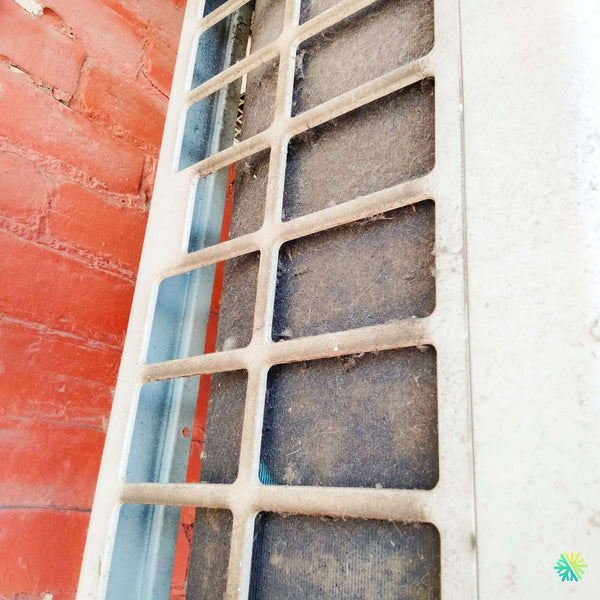
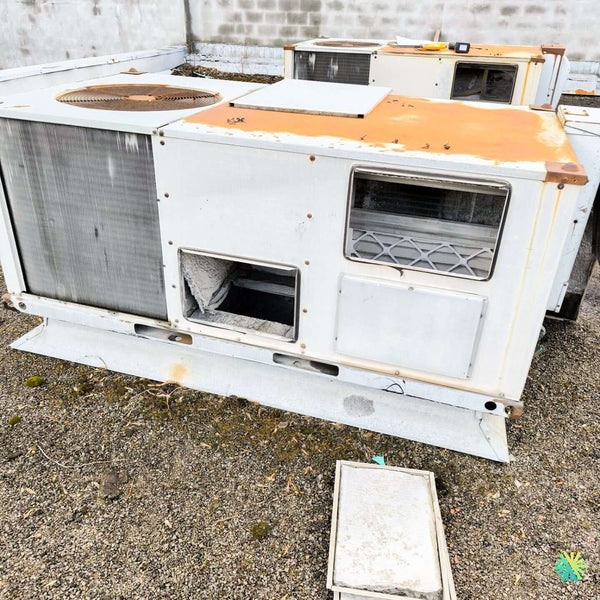
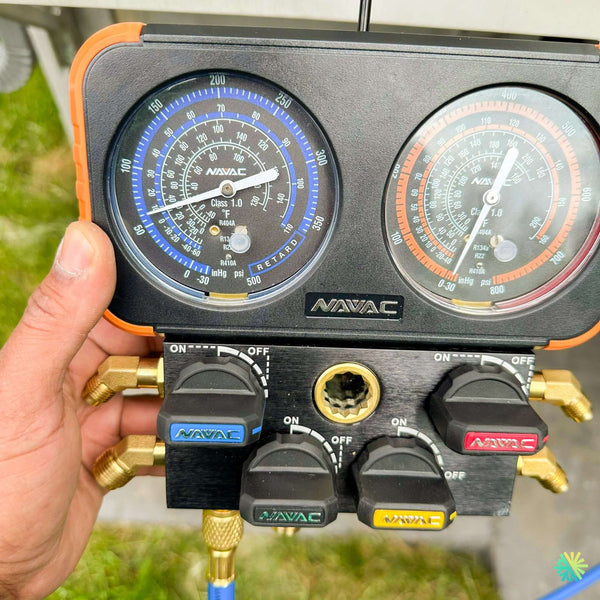
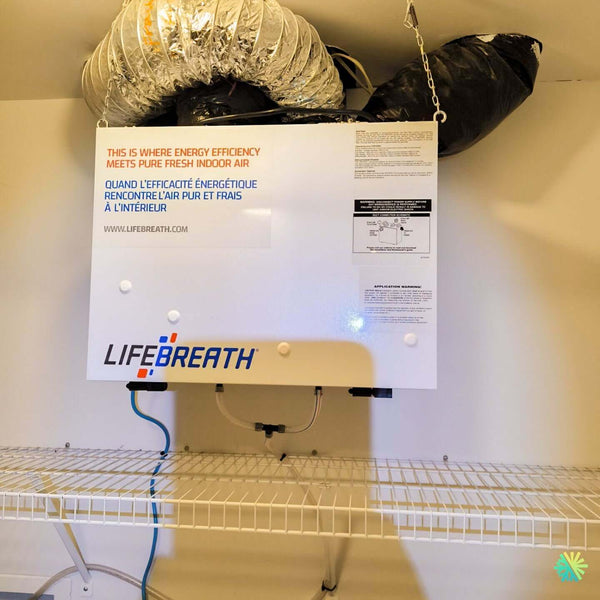
Job-site photos and our commercial cases. Tap a photo to read the case.
Commercial ventilation: the short answers.
How often should a business have its ventilation inspected?
In a workplace, Québec’s RSST (s. 104) requires every mechanical ventilation system to be inspected and adjusted at least once a year. Filters are cleaned or replaced as needed, depending on dust and traffic.
Why does ventilation matter so much in a commercial space?
It removes pollutants, brings in fresh air and keeps the space comfortable. The result is a healthier, more productive place for your staff and customers. It is the backbone of an efficient HVAC system.
What is the difference between an HRV and an ERV?
Both swap stale air for fresh air and recover heat along the way. An ERV also recovers some humidity, which helps when winter air is very dry. The right choice depends on occupancy and humidity in the space.
Why does the front door whistle or slam?
Often the space exhausts more air than it brings in, so it is under negative pressure and air rushes in through the door. The RSST (s. 109) requires a fresh-air intake that replaces exhausted air. We measure and balance the make-up air.
How can I tell if my space lacks fresh air?
A CO2 reader is a good clue. Health Canada sets 1,000 ppm (24-hour average) for residential indoor air, and outdoor air sits around 300 to 500 ppm. Above 1,000 ppm at peak hours, fresh air is probably not keeping up with occupancy.
Do you install commercial kitchen hood exhaust?
Yes. Exhaust, ductwork and make-up air are ventilation work (RBQ subclass 15.8). The hood fire-suppression system and gas hookups are done by a licensed partner.
How often should a hood duct be inspected?
Under NFPA 96: monthly for solid-fuel cooking, quarterly for high volume (24-hour, charbroiling, wok), twice a year for moderate volume and once a year for low volume.
Does the new Construction Code apply to my project?
The Building chapter based on the NBC 2020 as amended for Québec has been in force since April 17, 2025. Work started before October 17, 2027 may still follow the requirements in place before that date. Your designer confirms which edition applies.
Is there an incentive for commercial ventilation?
Hydro-Québec’s Solutions efficaces program funds measures predefined in its online tool, for buildings on rate G or Flex G. The project must qualify for at least $500 and the client pays at least 10% of eligible costs. A measure required by law does not qualify.
What licence is needed for ventilation work?
RBQ subclass 15.8 covers ventilation, exhaust, make-up air and ductwork. Heating or cooling appliances in a forced-air system also require 15.9 or 15.10. AirGreen holds RBQ licence 5645-9605-01 with subclasses 15.8, 15.10 and 16.
Do I need engineering drawings?
Not for every project. When sealed drawings are required, we work with the project engineer and install to their drawings.
Do you connect gas-fired make-up air units?
We install the unit, ducts and controls. The gas hookup is done by a licensed gas contractor.
Do you take the same approach for every business?
No. A restaurant, an office, a retail store and a plant have different needs. We visit first, measure, then propose a solution built for your space.
How much does a commercial ventilation project cost?
It depends on the volume of air to move, the existing ductwork and roof access. After the free on-site visit, you get a written quote within 24 hours with the full scope of work.
Does the online diagnostic replace a visit?
No. It ranks likely causes based on what you notice. The free visit confirms the cause with on-site measurements.
Which areas do you serve?
Montréal, Laval, Longueuil, the North Shore and the South Shore, from our office at 4951 Sainte-Catherine Street East and our showroom at 1370 Joliot-Curie Street in Boucherville.
Breathe easy with AirGreen
Customer satisfaction, sustainability and dependable service: that is how we work in commercial HVAC. We serve businesses in Montréal, Laval, Longueuil, the North Shore and the South Shore, whatever the size or complexity of the project. We don’t just promise comfort: we improve the air you breathe, all year round.
- Regulation respecting occupational health and safety (S-2.1, r. 13), ss. 101 to 109, LégisQuébec, up to date as of June 1, 2026.
- Régie du bâtiment du Québec, heating, ventilation and refrigeration subclasses (in force since January 16, 2017).
- Régie du bâtiment du Québec, transition period extension, August 26, 2026 (regulations in force September 10, 2026).
- Hydro-Québec, Solutions efficaces program, Small Businesses participation guide, March 2026.
- NFPA 96, inspection schedule for commercial kitchen exhaust systems.
- Health Canada, Carbon dioxide in your home, modified March 19, 2021.
- Persily, A. and de Jonge, L. (2017), Carbon dioxide generation rates for building occupants, Indoor Air 27(5).
Results from the tools on this page are for guidance only; only the responsible bodies confirm an incentive or a requirement.
Informations Intéressantes sur les Services de Ventilation partout à Montréal, Laval, Longueuil, Rive Sud et Rive Nord
-
 AirGreen Climatisation & Chauffage Admin
Are there eco-friendly or green commercial ventilation solutions?
-
 AirGreen Climatisation & Chauffage Admin
What's the average lifespan of commercial ventilation equipment?
-
 AirGreen Climatisation & Chauffage Admin
How can commercial ventilation systems help in odor control?
-
 AirGreen Climatisation & Chauffage Admin
How to address common noise issues in commercial ventilation systems?
-
 AirGreen Climatisation & Chauffage Admin
Are there energy-efficient commercial ventilation solutions available?
-
 AirGreen Climatisation & Chauffage Admin
How important is humidity control in commercial ventilation?
-
 AirGreen Climatisation & Chauffage Admin
How do I ensure balanced airflow in my commercial space?
-
 AirGreen Climatisation & Chauffage Admin
How can I improve the efficiency of my existing commercial ventilation system?
-
 AirGreen Climatisation & Chauffage Admin
How do ventilation systems support heating and cooling efforts in commercial spaces?
-
 AirGreen Climatisation & Chauffage Admin
Can commercial ventilation systems be remotely monitored and controlled?
-
 AirGreen Climatisation & Chauffage Admin
How does commercial ventilation help in reducing the spread of airborne diseases?
-
 AirGreen Climatisation & Chauffage Admin
What are the challenges in ventilating large commercial spaces?


