
Repair of a Fujitsu Mini Split Heat Pump in West Island
Learn how we expertly repaired a Fujitsu mini split heat pump in West Island, ensuring it operates like new. Discover why AirGreen is the trusted choice for HVAC services!
- City
- Region
- Equipment
- Brand
- Challenges
- Published
The job on one screen
The article, chapter by chapter
Bringing Comfort Back: A Unique Heat Pump Repair Story from West Island
Introduction to the Service Call
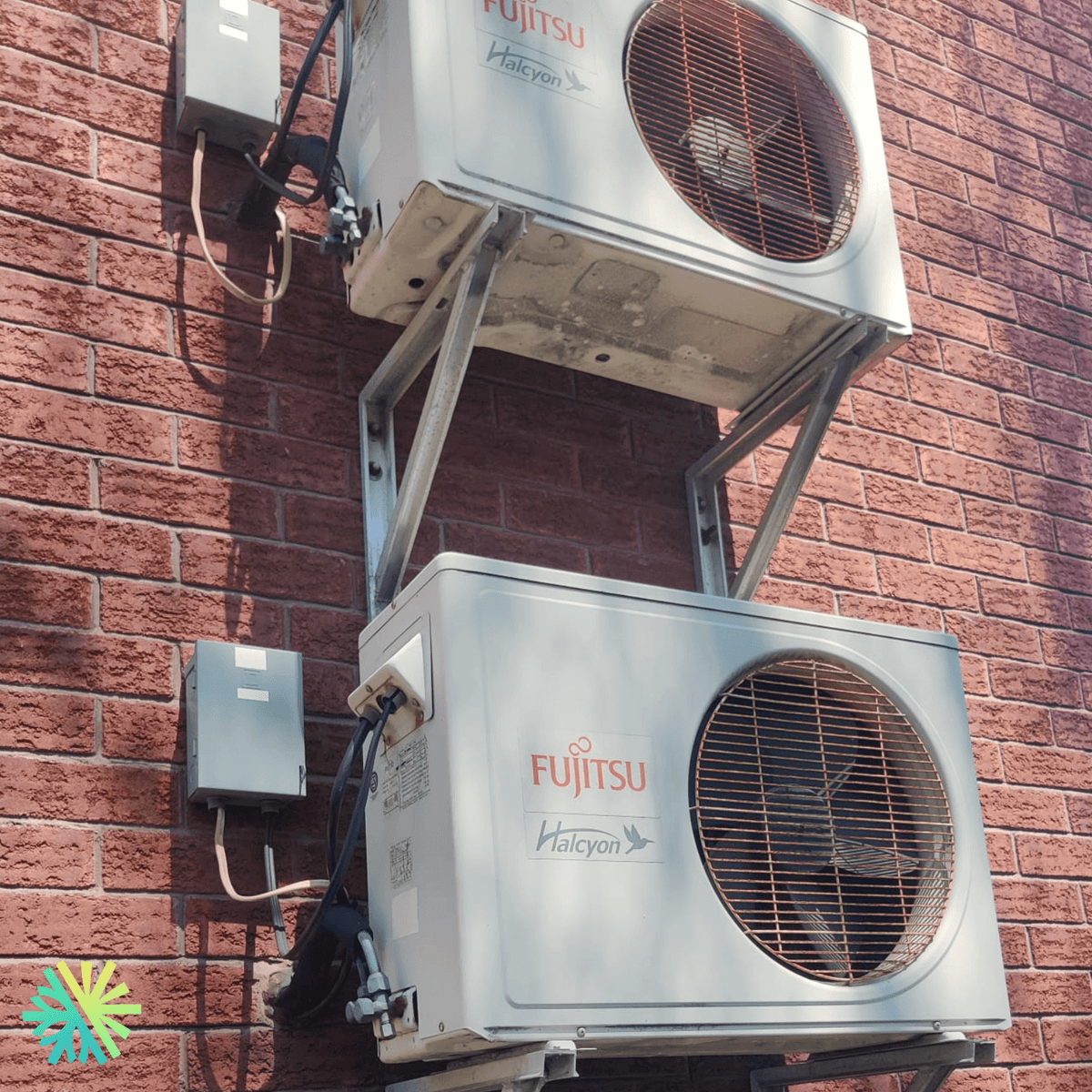
When our team at AirGreen received a call from a homeowner in West Island about a malfunctioning Fujitsu mini split heat pump, we knew we had to act quickly. The machine was critical for maintaining a comfortable indoor environment in their home, especially during Montreal’s unpredictable weather. The client had noticed inconsistent airflow, and the outdoor unit was producing an unusual noise—a telltale sign of potential compressor or fan issues.
Upon arriving, we discovered this repair wasn’t going to be a routine fix. Here’s a deep dive into the work we did and why our expertise made all the difference.
A Closer Look at the Fujitsu Mini Split Heat Pump
Fujitsu is renowned for its advanced ductless mini split systems, celebrated for their energy efficiency, quiet operation, and smart temperature controls. This particular unit was an 18,000 BTU model, ideal for medium-sized homes. However, like any complex HVAC system, regular maintenance and occasional repairs are essential to keep it running optimally.
Key features of the Fujitsu unit we serviced included:
- Energy-efficient inverter technology for precise temperature control.
- A compact design perfect for residential spaces.
- An eco-friendly refrigerant that minimizes environmental impact.
- A durable outdoor condenser built for varying climates.
Unfortunately, even the best machines are prone to wear and tear, especially if routine maintenance is neglected.
The Problem: What We Found
As we inspected the unit, several issues became apparent:
-
Clogged Filters and Blocked Drainage Lines
Dust and debris had accumulated in the indoor unit’s filters, restricting airflow and causing condensation to overflow. This led to water pooling near the unit, a common but preventable issue. -
Faulty Outdoor Fan Motor
The unusual noise reported by the client traced back to a failing fan motor in the outdoor unit. This not only affected the unit's performance but also increased energy consumption. -
Refrigerant Leak
Using our advanced diagnostic tools, we detected a small refrigerant leak in the system. Low refrigerant levels can drastically reduce a heat pump's efficiency, and in extreme cases, cause damage to the compressor.
Our Approach to the Repair
Step 1: Cleaning and Restoring the Indoor Unit
The first task was to disassemble the indoor unit and thoroughly clean the filters, coils, and drainage lines. Using specialized HVAC cleaning agents, we ensured all components were free from dust and bacteria, restoring proper airflow and preventing further water leakage.
Step 2: Repairing the Outdoor Unit
Next, we addressed the outdoor fan motor. After sourcing a genuine replacement part from our trusted supplier, we carefully installed it, ensuring the fan operated smoothly and silently.
Step 3: Sealing the Refrigerant Leak
Refrigerant leaks require precision. After identifying the leak’s location using an electronic detector, we sealed it with a high-quality sealant. Once repaired, we recharged the system with the appropriate amount of refrigerant to restore its cooling capacity.
Step 4: Comprehensive System Testing
Before leaving, we ran the heat pump through multiple operational cycles, checking for performance, efficiency, and noise levels. The system was now operating as good as new.
Why Choose AirGreen for Heat Pump Repairs?
At AirGreen, we pride ourselves on delivering top-notch HVAC services tailored to the needs of our Montreal, Laval, and surrounding area clients. Here’s what sets us apart:
- Expert Technicians: Our team is trained to handle a wide range of HVAC systems, including ductless heat pumps.
- Transparent Communication: We provide detailed explanations and cost breakdowns before starting any work.
- Eco-Friendly Practices: From refrigerants to cleaning agents, we prioritize environmentally responsible solutions.
- Timely Service: We understand the importance of a comfortable home and always aim for prompt repairs.
Tips for Maintaining Your Fujitsu Mini Split Heat Pump
To avoid future issues, we provided the homeowner with some valuable maintenance tips:
- Clean filters regularly (every 2-3 months) to maintain optimal airflow.
- Schedule annual professional servicing to inspect components and ensure proper refrigerant levels.
- Monitor for unusual noises or reduced performance and address issues early to prevent costly repairs.
A Happy Customer, A Happy Team
The West Island homeowner was thrilled with the results. Their Fujitsu heat pump was back to providing consistent heating and cooling, and they expressed gratitude for our professional, efficient service. It’s moments like these that remind us why we’re passionate about what we do.
Conclusion
Heat pump repairs require more than just technical expertise—they demand a commitment to quality and customer satisfaction. At AirGreen, we go above and beyond to ensure every repair is a success story. If you’re experiencing issues with your mini split system, don’t hesitate to reach out. We’re here to keep your home comfortable year-round.
How the job unfolds
The main steps of this kind of job at AirGreen. Every house has its quirks: the estimate brings them out.
The symptoms, since when, the model (on the unit's label) and the error code if there is one.
We look for the cause, not just the symptom: readings, components, installation.
Repair, part to order or replacement, depending on the failure. We explain what we found.
The repair is done and parts replaced as needed.
The unit is restarted and checked in its operating modes.
What caused the failure and what can keep it from coming back.
- Your callThe symptoms, since when, the model (on the unit's label) and the error code if there is one.
- On-site diagnosisWe look for the cause, not just the symptom: readings, components, installation.
- The optionsRepair, part to order or replacement, depending on the failure. We explain what we found.
- The workThe repair is done and parts replaced as needed.
- TestsThe unit is restarted and checked in its operating modes.
- AdviceWhat caused the failure and what can keep it from coming back.
What we check on a job like this one
Each number is a point we check on site. Switch between summer and winter to watch air and heat move.
In summer, the outdoor unit rejects the house's heat outside.
Generic illustration of this type of installation, not a survey of this job site. Tap a number.
Mounted level on a wall plate, high enough for the air to reach the whole room, with enough space around it to slide the filters out easily.
The refrigerant lines, the communication cable and the drain go through the wall in a single opening, sealed against water, cold air and insects.
Two insulated copper pipes connect the two units. Outside, a line cover can protect them from sun, knocks and weather.
A shut-off switch near the outdoor unit isolates it safely for service. It must stay accessible at all times.
The compressor and the fan. In heating mode it captures heat from the outdoor air, even in winter, and moves it inside.
On the ground or on the wall, it keeps the unit above accumulated snow. The unit stays clear and defrost water can drain away.
The fan needs to blow freely. Storage, a fence or a wall too close, and efficiency drops while noise goes up.
Good habits, once the unit is in place
Six simple habits that keep the unit going. Your list stays on this device.
What to do, season by season
Three habits per season for this unit. They take a few minutes and prevent many calls.
- Clean the indoor unit's filters.
- Clear leaves and debris left on the outdoor unit by winter.
- Test cooling before the first hot days.
- Clean the filters more often when the unit runs a lot.
- Keep plants away from the outdoor unit.
- Check that no water drips from the indoor unit.
- Rake the leaves around the outdoor unit.
- Test heating before the first cold days.
- Book periodic maintenance before winter.
- Keep snow away from the stand and the front of the unit.
- Let the unit defrost: it is normal.
- Never hit the ice on the fins; call us if the unit stays iced up.
The right pages, at the right time
Four statements: true or false?
It all comes down to details you have just seen.
1. In heating mode, the outdoor unit can produce water.
During defrost cycles. That water must drain away without forming ice.
2. You pick the capacity with a simple square-footage rule.
Windows, insulation, orientation and how the room is used all count. Capacity is chosen on site.
3. A multi-zone connects several indoor heads to a single condenser.
One head per room, all on the same condenser. Each room keeps its own temperature.
4. The disconnect can sit behind the patio furniture.
It must stay accessible: it is what shuts the unit off for service.
0 / 4 right answers
What people ask us about this kind of work
What should I have ready before calling?
Repair or replace?
Does a wall-mounted heat pump heat in winter?
Wall-mounted or multi-zone: how do I choose?
Where does the outdoor unit go?
Are there grants?
Do I need a permit?
Does AirGreen hold the required licences?
Is the estimate free?
No question matches. Write to us: we answer.
More jobs to see, near you
By town, by equipment or by region: browse more than 4,700 published projects.
Each dot: a town where AirGreen has published projects. The glowing dot: this job.
An on-site estimate, the right capacity, the right equipment.
The on-site estimate is free and the quote follows within 24 hours.
Text and photo: a real AirGreen Climatisation & Chauffage job. The diagrams are generic illustrations of the type of installation, not a survey of this job site. Sources of the added figures: airgreen.ca product pages (NEEP / AHRI performance), Hydro-Québec (Heat pumps page, LogisVert, read on 13 October 2026), Régie de l’énergie (rate D as of 1 April 2026).