
A Breath of Fresh Air: AirGreen’s Expert Mini Split Maintenance in Senneville
Breathe easy with AirGreen! Experience top-tier mini split maintenance that revives your system’s efficiency and air quality in Senneville.
- City
- Region
- Equipment
- Brand
- Challenges
- Published
The job on one screen
The article, chapter by chapter
Revitalizing Home Comfort with Precision and Care
At AirGreen, our commitment is not only to install top-tier HVAC systems but also to ensure they continue to perform at their best. This tale of transformation during a service call in Senneville highlights our dedication to excellence in maintaining mini split systems, proving why AirGreen is the trusted choice for HVAC solutions in Montréal, Laval, Longueuil, and beyond.
The Backstory: A Mini Split in Distress
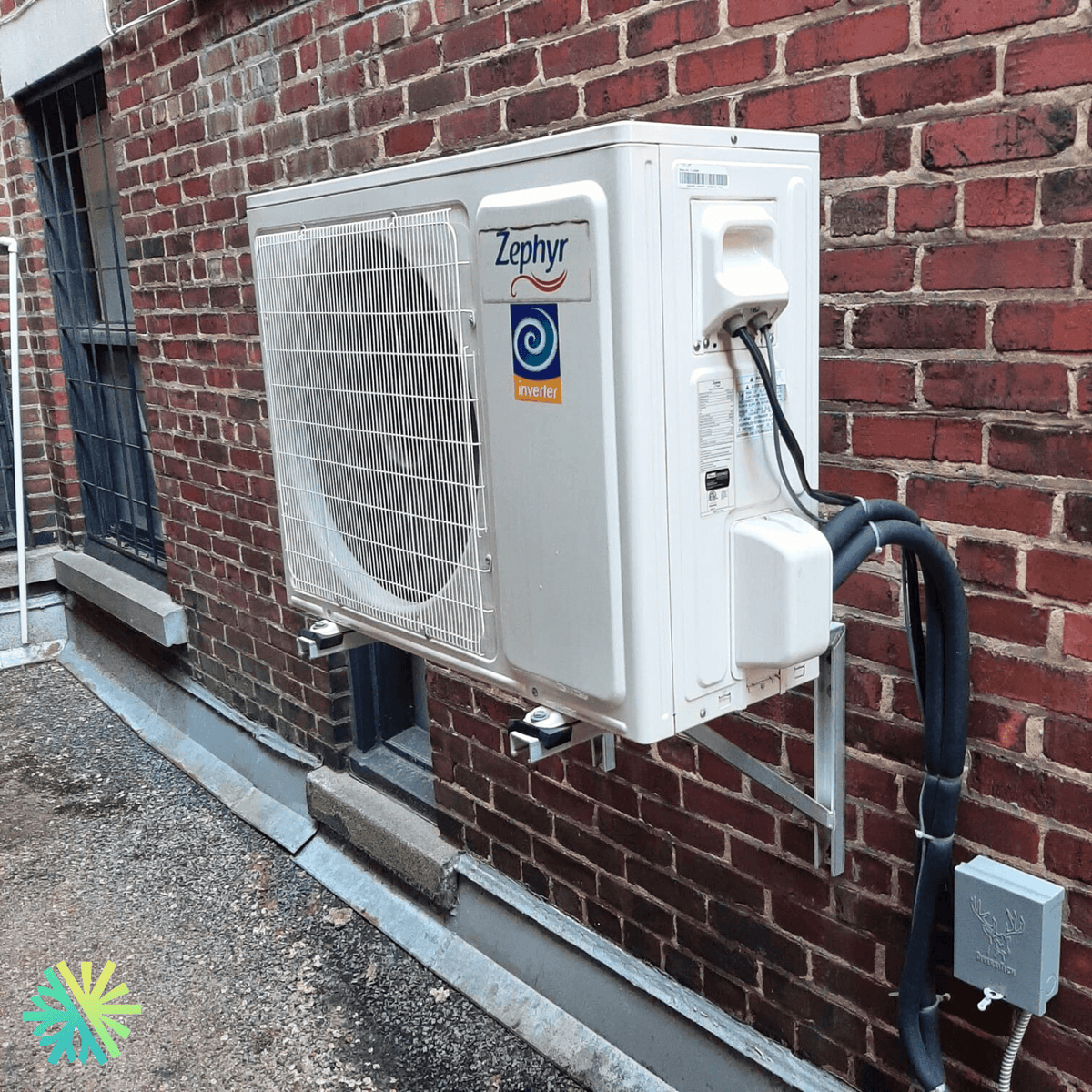
Imagine a summer retreat in the scenic town of Senneville, where the gentle breeze usually complements the serene atmosphere. However, this idyllic scenario was marred by a mini split system that had seen better days. Over time, the unit had accumulated a significant amount of dirt and debris, leading to decreased efficiency and an unpleasant odor permeating the residence. The homeowner, distressed by the situation, turned to AirGreen for a professional and thorough cleaning service.

Challenge Accepted: AirGreen’s Approach
Our team arrived at the scene equipped with the expertise and tools necessary to tackle this challenge head-on. Here’s how we restored the mini split system to its former glory:
-
Thorough Inspection: Initially, our technicians conducted a comprehensive inspection to assess the extent of the cleaning needed. This step is crucial as it determines the specific approach and techniques that will be employed.
-
Deep Cleaning: Utilizing specialized cleaning solutions and high-tech equipment, we meticulously cleaned each component of the mini split. From the filters and coils to the outer casings, no part was left untouched.
-
Efficiency Testing: After the cleaning, we performed several efficiency tests to ensure that the system was not only clean but also operating at its optimal performance level.
The Result: Beyond Expectations
The transformation was nothing short of remarkable. The once underperforming mini split system was now running efficiently, without any foul odors, and the air quality in the home was noticeably improved. The homeowner was thrilled with the outcome, praising AirGreen for our clean and professional job. Their satisfaction is a testament to our unwavering dedication to providing top-notch HVAC services.
Why Choose AirGreen?
Here are a few reasons why AirGreen remains a leader in the HVAC industry:
-
Expert Technicians: Our team is composed of highly skilled professionals who are not only adept at installation but excel in maintenance and troubleshooting.
-
Tailored Solutions: We understand that each home and system is unique. That’s why we offer customized services tailored to the specific needs and preferences of our customers.
-
Commitment to Quality: At AirGreen, we use only the best tools and technologies to ensure every job is done right the first time.
A Story of Success and Satisfaction
This service call in Senneville is just one of many success stories that illustrate the expertise and customer-centric approach of AirGreen. Whether it’s a routine maintenance check or a complex repair, our team ensures that every job is a step towards enhancing the comfort and quality of life for our clients.
If you’re in Montreal, Laval, Longueuil, or the surrounding areas and need professional HVAC services, look no further than AirGreen. Let us help you breathe easier in your home or business with our expert HVAC solutions.
How the job unfolds
The main steps of this kind of job at AirGreen. Every house has its quirks: the estimate brings them out.
The type of unit, its age and what you have noticed: noise, smell, water, lower output.
Filters, coils or core, drain, fans, connections and clearances.
Dirty parts are cleaned following the manufacturer's recommendations.
Operation, water drainage, noise and airflow.
What was done, what to watch and when to come back.
- The appointmentThe type of unit, its age and what you have noticed: noise, smell, water, lower output.
- InspectionFilters, coils or core, drain, fans, connections and clearances.
- CleaningDirty parts are cleaned following the manufacturer's recommendations.
- ChecksOperation, water drainage, noise and airflow.
- The reportWhat was done, what to watch and when to come back.
What we check on a job like this one
Each number is a point we check on site. Switch between summer and winter to watch air and heat move.
In summer, the outdoor unit rejects the house's heat outside.
Generic illustration of this type of installation, not a survey of this job site. Tap a number.
Mounted level on a wall plate, high enough for the air to reach the whole room, with enough space around it to slide the filters out easily.
The refrigerant lines, the communication cable and the drain go through the wall in a single opening, sealed against water, cold air and insects.
Two insulated copper pipes connect the two units. Outside, a line cover can protect them from sun, knocks and weather.
A shut-off switch near the outdoor unit isolates it safely for service. It must stay accessible at all times.
The compressor and the fan. In heating mode it captures heat from the outdoor air, even in winter, and moves it inside.
On the ground or on the wall, it keeps the unit above accumulated snow. The unit stays clear and defrost water can drain away.
The fan needs to blow freely. Storage, a fence or a wall too close, and efficiency drops while noise goes up.
Good habits, once the unit is in place
Six simple habits that keep the unit going. Your list stays on this device.
What to do, season by season
Three habits per season for this unit. They take a few minutes and prevent many calls.
- Clean the indoor unit's filters.
- Clear leaves and debris left on the outdoor unit by winter.
- Test cooling before the first hot days.
- Clean the filters more often when the unit runs a lot.
- Keep plants away from the outdoor unit.
- Check that no water drips from the indoor unit.
- Rake the leaves around the outdoor unit.
- Test heating before the first cold days.
- Book periodic maintenance before winter.
- Keep snow away from the stand and the front of the unit.
- Let the unit defrost: it is normal.
- Never hit the ice on the fins; call us if the unit stays iced up.
The right pages, at the right time
Four statements: true or false?
It all comes down to details you have just seen.
1. In heating mode, the outdoor unit can produce water.
During defrost cycles. That water must drain away without forming ice.
2. You pick the capacity with a simple square-footage rule.
Windows, insulation, orientation and how the room is used all count. Capacity is chosen on site.
3. A multi-zone connects several indoor heads to a single condenser.
One head per room, all on the same condenser. Each room keeps its own temperature.
4. The disconnect can sit behind the patio furniture.
It must stay accessible: it is what shuts the unit off for service.
0 / 4 right answers
What people ask us about this kind of work
How often should maintenance be done?
Does maintenance improve performance?
Does a wall-mounted heat pump heat in winter?
Wall-mounted or multi-zone: how do I choose?
Where does the outdoor unit go?
Are there grants?
Do I need a permit?
Does AirGreen hold the required licences?
Is the estimate free?
No question matches. Write to us: we answer.
More jobs to see, near you
By town, by equipment or by region: browse more than 4,700 published projects.
Each dot: a town where AirGreen has published projects. The glowing dot: this job.
An on-site estimate, the right capacity, the right equipment.
The on-site estimate is free and the quote follows within 24 hours.
Text and photo: a real AirGreen Climatisation & Chauffage job. The diagrams are generic illustrations of the type of installation, not a survey of this job site. Sources of the added figures: airgreen.ca product pages (NEEP / AHRI performance), Hydro-Québec (Heat pumps page, LogisVert, read on 13 October 2026), Régie de l’énergie (rate D as of 1 April 2026).