
Winter 2026-2027 · starts December 1, in 67 days
Hydro-Québec rates · Updated September 25, 2026
Rate D, Rate Flex D or dual-energy Rate DT: what your heat pump really costs in winter
From December 1 to March 31, Rate Flex D costs less than Rate D more than 95% of the time, but 4.2 times more during a peak. Find your rate in 4 questions, run the numbers with your own figures, then see whether dual-energy Rate DT applies to your home.
A winter day on Rate Flex D: 9.103¢ per kWh off-peak, 46.463¢ during peaks from 6 to 10 a.m. and 4 to 8 p.m. The heat pump, meanwhile, cuts your kWh around the clock.
Rate D7.065¢per kWh for the first 40 kWh each day, 11.142¢ after that. All year round.
Flex D off-peak4.886¢per kWh in winter for the first 40 kWh per day, 9.103¢ after that.
Flex D during a peak46.463¢per kWh during a 4-hour event, announced by 3 p.m. the day before.
Peak price4.2×the Flex D peak kWh compared with Rate D’s second tierMaximum120 hof peak per winter, or 30 four-hour eventsWinter 2025-202620Flex D events, nearly 140,000 households enrolled1st tier$105saved at most per winter on the first 40 kWh each dayDT threshold14.6%of kWh below the cold threshold, beyond which Rate DT costs more (25,000 kWh/yr)
In short
- Rate D: 7.065¢, then 11.142¢ per kWh, no surprises and no effort.
- Flex D: 4.886¢, then 9.103¢ almost all winter, 46.463¢ for 120 peak hours at most. Last winter: $90 saved on average without a smart device, $150 with one.
- Dual-energy Rate DT: 5.131¢ per kWh with a central system and backup fuel; 30.001¢ for the whole house below -12 °C or -15 °C.
- Winter Credit Option: closed to new customers since April 1, 2026.
01 · The 3 rates
Rate D, Rate Flex D and Rate DT: three ways to pay for the same electricity
Rate D applies by default. Rate Flex D and Rate DT are options, and only one can apply to your account.
By default
Rate D
The same price all winter. Nothing to watch.
7.065¢first 40 kWh per day
11.142¢the rest
46.154¢system access, per day
For you if no one can turn down the heat at 6 a.m. or 4 p.m.
Open to Rate D customers
Flex D
Cheaper all winter, except during 30 peaks at most.
4.886¢first 40 kWh per day, off-peak
9.103¢the rest, off-peak
46.463¢during a peak
Summer (April 1 to November 30): exactly the same prices as Rate D.
Dual-energy system required
Dual-energy DT
Electricity most of the time, fuel in extreme cold.
5.131¢at -12 °C or -15 °C and above
30.001¢below the threshold, for the whole house
46.154¢system access, per day
Threshold of -12 °C or -15 °C depending on the climate zone set by Hydro-Québec.
What about the Winter Credit Option? Since April 1, 2026, this option is limited to accounts that already had it on March 31, 2026. If that’s not you, the choice is between Rate Flex D and Rate D.
A winter day with two peaks
Price of a kWh beyond the day’s first 40, hour by hour. The first 40 kWh cost 4.886¢ on Flex D and 7.065¢ on Rate D.
All prices, in ¢ per kWh
One peak kWh costs as much as 9.5 off-peak kWh (46.463¢ ÷ 4.886¢). System access: 46.154¢ per day on all three rates.
02 · My rate
Which Hydro-Québec rate fits your home? Answer, and get the verdict
Every answer changes the recommendation. The reasoning is based on the Electricity Rates in effect April 1, 2026.
Question 1 of 4
How do you heat your home?
Question 2 of 4
During a 4-hour peak, can you turn down the heat and hold off on hot water?
Question 3 of 4
Do you have smart thermostats or Hilo devices?
Question 4 of 4
Did your account have the Winter Credit Option on March 31, 2026?
0 answer out of 4
Answer the first question
The verdict shows up as soon as you start answering.
Why—
Watch out—
Your heatingAnswer question 1.
Next stepStart with your heating.
03 · Simulator
Flex D simulator: would you save this winter?
Choose your consumption from December to March, the number of peak hours and what you’ll cut. The math follows the official prices, line by line.
1Your consumption from December 1 to March 31
Add up your Hydro-Québec bills from December to March for the real number.
2Peak hours this winter
3Your consumption during a peak
Peaks fall on cold mornings and evenings: that’s when the house uses more than its average.
4What you cut during the peak
Your winter, estimated
Flex D would save you
$56
less than Rate D for the winter, or 5.8% of the winter bill.
Rate D$973
Flex D$916
Flex D · 4,840 kWh at 4.886¢$236
Flex D · 4,747 kWh at 9.103¢$432
Flex D · 413 peak kWh at 46.463¢$192
System access · 121 days (both rates)$56
Worst case for this household (120 h, double consumption, nothing cut): +$98 compared with Rate D. AirGreen estimate: 121-day winter, cut energy shifted off-peak, summer not counted (same prices). Only your bill is definitive.
Your winter, month by month
Rate DFlex D
The same choices, split by the number of days in each month.
DecemberD $249 · Flex $235
JanuaryD $249 · Flex $235
FebruaryD $225 · Flex $212
MarchD $249 · Flex $235
04 · Three homes
Same winter, three homes, five ways to live it
A winter with 80 peak hours (like 2025-2026) and 1.5 times average consumption during peaks. Only the behaviour changes.
House, 10,000 kWh per winter
≈ 83 kWh per day. Our reference example.
What it means
Flex D wins as soon as you cut a little
$172
in savings with Flex D if you cut three quarters during peaks.
Nothing cut$56 less
Half cut$133 less
Worst winter (120 h, × 2, nothing cut)$98 more
AirGreen estimate, prices as of April 1, 2026, 121-day winter, system access included on both sides. Cut energy is shifted off-peak.
05 · The cost of a peak
Four hours when every kWh costs 46.463¢
Choose your home’s power draw during the event and what you cut. Even well prepared, an event costs more than on Rate D: the gain comes from the other 2,784 hours of winter.
1Average power during the peak
2What you cut
What Flex D gives back the rest of the time: 2.179¢ less on the first 40 kWh each day, up to $105 per winter (40 kWh × 121 days), and 2.039¢ less on every kWh beyond that.
A 4-hour event
+$7.06
more than on Rate D for this event, over 20 kWh.
20 kWh used during the peak × 46.463¢$9.29
0 kWh shifted after the peak × 9.103¢$0.00
Same energy on Rate D × 11.142¢$2.23
If 20 events, like last winter+$141
Compared with Rate D’s second-tier price (11.142¢), the one that applies once the house goes over 40 kWh in a day.
06 · Winter 2025-2026
Flex D last winter: 20 peaks, $90 to $150 in average savings
Results published by Hydro-Québec for households that took part all winter. Estimated data, before taxes, validated in summer 2026.
Average savings and credits
| Winter 2025-2026 | Flex D | Winter Credit Option |
|---|---|---|
| Participating households | nearly 140,000 | nearly 330,000 |
| Peak demand events | 20 | 21 |
| Without a smart device | $90 | $45 |
| With automated devices | $150 | $140 |
The peak rules
Nearly 2,600 MW shed per event
The combined effort of households and businesses last winter, the equivalent of about 350,000 households.
PeriodDec. 1 to March 31
Possible hours6–10 a.m., 4–8 p.m.
Per day2 at most, 6 h apart
Duration4 h each
Per winter120 h at most
Noticeby 3 p.m. the day before
07 · Heat pumps and Flex D
A heat pump doesn’t change your prices. It changes your kWh.
Fewer kWh every hour of the winter means less to pay, on Rate D and Flex D alike. And during a peak, you manage it like a thermostat.
25 to 40%
Less heating electricity
That’s the difference Hydro-Québec gives for a heat pump compared with baseboard heaters alone. Fewer kWh, whatever the rate.
Hydro-Québec
At the start
Lower the setpoint
Hydro-Québec recommends lowering thermostat temperatures at the start of an event and holding off on hot water.
Hydro-Québec, Rate Flex D
$150
Automating pays more
Last winter, Flex D households with automated smart devices saved $150 on average, versus $90 without.
Hydro-Québec, 2025-2026 results (estimated)
25%
Maintenance matters
A poorly maintained heat pump can use up to 25% more electricity. Take care of it before December 1.
Hydro-Québec
$2,268
LogisVert covers part of it
Sharp CHU 12,000 (AHRI 217512736): 18,900 BTU/h at -8 °C ÷ 1,000 × $120 = $2,268 (indicative).
LogisVert Guide v1.10
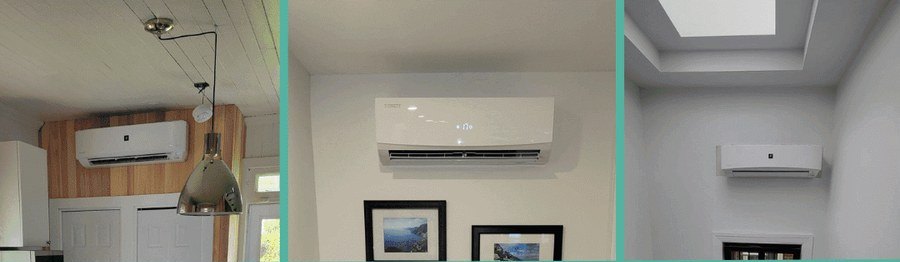
Choosing a heat pump for a Québec winter
Go for an ENERGY STAR cold-climate heat pump: it’s the condition for LogisVert’s $120 per 1,000 BTU/h amount, and it stays efficient in extreme cold (COP of at least 1.75 at -15 °C, according to ENERGY STAR).
Examples: LogisVert assistance on Sharp models
| Model | Works down to | AHRI | BTU/h at -8 °C | LogisVert (indicative) |
|---|---|---|---|---|
| Sharp CHU 12,000 | -30 °C | 217512736 | 18,900 | $2,268 |
| Sharp CHU 18,000 | -30 °C | 217508925 | 22,600 | $2,712 |
| Sharp ZHU1 12,000 | -27 °C | 213238803 | 18,900 | $2,268 |
| Sharp ZHU1 18,000 | — | 213246052 | 22,600 | $2,712 |
Capacity at -8 °C ÷ 1,000 × $120 (ENERGY STAR cold climate), up to 100% of the pre-tax cost, outdoor unit of at least 12,000 BTU/h. Only Hydro-Québec confirms the assistance.
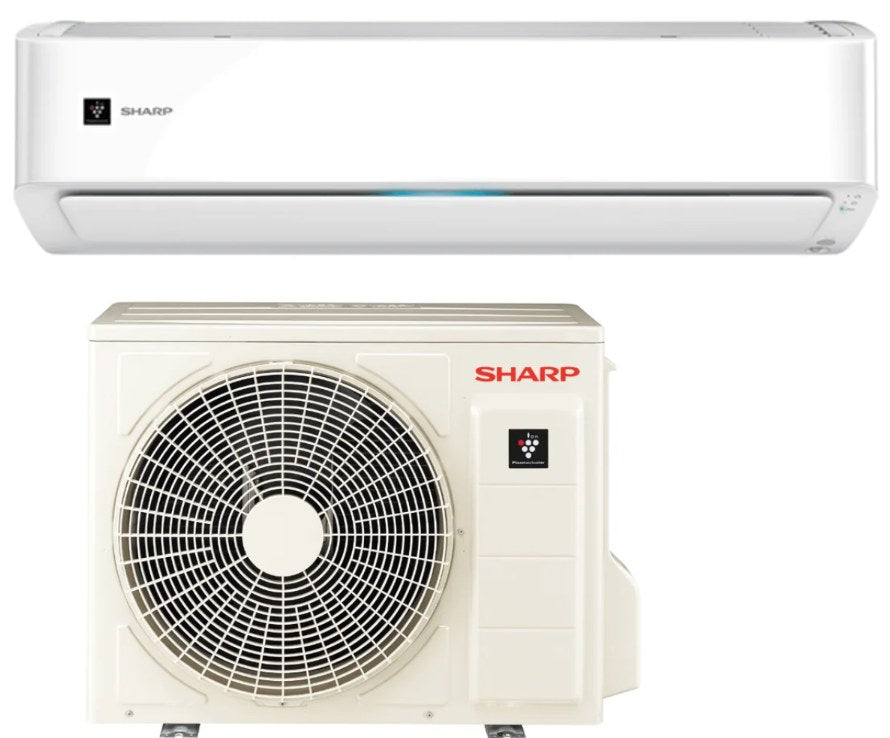
Cold climate, efficiency kept
ENERGY STAR cold climate requires a COP of at least 1.75 at -15 °C: the heat pump stays efficient on the mornings when peaks hit.
08 · Dual-energy DT
Dual-energy Rate DT: worth it with backup fuel, impossible without
Rate DT requires a central system that heats the whole house with fuel when it’s colder than -12 °C or -15 °C, depending on your zone.
Eligible? Four questions
Is your main heating a central system: a furnace or boiler, a central or geothermal heat pump?
Does it have a backup fuel (natural gas, heating oil, propane or wood pellets) that can heat the whole house on its own?
Does it switch automatically from electricity to fuel based on an outdoor sensor installed by Hydro-Québec?
Is your electrical service 200 A, or 400 A and up (not 320 A)?
Answer the four questions
A single “no” is enough to rule out Rate DT.
A single “no” is enough to rule out Rate DT.
Rate DT’s break-even point
What share of your kWh falls below the threshold?
8%of your kWh below the threshold
Rate D$2,359
DT (electricity)$1,949
Rate DT costs $410 less in electricity. Beyond 14.6 % of your kWh below the threshold, it costs more than Rate D.
Electricity only, over one year: the backup fuel comes on top. Hydro-Québec says Rate DT is generally cheaper over a year, but it can cost more depending on your habits and a harsh winter.
How dual energy switches over
Hydro-Québec’s sensor tells the system when to switch to fuel. The two sources never run at the same time.
Rate DT by share of cold
Annual electricity cost by share of kWh below the threshold. Same choice as the slider above.
Rate DDT (electricity)Break-even point: at 14.6%
Heating with natural gas? Hydro-Québec’s dual-energy offer with Énergir ($7,300) or Enbridge Gaz Québec ($6,800) helps add a central heat pump to a home’s gas furnace. AirGreen installs the heat pump; the gas work is done by a licensed partner. See dual energy with Énergir · Chauffez vert
09 · Calendar
Flex D peak demand events: the 2026-2027 winter at a glance
Tap a day to see if a peak can fall on it. In yellow: days when Hydro-Québec never calls an event.
MonTueWedThuFriSatSun
Peak possibleNo peakSelected day
Thursday December 24, 2026
No peak that day
Hydro-Québec excludes this date: on Flex D, you pay the off-peak price all day.
12 a.m.6 a.m.10 a.m.4 p.m.8 p.m.
Days in the winter121 days
Days with no possible peak8 days
Maximum peak hours120 h
Noticeby 3 p.m. the day before
If I sign up on…
1
Friday September 25, 2026Request it in your Customer Space, on hiloenergie.com or through Customer Service.
2
Friday October 2, 2026At the latest: Hydro-Québec’s answer, within 5 business days.
3
Saturday October 3, 2026At the latest: Flex D applies, the day after acceptance.
4
December 1, 2026First day a peak can happen. Until then, you pay Rate D prices.
No peaks on these days
December 24, 25, 26 and 31, 2026; January 1 and 2, 2027; Good Friday (March 26) and Easter Monday (March 29).
Sign up early: in summer, Flex D has exactly the same prices as Rate D (7.065¢ and 11.142¢). So signing up in October costs nothing extra.
10 · Compare
The four options side by side
Tell us how you heat: options that don’t apply fade out.
| Option | Who can get it | Winter, off-peak | Peak or extreme cold | Summer | The risk |
|---|---|---|---|---|---|
| Rate D | Any residential account, by default | 7.065¢, then 11.142¢ | No increase | Same prices | None |
| Flex D | Account eligible for Rate D, smart meter, Customer Space | 4.886¢, then 9.103¢ | 46.463¢, 120 h at most | Rate D prices | Paying more than Rate D if you don’t cut back |
| Dual-energy DT | Compliant central system with backup fuel | 5.131¢ | 30.001¢ below the threshold, whole house | 5.131¢ | Harsh winter; fuel extra |
| Winter Credit Option | Only accounts enrolled as of March 31, 2026 | Rate D prices | Credit of 58.490¢ per kWh shed | Rate D prices | Closed to new customers |
11 · True or false
Eight myths about Flex D and Rate DT
Tap True or False: the explanation shows up right away.
Flex D costs more in summer.
Hydro-Québec can call two peaks on the same day.
I can sign up for the Winter Credit Option this winter.
My wall-mounted heat pump qualifies me for Rate DT.
On Rate DT, only heating pays 30.001¢ in extreme cold.
If Flex D costs me more, Hydro-Québec refunds the difference.
You get notified the day before a peak.
A peak can fall on Christmas Day.
12 · Before December 1
Seven things to sort out before the first peak
0 out of 7 done. Tick them off as you go.
Has your heat pump been through more than a few winters? Have it serviced before December: poorly maintained, it can use up to 25% more electricity, and every peak kWh costs 46.463¢. Book an appointment
13 · The pitfalls
Six details that cost you when you learn them in February
All taken from Hydro-Québec’s Electricity Rates in effect April 1, 2026.
Opting out
Leaving too early locks you out
If you leave Flex D before completing a full winter, you can’t come back that winter or the next.
Winter Credit Option
The option is closed to new customers
Since April 1, 2026, it only applies to accounts that already had it on March 31, 2026. And you can’t combine it with Flex D.
Two a day
Morning and evening is possible
Hydro-Québec can call up to 2 four-hour events on the same day, with at least 6 hours between them.
30.001¢
On Rate DT, the whole house pays top price
Below -12 °C or -15 °C, all your consumption moves to 30.001¢: hot water, stove, dryer, not just heating.
Wall-mounted
A wall-mounted heat pump doesn’t qualify you for Rate DT
Rate DT requires a central system with backup fuel and automatic switchover. Wall-mounted units and baseboard heaters: Rate D or Flex D.
No safety net
No refund if Flex D costs more
The 2026 Electricity Rates offer no guarantee that you’ll pay the cheaper of the two. Do the math before you sign up.
14 · What we know
What’s set, and what nobody knows yet
Set until March 31, 2027
- Prices for all rates, in effect since April 1, 2026.
- The possible hours: 6–10 a.m. and 4–8 p.m., from December 1 to March 31.
- The cap: 120 peak hours, 2 events per day at most.
- Peak-free dates: December 24, 25, 26 and 31, January 1 and 2, Good Friday and Easter Monday.
- The Winter Credit Option stays closed to new accounts.
Still unknown
- How many events this winter: Hydro-Québec calls them based on demand, up to 30.
- The weather: a cold winter adds peaks and, on Rate DT, more hours at the high price.
- Prices after April 1, 2027.
- Your own profile during peaks: your Customer Space shows it after a few events.
15 · Frequently asked questions
The questions we get before every winter
When do peak demand events happen?
Only from December 1 to March 31, 7 days a week, between 6 and 10 a.m. or between 4 and 8 p.m. No events on December 24, 25, 26 and 31, January 1 and 2, Good Friday or Easter Monday.
AirGreen · Heat pumps in Montréal, Laval, South Shore and North Shore
Whatever your rate, the cheapest kWh is the one your heat pump saves you
We help you choose a properly sized cold-climate heat pump, check its indicative LogisVert amount and install it. For a dual-energy system, the gas or heating oil work is done by a licensed partner.
RBQ 5645-9605-01Subcategories 15.8 Ventilation, 15.10 Refrigeration and 16 Electricity.
AHRI on every product pageAHRI number and indicative LogisVert amount shown on every product page.
On-site estimateFree, for the right size and the right location.
Quote within 24 hoursWith the indicative LogisVert amount for the model you choose.
Hydro-Québec never does phone or door-to-door solicitation for LogisVert. You choose your rate in your Customer Space, never through a salesperson.
Sources checked September 25, 2026
- Hydro-Québec, Electricity Rates in effect April 1, 2026 (sections 2, 5, 8 and 9; articles 1.1, 2.5, 2.29 to 2.44, 2.58 to 2.73).
- Hydro-Québec, 2026 Electricity Rates grid (2026G028-2F), 3% increase as of April 1, 2026.
- Hydro-Québec, “Rate Flex D” page (accessed September 25, 2026).
- Hydro-Québec, “Rate DT – Dual energy” pages, overview and how it works (accessed September 25, 2026).
- Hydro-Québec, “Winter Credit Option” page (accessed September 25, 2026).
- Hydro-Québec, “Bilan des efforts collectifs” (collective effort results), winter 2025-2026 (estimated data, validated in summer 2026).
- Hydro-Québec, “Dual energy – electricity and natural gas” (Énergir, Enbridge Gaz Québec, Chauffez vert).
- Hydro-Québec, “Using your heat pump in winter” and maintenance tips.
- Hydro-Québec, LogisVert Participant Guide, version 1.10 (September 15, 2026).
The amounts shown are estimates based on official prices; only your Hydro-Québec bill is definitive, and only Hydro-Québec confirms the LogisVert assistance granted.