
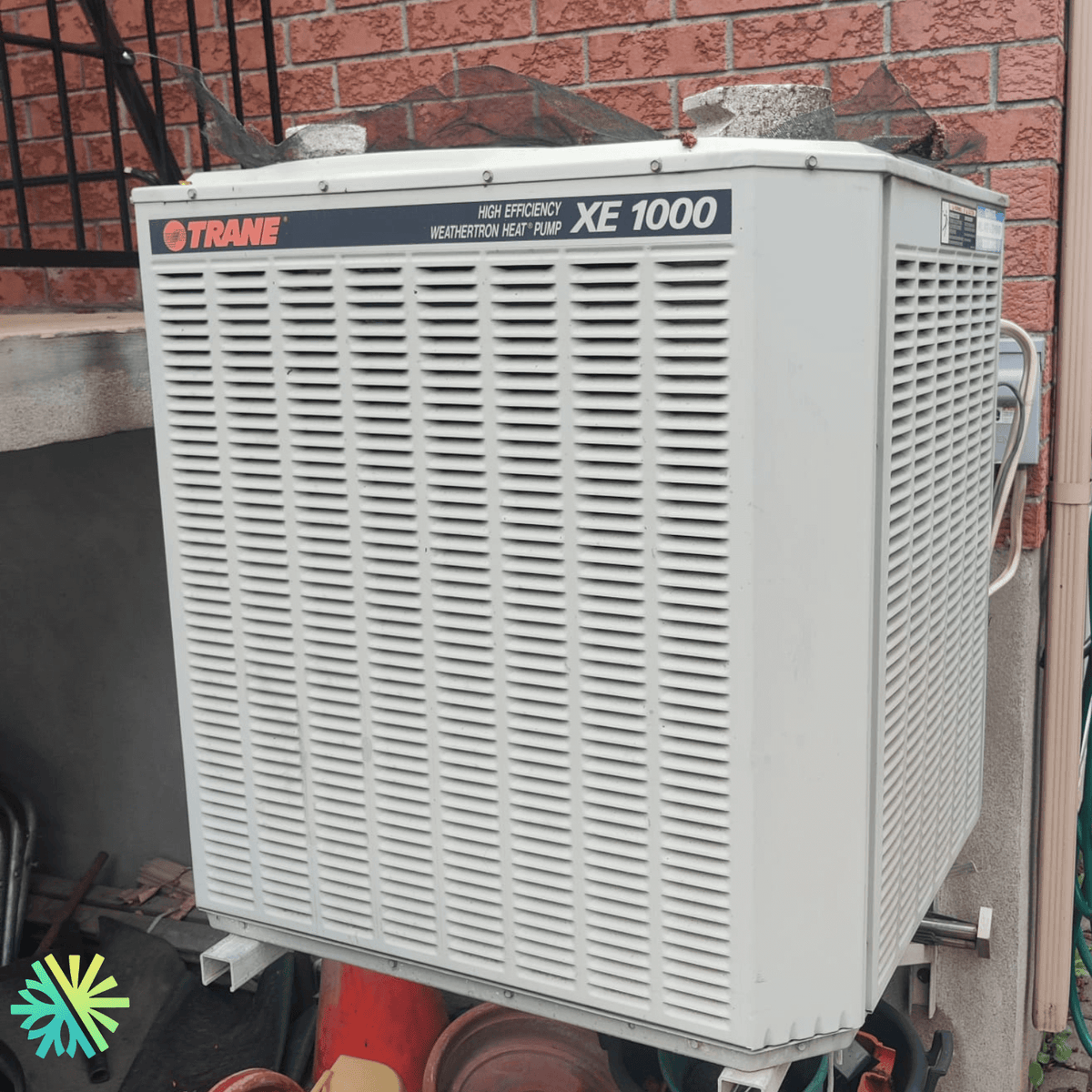
Service Call of a Trane Heat Pump in Beaconsfield
Facing a heat pump disaster? Read how AirGreen's expert service turned a hopeless situation into a triumphant repair in Beaconsfield!
- City
- Region
- Equipment
- Brand
- Challenges
- Published
The job on one screen
The article, chapter by chapter
A Remarkable Rescue: Bringing a Trane Heat Pump Back to Life
When it comes to HVAC solutions, the devil is often in the details—and at AirGreen, we thrive on turning challenging scenarios into tales of triumph. Our recent service call in Beaconsfield exemplifies just how our expertise and dedication can breathe new life into what might seem like hopeless cases.
Background and Challenge
On a crisp morning in Beaconsfield, we received a call that would put our skills to the test. A homeowner was grappling with a malfunctioning Trane heat pump, an essential part of their home's climate control system. The stakes were high; the customer had consulted multiple technicians who suggested that the machine was beyond repair. Faced with the grim prospect of a costly replacement, the homeowner turned to AirGreen as their last hope.
Discovery and Diagnosis
Upon arrival, our team conducted a thorough assessment of the system. Trane machines are known for their durability and efficiency, but like any complex machinery, they can succumb to the rigors of extensive use. Initial diagnostics pointed towards multiple potential faults, but our experienced technicians suspected something deeper—a misdiagnosed underlying issue that previous experts had overlooked.
The real breakthrough came when we decided to inspect the system's electronic control module, a component often ignored during routine checks. Our hunch was right; a faulty sensor within the module was sending incorrect signals, causing the system to shut down intermittently.
The AirGreen Touch: Repair Over Replacement
Understanding the root cause allowed us to focus on a precise, effective solution. Instead of advising our client to invest in a new unit, we replaced the defective sensor and updated the firmware to enhance the system's overall responsiveness. This not only solved the immediate problem but also improved the heat pump's efficiency, ensuring it would provide reliable service for years to come.
Results and Client Satisfaction
The repair was a success, much to the delight of the homeowner. The Trane heat pump was back in action, performing even better than before, thanks to our targeted interventions. This service call not only saved the client significant expense but also reinforced the value of a second opinion and the importance of expert diagnostics.
Why Choose AirGreen for Your HVAC Needs?
- Expertise in Advanced Diagnostics: We don’t just fix symptoms; we diagnose and treat the root causes of HVAC issues.
- Cost-Effective Solutions: Our focus is on extending the life of your existing equipment through precise repairs, saving you money in the long run.
- Customer-Centric Service: We listen to our clients and tailor our services to meet their unique needs, ensuring satisfaction with every job.
Final Thoughts
Our work in Beaconsfield is a testament to AirGreen's commitment to excellence. Whether you're dealing with a malfunctioning heat pump or need a routine service check, our team is equipped to handle any challenge, proving that sometimes, a skilled hand and a fresh perspective are all you need to restore comfort and peace of mind.
How the job unfolds
The main steps of this kind of job at AirGreen. Every house has its quirks: the estimate brings them out.
The symptoms, since when, the model (on the unit's label) and the error code if there is one.
We look for the cause, not just the symptom: readings, components, installation.
Repair, part to order or replacement, depending on the failure. We explain what we found.
The repair is done and parts replaced as needed.
The unit is restarted and checked in its operating modes.
What caused the failure and what can keep it from coming back.
- Your callThe symptoms, since when, the model (on the unit's label) and the error code if there is one.
- On-site diagnosisWe look for the cause, not just the symptom: readings, components, installation.
- The optionsRepair, part to order or replacement, depending on the failure. We explain what we found.
- The workThe repair is done and parts replaced as needed.
- TestsThe unit is restarted and checked in its operating modes.
- AdviceWhat caused the failure and what can keep it from coming back.
What we check on a job like this one
Each number is a point we check on site. Switch between summer and winter to watch air and heat move.
In summer, the outdoor unit rejects the house's heat outside.
Generic illustration of this type of installation, not a survey of this job site. Tap a number.
It captures or rejects heat outside. It sits on a level base, above the snow, with free space all around.
The insulated refrigerant lines enter the house through a sealed opening and run to the indoor coil.
A shut-off switch near the outdoor unit isolates it safely for service.
Sitting on the indoor module, it moves heat between the house air and the refrigerant.
Electric furnace or air handler: its fan pushes air through the ducts. The electric backup takes over in extreme cold.
Supply ducts bring air to the rooms; returns bring it back to the unit. Their condition matters as much as the unit's.
It protects the coil and the fan. A dirty filter cuts airflow, so it gets checked regularly.
It runs the heat pump and the backup heat. It must be compatible with the installed system.
Good habits, once the unit is in place
Six simple habits that keep the unit going. Your list stays on this device.
What to do, season by season
Three habits per season for this unit. They take a few minutes and prevent many calls.
- Check the indoor module's filter.
- Clear winter debris from the outdoor unit.
- Test cooling before the heat arrives.
- Check the filter more often in peak season.
- Keep registers and returns clear.
- Watch condensate drainage near the coil.
- Change or clean the filter.
- Test heating and backup heat before the cold.
- Book periodic maintenance.
- Clear snow around the outdoor unit.
- Store nothing in front of the indoor module.
- Note any unusual noise or smell and call us.
The right pages, at the right time
Four statements: true or false?
It all comes down to details you have just seen.
1. A central heat pump uses the house's ducts.
It connects to the existing ducts to heat and cool everywhere.
2. In extreme cold, electric backup heat can take over.
The indoor module (furnace or air handler) works with the heat pump and takes over in extreme cold.
3. The filter only gets changed when the unit breaks down.
A dirty filter cuts airflow. It gets checked regularly.
4. You can reuse the old unit's size without checking.
The house may have changed: insulation, windows, added rooms. Capacity is confirmed on site.
0 / 4 right answers
What people ask us about this kind of work
What should I have ready before calling?
Repair or replace?
Can I keep my current ducts?
What happens in extreme cold?
Furnace, air handler, ducted: what is the difference?
Are there grants?
Do I need a permit?
Does AirGreen hold the required licences?
Is the estimate free?
No question matches. Write to us: we answer.
More jobs to see, near you
By town, by equipment or by region: browse more than 4,700 published projects.
Each dot: a town where AirGreen has published projects. The glowing dot: this job.
An on-site estimate, the right capacity, the right equipment.
The on-site estimate is free and the quote follows within 24 hours.
Text and photo: a real AirGreen Climatisation & Chauffage job. The diagrams are generic illustrations of the type of installation, not a survey of this job site. Sources of the added figures: airgreen.ca product pages (NEEP / AHRI performance), Hydro-Québec (Heat pumps page, LogisVert, read on 13 October 2026), Régie de l’énergie (rate D as of 1 April 2026).