
Repair Service of a York Central AC System on Nun’s Island
Freon leak? No problem! See how AirGreen revived a York Central AC on Nun’s Island, saving money and extending its life. Read the full story now!
- City
- Region
- Equipment
- Brand
- Challenges
- Published
The job on one screen
The article, chapter by chapter
Breathing New Life into a York Central AC System on Nun’s Island
Located in the serene and picturesque setting of Nun’s Island, a York Central Air Conditioning system had been the unsung hero of its household, providing cool relief during sweltering summers and ensuring year-round comfort. Recently, however, the system began to falter, prompting the homeowners to call on AirGreen, the trusted HVAC specialists serving Montreal and its surrounding areas.
This service call wasn’t just about fixing an issue; it was about preserving comfort and extending the life of a machine that still had much to offer. The result? A successfully repaired system operating at peak performance without the need for a costly replacement.
The Problem: Detecting and Repairing a Freon Leak
When we arrived on the scene, the homeowners explained that their York Central AC System had been losing its cooling power. After conducting a detailed inspection, we identified the problem—a freon leak. Freon leaks, while relatively common, are a serious issue for any air conditioning system. They can lead to diminished performance, increased energy consumption, and environmental concerns if left unchecked.
Using our advanced diagnostic tools, we carefully located the source of the leak. It was found in one of the copper lines, a common stress point for systems that have provided years of dependable service. Despite this issue, the rest of the unit was in excellent condition, making it an ideal candidate for repair rather than replacement.
The Repair Process: Restoring the York Central AC
Repairing a freon leak requires expertise and precision. Here’s how we handled this project:
-
Locating the Leak
Using state-of-the-art detection tools, we pinpointed the exact location of the freon leak. In systems like York, leaks are often found at connection points or areas that experience consistent stress over time. -
Sealing the Leak
Once identified, we sealed the leak using industry-standard materials and techniques to ensure the integrity of the system. We also reinforced the surrounding area to prevent future leaks. -
Recharging the System
After sealing the leak, we recharged the system with the appropriate type and amount of refrigerant, ensuring that the AC would deliver consistent cooling. For added peace of mind, we used an environmentally friendly refrigerant approved for York systems. -
Testing and Verifying
Finally, we conducted a series of tests to confirm that the system was functioning optimally. We checked the airflow, cooling consistency, and energy efficiency to ensure everything was running like new.
Why Repair Instead of Replace?
In today’s world, it’s tempting to replace appliances at the first sign of trouble. However, at AirGreen, we believe in sustainability and cost-effective solutions. Here’s why repairing this York Central AC System was the right decision:
-
Reliability of York Systems
York systems are built to last. Even with years of use, this unit showed no signs of major wear, making repair a practical and economical option. -
Significant Cost Savings
Repairing the freon leak and recharging the refrigerant cost a fraction of what replacing the entire system would have. -
Environmental Responsibility
Repairing instead of replacing reduces waste and conserves resources, aligning with our commitment to eco-friendly practices.
The Outcome: A Thrilled Homeowner and a Revived AC System
After completing the repair, we explained every step of the process to the homeowner and offered tips on how to maintain their system moving forward. The York Central AC was back to delivering cool, refreshing air throughout the home, performing just as it did when it was first installed.
The homeowner was overjoyed, not only because of the quick and affordable repair but also because they avoided the unnecessary expense of replacing a perfectly good system. As they said, “It’s like having a brand-new system without the price tag!”
Maintenance Tips for Your Central AC System
To keep your central AC running smoothly for years to come, here are a few maintenance tips:
-
Regularly Check and Replace Filters
Dirty filters reduce airflow and efficiency. Replace or clean them every 1-3 months, especially during heavy usage periods. -
Clear Debris Around the Outdoor Unit
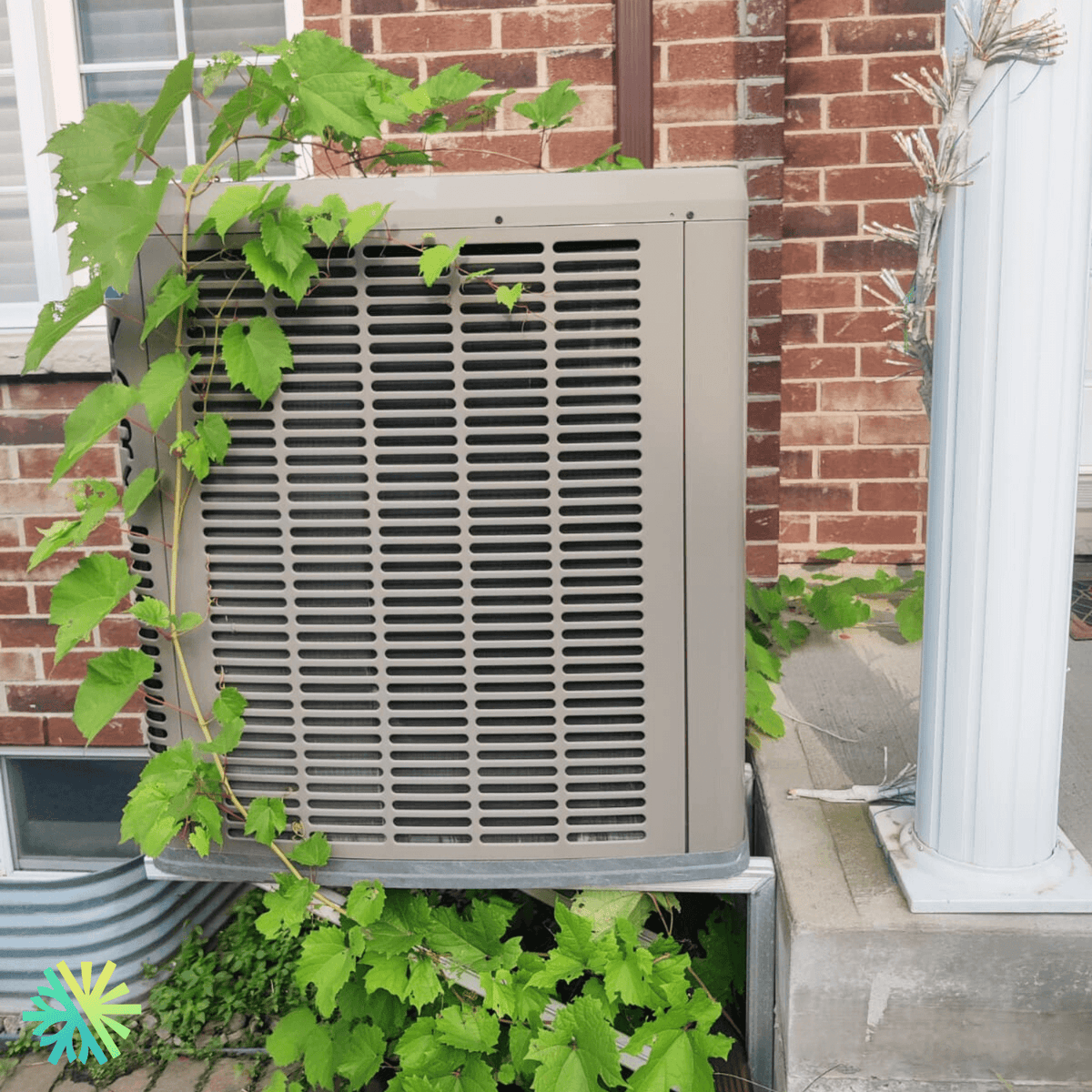
Ensure the outdoor unit is free from leaves, dirt, and vines (like the ones we found near this system!) to maintain proper airflow. -
Schedule Annual Maintenance
An annual tune-up can catch minor issues before they become major problems and keep your system running efficiently. -
Watch for Warning Signs
If your system struggles to cool, makes unusual noises, or increases your energy bills, call a professional immediately.
Why Choose AirGreen for Your HVAC Repairs?
At AirGreen, we pride ourselves on delivering exceptional service to homeowners in Montreal, Laval, Longueuil, and surrounding areas. Here’s what makes us the go-to choice for HVAC repairs:
-
Experienced Technicians
Our team is trained to handle everything from minor repairs to major system overhauls with care and precision. -
Customer-Centric Approach
We prioritize repairs whenever possible, saving you money while reducing environmental impact. -
Transparent Pricing
No hidden fees or surprises—just clear, honest quotes for every job. -
Commitment to Excellence
Whether it’s a York system or any other brand, we use only the best tools and techniques to ensure durable results.
Conclusion: Preserving Comfort, One Repair at a Time
This repair project on Nun’s Island is a testament to the importance of professional intervention and preventative maintenance. By addressing the problem promptly, the homeowners not only extended the life of their system but also ensured their comfort for years to come.
If your HVAC system is showing signs of trouble, trust AirGreen to restore its performance. Contact us today to schedule your next service and experience the difference of working with Montreal’s HVAC experts!
How the job unfolds
The main steps of this kind of job at AirGreen. Every house has its quirks: the estimate brings them out.
The symptoms, since when, the model (on the unit's label) and the error code if there is one.
We look for the cause, not just the symptom: readings, components, installation.
Repair, part to order or replacement, depending on the failure. We explain what we found.
The repair is done and parts replaced as needed.
The unit is restarted and checked in its operating modes.
What caused the failure and what can keep it from coming back.
- Your callThe symptoms, since when, the model (on the unit's label) and the error code if there is one.
- On-site diagnosisWe look for the cause, not just the symptom: readings, components, installation.
- The optionsRepair, part to order or replacement, depending on the failure. We explain what we found.
- The workThe repair is done and parts replaced as needed.
- TestsThe unit is restarted and checked in its operating modes.
- AdviceWhat caused the failure and what can keep it from coming back.
What we check on a job like this one
Each number is a point we check on site. Switch between summer and winter to watch air and heat move.
In summer, the outdoor unit rejects the house's heat outside.
Generic illustration of this type of installation, not a survey of this job site. Tap a number.
It captures or rejects heat outside. It sits on a level base, above the snow, with free space all around.
The insulated refrigerant lines enter the house through a sealed opening and run to the indoor coil.
A shut-off switch near the outdoor unit isolates it safely for service.
Sitting on the indoor module, it moves heat between the house air and the refrigerant.
Electric furnace or air handler: its fan pushes air through the ducts. The electric backup takes over in extreme cold.
Supply ducts bring air to the rooms; returns bring it back to the unit. Their condition matters as much as the unit's.
It protects the coil and the fan. A dirty filter cuts airflow, so it gets checked regularly.
It runs the heat pump and the backup heat. It must be compatible with the installed system.
Good habits, once the unit is in place
Six simple habits that keep the unit going. Your list stays on this device.
What to do, season by season
Three habits per season for this unit. They take a few minutes and prevent many calls.
- Check the indoor module's filter.
- Clear winter debris from the outdoor unit.
- Test cooling before the heat arrives.
- Check the filter more often in peak season.
- Keep registers and returns clear.
- Watch condensate drainage near the coil.
- Change or clean the filter.
- Test heating and backup heat before the cold.
- Book periodic maintenance.
- Clear snow around the outdoor unit.
- Store nothing in front of the indoor module.
- Note any unusual noise or smell and call us.
The right pages, at the right time
Four statements: true or false?
It all comes down to details you have just seen.
1. A central heat pump uses the house's ducts.
It connects to the existing ducts to heat and cool everywhere.
2. In extreme cold, electric backup heat can take over.
The indoor module (furnace or air handler) works with the heat pump and takes over in extreme cold.
3. The filter only gets changed when the unit breaks down.
A dirty filter cuts airflow. It gets checked regularly.
4. You can reuse the old unit's size without checking.
The house may have changed: insulation, windows, added rooms. Capacity is confirmed on site.
0 / 4 right answers
What people ask us about this kind of work
What should I have ready before calling?
Repair or replace?
Can I keep my current ducts?
What happens in extreme cold?
Furnace, air handler, ducted: what is the difference?
Are there grants?
Do I need a permit?
Does AirGreen hold the required licences?
Is the estimate free?
No question matches. Write to us: we answer.
More jobs to see, near you
By town, by equipment or by region: browse more than 4,700 published projects.
Each dot: a town where AirGreen has published projects. The glowing dot: this job.
An on-site estimate, the right capacity, the right equipment.
The on-site estimate is free and the quote follows within 24 hours.
Text and photo: a real AirGreen Climatisation & Chauffage job. The diagrams are generic illustrations of the type of installation, not a survey of this job site. Sources of the added figures: airgreen.ca product pages (NEEP / AHRI performance), Hydro-Québec (Heat pumps page, LogisVert, read on 13 October 2026), Régie de l’énergie (rate D as of 1 April 2026).