
Ask the technicianAn answer written by the AirGreen team ·
Question
Summer 2026: Is Hydrogen Air Conditioning About to Arrive in Montréal?
A Summer Under Energy Pressure: Is Hydrogen the Next Breath of Fresh Air for Air Conditioning in Montréal?
As summer 2026 approaches, a pressing question is making waves among technical and environmental circles in Greater Montréal: Could hydrogen revolutionize the residential and commercial air conditioning industry, just as it has in the automotive and heavy industrial sectors? At AirGreen, always on the lookout for emerging technologies in the HVAC field, we’re offering a serious look at this innovation, its real-world implications, and the place it might soon occupy in homes throughout Montréal, Laval, Longueuil, the North Shore, and the South Shore.
An Energy Revolution Underway: Why Is Everyone Talking About Hydrogen Air Conditioning?
While traditional air conditioning systems rely on electric compressors and refrigerant gases (R-32, R-410A, R-454B, etc.), the idea of using hydrogen as a primary energy source to power these systems represents a true technological shift. Hydrogen, when produced in a green way (electrolysis powered by renewable energy), emits zero CO2 during use—making it a serious contender in the decarbonization of the building sector.
How Would Hydrogen Air Conditioning Work?
A Process Based on Fuel Cells
In practice, a hydrogen-powered HVAC unit would operate with the help of a fuel cell, which converts hydrogen into electricity. This electricity then powers the compressor, fan, and refrigeration circuit. The principle is already well mastered in several industrial sectors, but its adaptation to residential and commercial buildings is a recent development.
A Setup Similar to Conventional Heat Pumps
Hydrogen air conditioning technology shares many components with the wall-mounted or central heat pumps we install daily. However, the outdoor unit is replaced or supplemented by a fuel cell module, which requires safe on-site hydrogen storage.
What Would This Change for Residential and Commercial Users?
Potential Advantages
-
Zero direct emissions: no CO2 or local pollutant emissions during operation.
-
Energy autonomy: in the event of a power outage, a hydrogen-powered installation can continue running.
-
Stable performance: fuel cells offer consistent output, even during extreme heat.
Challenges to Overcome
-
Hydrogen distribution: as of now, hydrogen is not widely distributed in residential sectors in Montréal.
-
High installation costs: hydrogen air conditioning systems currently cost 3 to 5 times more than electric systems.
-
Regulatory framework: hydrogen requires strict safety regulations that are still being developed in Québec.
AirGreen and Innovation: Our Vision for Hydrogen’s Role in HVAC
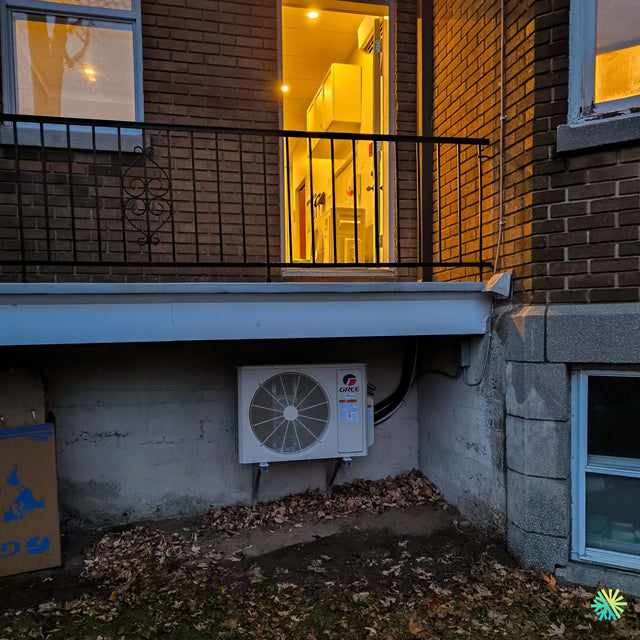
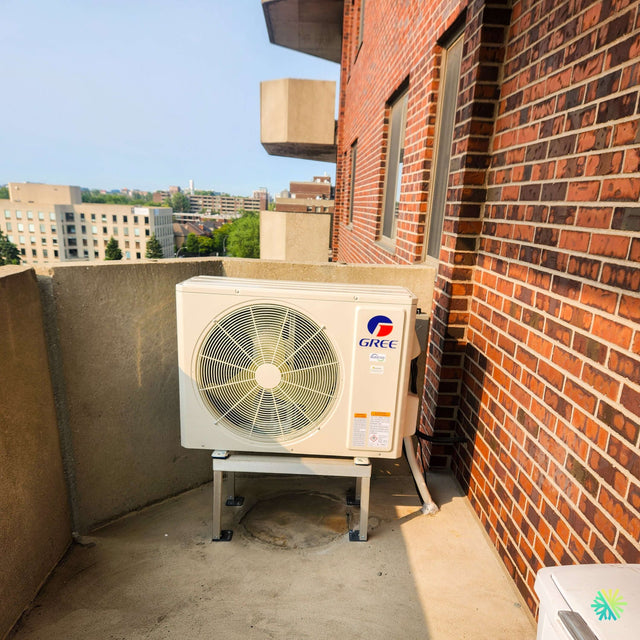
At AirGreen, we’ve always focused on technologies that combine energy efficiency, emissions reduction, and long-term comfort. In 2024 and 2025 alone, we installed hundreds of high-efficiency wall-mounted heat pumps (FUJITSU, Gree, MIDEA, Bosch) using eco-friendly refrigerants such as R-32 or R-454B, with energy savings of up to 40% compared to standard air conditioners.
Our role goes beyond installing machines: we guide our clients in choosing cutting-edge solutions, always tailored to their budgets, technical constraints, and local regulations.
Hydrogen in Pilot Projects: Already Becoming a Reality?
Projects in the Pipeline
-
Hydro-Québec has been developing green hydrogen production at its Bécancour facility since 2023, a site that could eventually supply residential applications.
-
Prototype hydrogen air conditioners have already been tested in Germany and Japan. Initial results show a carbon footprint reduction of over 90% over a 20-year lifespan.
What Needs to Happen for This to Come to Montréal?
-
Local infrastructure: a residential hydrogen distribution network would need to be developed.
-
Government incentives: like the LogisVert rebates available for today’s heat pumps, a new subsidy structure would be essential to spark adoption.
-
Installer training: certified professionals like the AirGreen team would need specific qualifications to handle this new technology safely.
Our Recommendations for Homeowners and Business Owners in Greater Montréal
Should You Wait for Hydrogen or Invest Today?
Our advice is clear: don’t delay improving your comfort while waiting for a still-experimental technology. Today’s high-efficiency Inverter heat pumps already provide:
-
Year-round comfort
-
Significant reductions in electricity bills
-
Eligibility for government rebates (up to $5,000 through the LogisVert program)
And most importantly, they’re available, reliable, and designed for Québec’s harsh climate.
Conclusion: A Promising Innovation, But Not Yet Accessible
Hydrogen-powered air conditioning is undoubtedly one of the most exciting avenues in the upcoming energy transition. But its adoption in Montréal or Laval homes will still require several more years of research, regulatory adaptation, and logistical deployment.
In the meantime, at AirGreen, we help you make the best choices for your comfort today, while staying fully engaged with tomorrow’s innovations.
Contact us now for a free evaluation of your HVAC system and discover how you can improve your comfort, energy efficiency, and environmental footprint—starting this summer.
Another question about your unit?

AirGreen Climatisation & Chauffage
From reading to your home.
An AirGreen advisor assesses your situation on site, free of charge, and gives you a quote within 24 hours.
- RBQ licence 5645-9605-01Subclasses 15.8, 15.10 and 16
- Free on-site estimateAn advisor assesses your needs
- Quote within 24 hoursClear and detailed
Contents
AirGreen glossary