


Cleats for Galvanized Duct (C and S)
The C (drive) and S cleats that join rectangular duct sections end to end.
AirGreen codeAG-VC-01702
514 316-2973 · sales@airgreen.ca
Quick facts
Cleats for galvanized duct join the sections of a rectangular duct end to end — a forced-air main duct (trunk) or a plenum. They come in two profiles that work together: the S cleat and the C cleat.
Two profiles, one solid joint
A rectangular duct does not slip together like a round duct. Its sections join at their edges, and the cleats are what hold them together, aligned and tight. The joint can still be taken apart: the duct can be opened later for a modification without cutting the sheet metal.
The S cleat
Its S profile forms two folds: the flat edge of each section slides into it, one on each side. It is usually installed on the long sides of the duct.
The C cleat
It slides over the outward-folded edges of both sections and locks them together. It is generally installed on the short sides, then its ends are bent over to keep it from sliding.
Tips
- Cut each cleat to the length of the side being joined.
- Install the S cleats first, then lock with the C cleats.
- Seal the finished joint with mastic or aluminum tape: cleats hold the sheet metal, they do not make it airtight.
Available at AirGreen, in Greater Montréal
We assemble, modify and seal main ducts and plenums in Montréal, Laval, Longueuil, on the South Shore and on the North Shore. RBQ licence 5645-9605-01, subcategory 15.8 Ventilation. For availability or a quote, call us at 514 316-2973 or email sales@airgreen.ca with the cleat type and quantity.
The classic way to join rectangular duct
On a rectangular trunk or plenum, sections are joined with two kinds of cleats, each in its own place.
- Joining the sections of a rectangular trunk duct
- Connecting a plenum to a trunk
- Repairing a duct joint that has opened
- Extending an existing rectangular duct
2 sizes, one page
Each size has its own AirGreen code. Tap a row to select it.
Choose the profile: C to lock folded edges, S to receive flat edges.
Specifications
From the manufacturer’s documentation. A value the manufacturer does not publish is not listed.
What to know before installing
- On a rectangular joint, S cleats usually go on the long sides and C cleats on the short sides.
- The ends of the C cleat are folded over to lock it in place.
- Cut the cleat to the length of the side being joined.
- Seal the finished joint with mastic or foil tape: cleats hold the metal, they do not make it airtight.
You may also need
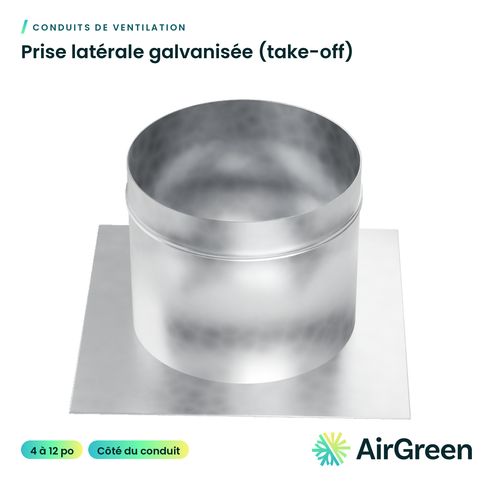 Galvanized Side Take-Off
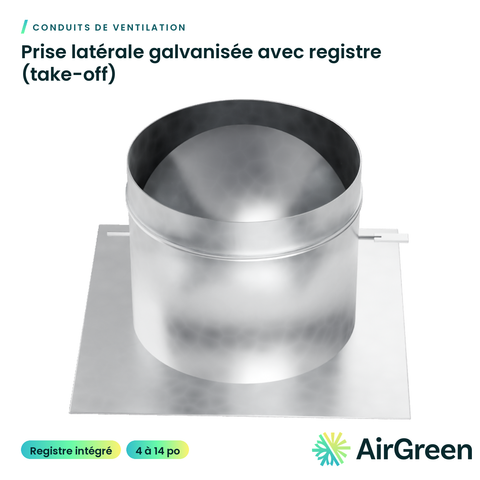 Galvanized Side Take-Off with Damper
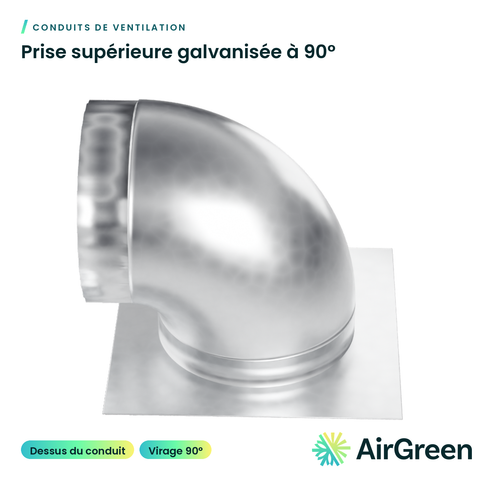 Galvanized 90° Top Takeoff
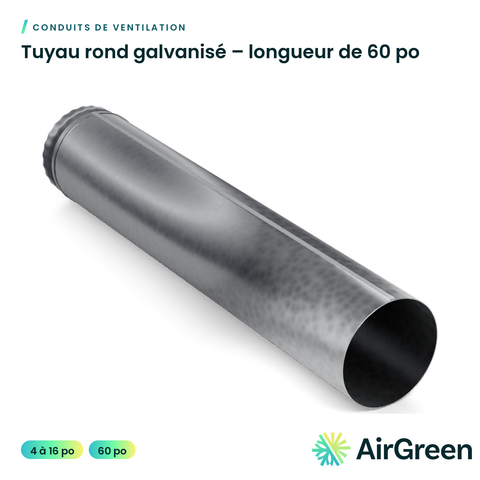 Galvanized Round Pipe – 60 in Length
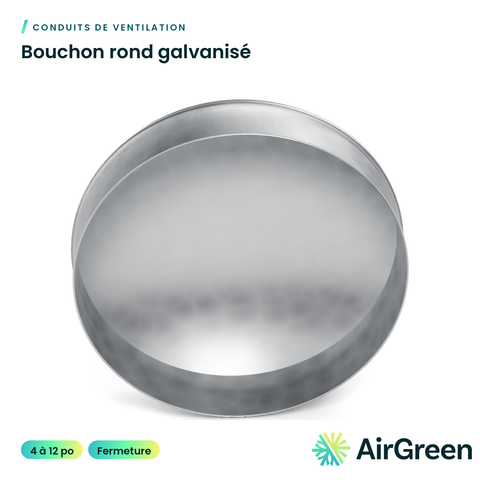 Galvanized Round End Cap
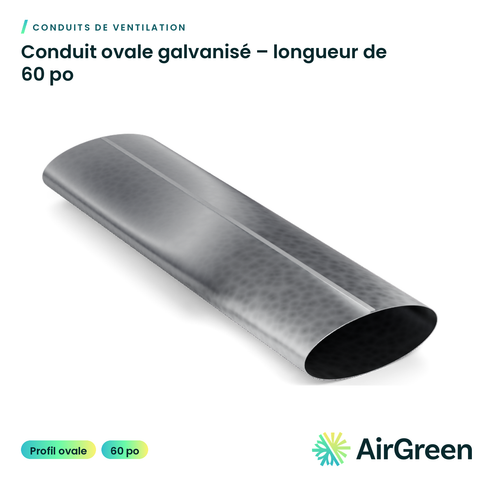 Galvanized Oval Duct – 60 in Length
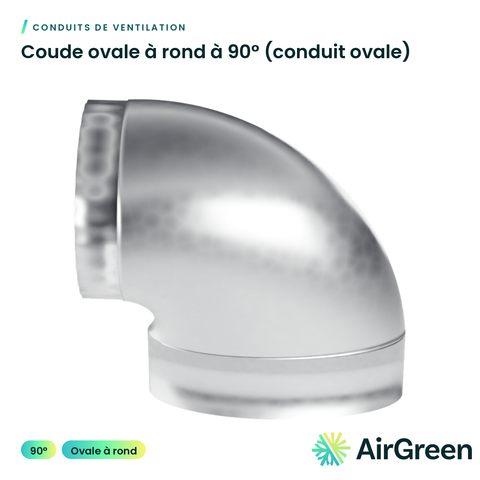 90° Oval-to-Round Elbow (Oval Duct)
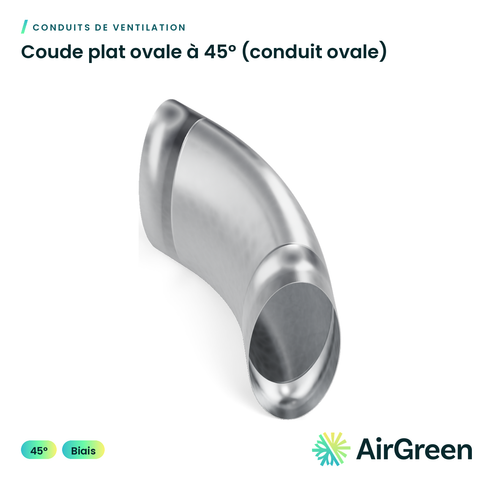 45° Flat Oval Elbow (Oval Duct)
Ventilation ductsSee all
Frequently asked questions
What is the difference between a C and an S cleat?
The S cleat takes the flat edge of each section in its two folds. The C cleat slides over the folded edges of both sections and locks the joint.
Do I need both on one joint?
On a typical rectangular joint, yes: S on two opposite sides, C on the other two.
Are they used on round duct?
No. Round ducts slip together and are screwed; cleats are made for rectangular ducts and plenums.
Can you do the work?
Yes. We assemble, modify and seal trunk ducts and plenums across Greater Montréal.
Solid, sealed duct joints
Tell us the size and the quantity: we confirm availability and send you a quote. Or let our technicians install it for you.
Specifications from the manufacturer’s documentation, checked on October 7, 2026.