
Service Call for an Electric Furnace in Kirkland

What we checked
Items tick as you read the diagnosis.
A central electric furnace that was heating, but not consistently
In Kirkland, in a residence where the main heating system relies on an electric furnace connected to a duct network, our AirGreen team was called for a problem very representative of the central installations we regularly see in Greater Montreal: the house was still receiving warm air, but comfort was no longer stable. Some rooms quickly became cold, the fan seemed to operate irregularly, and the client had noticed that the system was putting more strain on the circuit breakers integrated into the furnace.
This type of service call requires a methodical approach. An electric furnace may seem simple because it has neither a gas burner nor combustion venting, but it remains a powerful HVAC device, powered by high voltage, with several critical components: heating elements, relays, sequencers, blower motor, control board, safety switches, thermostat, filters, distribution ducts, and return air.
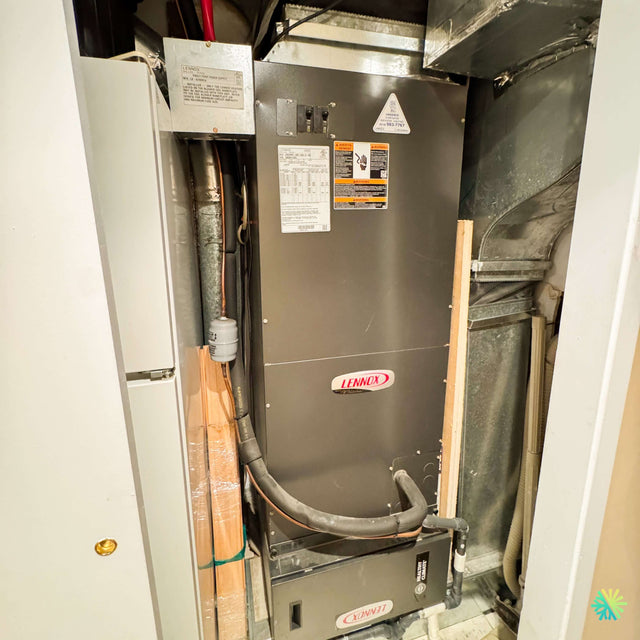
In this specific case, the installation visible on site showed a vertical indoor cabinet connected to a main metal duct, with front access to the device's circuit breakers. The mechanical space was tight, typical of several houses in Kirkland, with a furnace installed near a concrete wall, tight ducts, and limited service access. This detail is important: when equipment operates in a confined space, a small dust buildup, a clogged filter, or a poor electrical contact can quickly cause a performance drop.
Description of the inspected equipment
The device was a central electric furnace connected to a residential ventilation network. The nameplate was not fully readable in the service photo, but the observed configuration matched a multi-stage electric furnace, with a typical capacity around 15 to 20 kW, approximately between 51,000 and 68,000 BTU/h depending on the heating element configuration.
The main elements inspected by our technicians included:
- the circuit breaker panel integrated into the furnace;
- the electrical control compartment;
- the relays and sequencers of the heating elements;
- the blower motor;
- the return air filter;
- air pressure in the ducts;
- low voltage thermostat connections;
- temperature limits and internal safety features;
- the general condition of the metal ducts connected to the device.
The filter box near the unit indicated a common residential size, namely 20 x 20 x 1, which quickly validated a point often underestimated: air restriction caused by a filter that is too dirty, poorly installed, or of poor quality can make the furnace work harder, reduce airflow, increase internal temperature, and trigger protections.
Symptoms reported by the client
The client contacted us because the system no longer provided the same performance as before. The symptoms were intermittent, making the diagnosis more delicate. The furnace did not seem completely stopped, but its behavior was no longer normal:
- more frequent starts than usual;
- uneven heat between rooms;
- blower that sometimes seemed weak;
- periods when the blown air was lukewarm rather than hot;
- concern related to the breaker panel on the furnace;
- more noticeable discomfort during cold periods.
At AirGreen, we know that an intermittent problem with an electric furnace should never be taken lightly. It can stem from a simple clogged filter, but also from a worn relay, a tired sequencer, a blower motor losing performance, a poorly calibrated thermostat, or an electrical connection heating under load.
Our on-site HVAC diagnosis
The intervention began with a complete visual inspection. The goal was to understand not only what was not working but also why the problem occurred mainly at certain times. In a house in Kirkland, as elsewhere in Montreal, Laval, Longueuil, on the North Shore or the South Shore, central systems are often heavily used during temperature fluctuations. Equipment can therefore operate partially while being unable to maintain consistent comfort.
Checking the thermostat and heating request
We first confirmed that the thermostat was indeed sending a heating request. The low-voltage communication was present, but we noticed a slightly irregular response between the thermostat’s request and the full activation of the heating stages. This observation led us to focus on the control circuit rather than a simple air distribution problem.
Inspection of circuit breakers and electrical supply
The furnace had built-in circuit breakers on the front panel, a common setup on central electric units. Our technicians verified that each circuit was properly engaged and that the power supply matched the heating demand. On this type of equipment, several heating elements can activate in sequence. If one stage doesn’t start correctly, the furnace may produce lukewarm air even if the fan is running.
We also paid close attention to signs of overheating, loose connections, and oxidation marks. A slightly weakened connection can create electrical resistance, generate heat, and reduce the device’s reliability.
Airflow control
The 20 x 20 x 1 filter was checked, along with its positioning. An overly restrictive filter can limit air return and disrupt the operation of the electrical elements. The blower must move enough air through the electric heat exchanger to prevent excessive temperature rise inside the cabinet.
In this case, the airflow was lower than what we expected for a central furnace of this capacity. It wasn’t just a filter issue: the inside of the blower compartment also showed signs of dirt buildup, which contributed to reducing overall efficiency.
Testing relays and sequencers
One of the key points of the intervention was checking the relays and sequencers responsible for the progressive activation of the heating elements. In an electric furnace, these components play an essential role. They prevent all the elements from activating abruptly at the same time, which protects the electrical circuit and stabilizes the power demand.
During our tests, a control relay showed an irregular response. It did not always engage properly on demand, which explained why the customer sometimes received only lukewarm air. The furnace was heating but not at full capacity. This type of failure is common: the unit appears to be working but does not deliver its full power.
The solution applied by AirGreen
After validating the electrical readings and observed symptoms, we proceeded with a targeted intervention. The goal was not to unnecessarily replace costly components but to restore reliable and safe operation.
Replacement of the defective component
The faulty control relay was replaced with a component compatible with the furnace configuration. Before replacement, we cut the power, secured the unit, and confirmed the absence of voltage on the affected circuits. This type of intervention must always be performed by a qualified technician, as a central electric furnace can be powered by multiple high-voltage circuits.
Once the part was replaced, we retested the startup. The heating stages responded more consistently, and the blowing temperature stabilized.
Cleaning and optimizing airflow
We then proceeded with a local cleaning of the accessible compartment and recommended more regular filter maintenance. In a central installation, airflow is as important as heating capacity. A 20 kW furnace with poor air return can give the impression of underperformance, even if its heating elements are functional.
We also checked the visible duct transitions around the unit. The metal joints and duct sections were generally in place, but some sealing points required monitoring. Small air leaks in an unheated or partially insulated mechanical room can reduce the perceived efficiency in distant rooms.
Final validation of the heating cycle
After the repair, we performed several complete cycles:
- Heating demand at the thermostat;
- Activation of the blower;
- Gradual triggering of the electric stages;
- Stabilization of the blowing temperature;
- Controlled shutdown at the end of the demand;
- Restart to confirm consistency.
The result was clear: the furnace responded more steadily, the blown air was warmer, and the customer could notice an immediate improvement in comfort.
What this intervention reveals about electric furnaces
An electric furnace is often seen as a robust system, and that’s true when it’s well installed and maintained. However, its reliability depends on several elements working together. A single weak component can cause a performance drop without causing a complete failure.
A partial failure can be costly in energy
When a heating zone isn’t working properly, the furnace may run longer trying to reach the requested temperature. The customer feels less comfort, but electricity consumption can remain high. This is one of the most common traps: the device isn’t completely off, so the service call is delayed, while the system works under poor conditions.
The filter is never a minor detail
The 20 x 20 x 1 filter observed on site reminds us of a simple rule: a filter must be suited to the device, replaced regularly, and installed correctly. A filter neglected for several months can cause a series of problems: reduced airflow, internal overheating, triggering safety limits, blower noise, and decreased comfort.
For a home with central heating, we recommend checking the filter more often during heavy use periods. Homes with pets, recent renovations, construction dust, or heavy traffic may require more frequent replacements.
Built-in circuit breakers should not be used as a permanent solution
Some homeowners are tempted to reset a circuit breaker and wait. If a breaker trips, it’s important to understand why. It could be an overload, a faulty component, an intermittent short circuit, or a connection problem. Reactivating without diagnosis can hide a more serious issue.
Mistakes to avoid with a central electric furnace
During our service calls in Montreal, Laval, Longueuil, on the North Shore, the South Shore, and in West Island, we often observe the same errors:
Waiting for the device to stop working completely
A furnace that heats less effectively is already sending a signal. A drop in heat, longer operation, a new noise, or an irregular cycle deserves a check-up. The quicker the intervention, the higher the chances of limiting the repair.
Installing an overly restrictive filter
Some very high-density filters may seem advantageous, but they can harm airflow if the furnace or duct system is not designed to support them. A better filter is not always a thicker or denser filter. The right choice depends on the system.
Neglecting service access
In the service photo, the space around the device is tight. This is common, but sufficient access to the front panel, filter, and control components must still be maintained. Boxes, bins, or objects stored too close to the furnace can complicate maintenance and slow down urgent interventions.
Confusing thermostat problems with furnace problems
A poorly programmed thermostat can cause discomfort, but you shouldn't jump to conclusions. In this case, the heating demand was indeed present; the problem was rather with the furnace's internal response. That's why a complete diagnosis is essential.
Restored comfort and a safe installation for winter
At the end of the intervention in Kirkland, the electric furnace was operating with a more stable heating sequence, better airflow, and a more reliable response to the thermostat's demand. The client was reassured not only because the heat was back but because the problem had been clearly identified: a weakened control component, worsened by airflow that needed attention.
This type of service call perfectly illustrates AirGreen's approach: inspect before replacing, measure before concluding, explain before leaving. A successful HVAC repair is not just about getting a device running again. It involves understanding the entire system to reduce the risk of recurrence.
Why call AirGreen for an electric furnace repair
Our team regularly works on residential central systems in Greater Montreal, whether it's for an electric furnace, a central heat pump, a central air conditioner, a ventilation system, or a complete equipment replacement. We understand the realities of homes in Kirkland and the West Island: compact mechanical rooms, sometimes aging existing ducts, already heavily used electrical panels, and high heating needs during the Quebec winter.
Our service is based on a combination of technical rigor and practical advice. During a service call, we don’t just look at the broken part. We check the power supply, control, air, safety, accessibility, and the overall condition of the installation.
When to call us for an electric furnace
A professional inspection is recommended if you notice:
- a drop in heat in certain rooms;
- lukewarm air despite a heating demand;
- a fan that starts and stops frequently;
- a circuit breaker that trips;
- a smell of overheating;
- an unusual increase in consumption;
- a new noise in the blower;
- a filter that gets dirty very quickly;
- a thermostat that seems to call for heat without stable results.
These signs do not always mean the furnace needs to be replaced. In many cases, a targeted repair is enough to extend the system’s lifespan and restore comfort.
Local HVAC expertise, from Kirkland to all of Greater Montreal
AirGreen serves residential and commercial owners in Montreal, Laval, Longueuil, on the North Shore, the South Shore, and in the West Island, including Kirkland, Pointe-Claire, Beaconsfield, Dorval, and Dollard-des-Ormeaux. Our technicians understand the demands of the Quebec climate and the real constraints of existing installations.
For an electric furnace repair, a central heating diagnosis, a ventilation check, or an upgrade to a more efficient central heat pump, we always prioritize a solution adapted to the equipment, the building, and the client’s budget.
Final result of the intervention
The service call in Kirkland ended with a furnace restored to working order, a stabilized electrical sequence, improved airflow, and clear recommendations for future maintenance. The client regained more consistent heating without having to immediately replace the entire equipment.
This is exactly what we look for in every AirGreen service call: extending the useful life of HVAC systems when possible, fixing problems at the source, and providing reliable, transparent, and sustainable service.

The same service at your place?
Cleaning, repair or maintenance: tell us about your unit and we schedule the visit.
- RBQ licence 5645-9605-01Subclasses 15.8, 15.10 and 16
- $5M liability insuranceOn every job
- 15+ yearsFamily-owned, based in Montréal