


Brazing Flux – 7 oz
Brazing flux that keeps metal from oxidizing when brass or another metal is part of the joint.
AirGreen codeAG-BR-003
514 316-2973 · sales@airgreen.ca
Quick facts
Brazing flux is applied to a joint before heating to protect the surfaces from oxidation and help the alloy flow. Available in a 7 oz size, it is used for silver brazing brass and dissimilar metals, when the joint is not just copper to copper.
What brazing flux does
When metal is heated, oxide forms on its surface and keeps the alloy from bonding. Flux covers the surfaces during heating, dissolves that oxide and lets the alloy spread and draw into the gap between the tube and the fitting. On a refrigerant line, you need it to braze a brass valve, fitting or accessory, or to join copper to steel.
Flux or no flux?
- Copper to copper: copper-phosphorus rods are generally used without flux.
- Brass, steel, dissimilar metals: flux required, often with a high-silver rod.
- In every case, the rod's label states whether flux is required.
Applying it properly
First clean the surfaces down to bright metal: flux does not replace cleaning. Apply a thin coat to the male part of the joint only; any excess that gets into the tube contaminates the system. After brazing, remove the residue as the manufacturer directs. Read the manufacturer's label and safety data sheet before use, and work in a ventilated area.
Available from AirGreen in Greater Montréal
AirGreen offers this flux for your brazing work in Montréal, Laval, Longueuil, on the South Shore and the North Shore. For availability or a quote, call us at 514 316-2973 or email sales@airgreen.ca with the quantity.
When the joint is not just copper to copper
Flux keeps surfaces clean while heating and helps the alloy flow into the joint.
- Brazing a brass valve, fitting or accessory onto a copper line
- Joining copper to steel or other metals
- Use with high-silver brazing rods
- Repairs on components that are not copper
Specifications
From the manufacturer’s documentation. A value the manufacturer does not publish is not listed.
What to know before installing
- Apply a thin coat to the male part of the joint only, never inside the tube.
- Clean the surfaces to bright metal first: flux does not replace cleaning.
- Remove flux residue after brazing, as the maker instructs.
- Read the maker’s label and safety data sheet before use.
You may also need
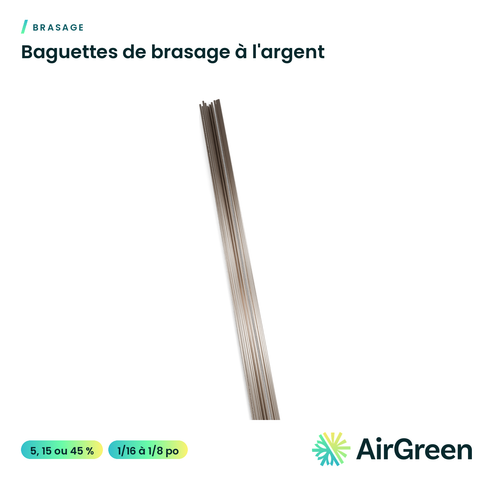 Silver Brazing Rods
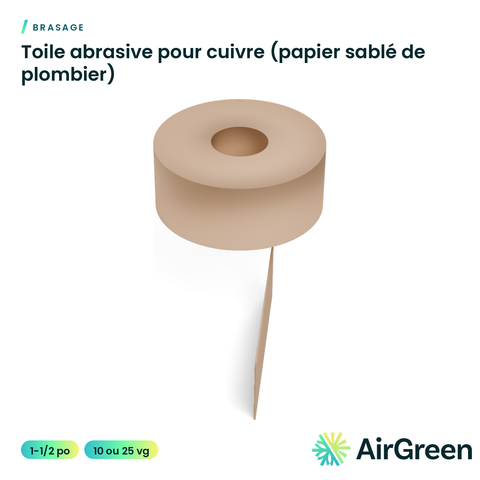 Abrasive Cloth for Copper (Plumber’s Sand Cloth)
 Cool Gel Heat Protection Gel – 1 Pint Aerosol
 Oxygen – Cylinder
 Acetylene – Cylinder
BrazingSee all
Frequently asked questions
Do I need flux for copper to copper?
Not with copper-phosphorus rods, which are generally used without flux on copper. Flux is needed as soon as one part is brass or another metal; the rod label says so.
Where does the flux go?
A thin coat on the male part of the joint, on the outside. Excess that gets inside the tube contaminates the refrigerant circuit.
Should I clean up after brazing?
Yes, remove flux residue as the maker instructs; left in place, it can attack the metal.
Where is the safety data sheet?
It is supplied by the product’s maker. Ask us for it with your order.
Brazing flux for your brass assemblies
Tell us the size and the quantity: we confirm availability and send you a quote. Or let our technicians install it for you.
Specifications from the manufacturer’s documentation, checked on October 7, 2026.