
Service Call for a Lennox Central Heat Pump in Laval-Ouest

What we checked
Items tick as you read the diagnosis.
When a Lennox central heat pump ages, the diagnosis must go beyond simply identifying a failure
In Laval-Ouest, a homeowner contacted us about a recurring problem with their Lennox central heat pump. The system was still heating the house, but irregularly. Some days, the air blown seemed lukewarm, the outdoor unit started hesitantly, and the backup heating took over more often than usual. The customer also noticed a different noise at the outdoor condenser, especially during startups and cold periods.
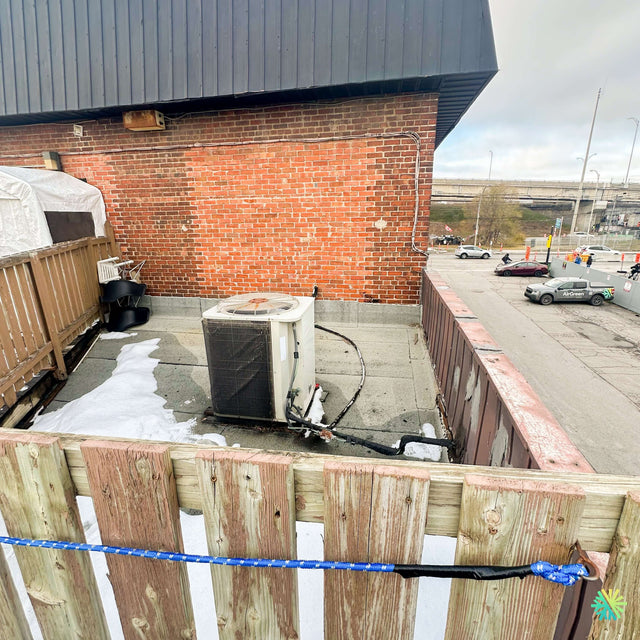
The device in question was a Lennox Dimension generation central heat pump, installed outdoors on an elevated metal stand. This type of unit is typical of residential central systems connected to a duct network: the outdoor unit works with an indoor coil, a furnace or ventilation cabinet, a central thermostat, and, in many Quebec homes, an electric backup. The exact BTU capacity depends on the model’s nameplate, but the installation clearly corresponded to a residential central heat pump designed to heat and cool the entire house.
At AirGreen, we regularly service HVAC systems of this type in Montreal, Laval, Longueuil, on the North Shore and on the South Shore. In this case, the value of the service was not only in repairing a component but in the complete analysis of an aging machine, exposed to Quebec winters, with visible signs of wear on top of the unit, especially around the fan grille.
Symptoms observed before the intervention
The customer described a situation that occurred intermittently. The central heat pump sometimes worked normally, then became less efficient when the outside temperature dropped. The outdoor unit could start, produce a vibration or humming sound, then stop or operate more weakly than expected. Inside, the temperature set on the thermostat was reached more slowly, and comfort became unstable from one room to another.
The main symptoms were as follows:
- irregular starting of the outdoor unit;
- more noticeable noise at the upper fan;
- less consistent heating;
- more frequent use of electric backup;
- presence of rust around the fan grille;
- concern about compressor reliability;
- performance varies depending on outdoor conditions.
On a Lennox central heat pump, these signs can come from several elements: a weakened capacitor, a worn contactor, a tired outdoor fan motor, an air restriction, an unstable defrost control board, an inadequate refrigerant charge, or a sequencing problem between the heat pump and the electric backup.
Our role was therefore to proceed methodically. A central heat pump should never be diagnosed solely based on a noise or isolated symptom. The entire system must be observed in operation.
Visual inspection of the Lennox condenser
Upon arrival on site, our technician inspected the outdoor unit. The Lennox condenser was installed against the building, on a metal support. The height of the support was useful in winter, as it limited the device being buried in snow. However, the top of the unit showed significant wear around the ventilation grille: rust marks, discoloration, dirt accumulation, and aging of the top panel.
This detail is important. On a central heat pump, the outdoor fan must expel air properly. When the grille is rusty, deformed, or dirty, it is necessary to check if the fan spins freely, if the blades rub, if the motor strains, and if vibrations are not amplified by the top panel.
We also checked:
Clearance around the unit
Even if the device was not completely blocked, the snow on the ground and the space near the building could affect water drainage during defrost cycles. A central heat pump working in heating mode naturally produces frost on the outdoor coil. The system must then enter defrost mode to melt this frost. If the water does not drain well, it can refreeze around the base and create additional stress.
The condition of the support
The metal support was functional, but we checked its stability, level, and vibration points. A support that moves slightly can turn a small imbalance of the fan into significant noise perceived inside the house.
Panels and fasteners
On an older unit, screws, panels, and metal corners can vibrate due to the compressor and fan. We therefore checked accessible panels, fastening points, and the general condition of the casing.
Electrical diagnosis: the system’s real weak point
After the visual inspection, we proceeded with electrical tests. It is often at this stage that an intermittent problem becomes much clearer.
On this Lennox central heat pump, the startup behavior indicated a weakness in the power circuit. The compressor and outdoor fan required stable power, but the startup sequence was not as smooth as it should be. We therefore checked the following components:
The run capacitor
The capacitor is an essential part for starting and running the fan motor and, depending on the setup, the compressor. When it loses capacity, the unit may still try to start, but the motor strains, hums, slows down, or overheats. In some cases, the heat pump operates intermittently, which complicates diagnosis for the customer.
Our reading confirmed that the capacitor no longer provided a stable value. It was below the acceptable range for reliable operation. This type of failure is common on devices exposed to many years of hot-cold cycles, humidity, vibrations, and load variations.
The contactor
The contactor acts as an electromechanical switch controlled by the thermostat. It allows power to the outdoor unit when the house calls for heating or cooling. Over time, its contacts can become pitted, oxidized, or less effective. A worn contactor can cause irregular starts, electrical arcs, intermittent cuts, and unstable compressor power.
In this case, the contactor showed signs of wear. It was not completely out of service, but its condition contributed to the system's unstable behavior. On an aging central heat pump, replacing only the capacitor without addressing a worn contactor can lead to a service recall. We therefore recommended a complete correction of the starting circuit.
The outdoor fan motor
The fan motor was tested to check its amperage, speed, noise, and stability. It was still running, but it was sensitive to the capacitor's weakness. The visible rust around the top grille might suggest a major mechanical failure, but tests showed that the main problem was first with the power supply and startup, not a completely seized motor.
Repair performed on site
After diagnosis, we replaced the defective starting circuit components. The weakened capacitor was removed and replaced with a part matching the unit's required values. The worn contactor was also replaced to stabilize the power supply to the central heat pump.
We then proceeded with a complete operational check:
- restarting the outdoor unit;
- measuring the fan amperage;
- verifying the compressor response;
- checking the thermostat during heating demand;
- observing the sequence with electric backup;
- listening for vibrations after repair;
- checking the outdoor airflow;
- inspection of visible pipes and connections.
Starting became more reliable, the buzzing noise decreased, and the outdoor unit regained more stable behavior. The customer noticed that the central heat pump responded better to thermostat commands and that the electric backup no longer had to compensate so quickly for a faulty start.
An HVAC repair that extends the system's useful life and avoids premature replacement
In many service calls, especially on older systems, the customer's first concern is whether the entire machine needs to be replaced. This question is legitimate, especially when a device shows visible rust, unusual noises, and irregular performance. However, a professional inspection often distinguishes normal wear from a truly critical failure.
In this case in Laval-Ouest, the Lennox central heat pump was certainly aging, but it was not necessarily at the end of its useful life. The compressor responded, the fan could still operate, and repairing the electrical components restored a more reliable sequence. Therefore, a complete replacement was not the first solution to propose.
Why the capacitor and contactor are so important
A weak capacitor and a worn contactor may seem like small parts compared to the compressor or coil. Yet, they play a major role in the daily reliability of the device.
A weak capacitor wears out motors
When a motor receives insufficient starting assistance, it can draw more amperage, heat up more, and experience accelerated wear. If the problem is ignored for too long, a low-cost part can eventually cause motor failure or even damage the compressor.
A worn contactor creates instability
A faulty contactor can power the unit irregularly. This instability is especially problematic in winter when the central heat pump must meet frequent and sometimes long demands. Poor power supply can cause shutdowns, difficult restarts, and inefficient cycles.
Together, these two parts influence comfort
The client does not see the capacitor and does not monitor the contactor. What they feel is a house that heats less well, a noisier device, and a potentially higher electricity bill. HVAC repair precisely connects these symptoms to the real technical causes.
Cleaning, clearance, and winter prevention
After the electrical repair, we also advised the client on outdoor unit maintenance. The presence of snow around the condenser and rust on the top part remind us that an outdoor central heat pump works under harsh conditions.
We recommended maintaining sufficient clearance around the unit, especially after storms. Snow should not be pushed against the device, nor should metal tools be used near the panels or coil. Ice formation under the condenser should also be monitored, especially when a metal support is used. Ice buildup can reach the base of the device, hinder defrost drainage, and increase vibrations.
Mistakes to avoid with an aging Lennox central heat pump
This service in Laval-Ouest illustrates several common mistakes we encounter in Greater Montreal.
Waiting for the unit to stop working completely
A difficult start, buzzing, or performance drop are already warning signs. It is better to intervene before the compressor or fan motor undergo prolonged overload.
Replacing the machine without a complete diagnosis
An old unit is not automatically irreparable. In this case, targeted repair stabilized the operation without requiring an immediate full replacement.
Ignoring rust on the top of the unit
Rust is not always the direct cause of the breakdown, but it indicates that the device has been exposed for many years. It justifies a closer inspection of the fan, fasteners, grille, and panels.
Confusing normal electric topping up with performance problems
Electric backup can be normal in very cold weather. However, if it starts too often when the heat pump should still be able to heat efficiently, the system needs to be checked.
Neglecting outdoor clearance maintenance
A central heat pump needs air. Even a good unit loses efficiency if snow, ice, or obstacles hinder airflow around the condenser.
Customer experience after the intervention
At the end of the service call, the client had a clear explanation: the central heat pump was not simply “old and noisy.” It mainly suffered from an electrical starting problem, worsened by normal wear and outdoor conditions. The repair made operation more stable, reduced startup noise, and limited unnecessary use of the electric backup.
We also provided concrete recommendations for the coming weeks: monitor behavior during extreme cold, keep the unit clear, note any unusual noises, and plan preventive maintenance before the cooling season. This approach allows the client to make an informed decision about the system’s future, without pressure and without rushed replacement.
AirGreen expertise tailored to residential central systems
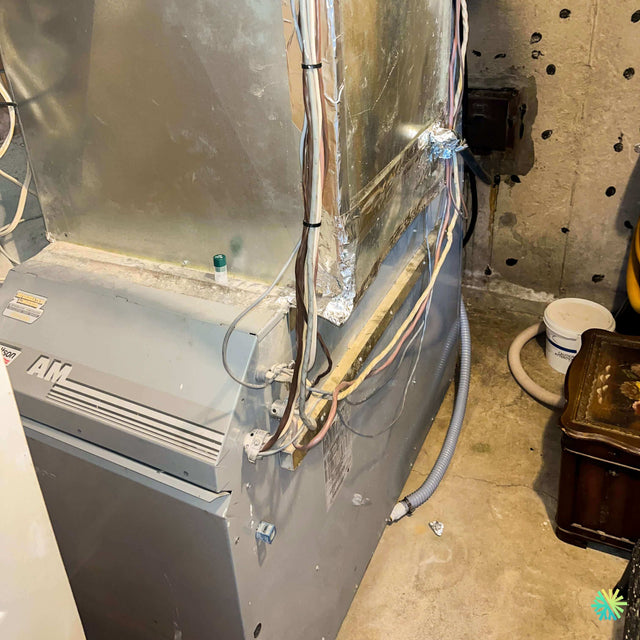
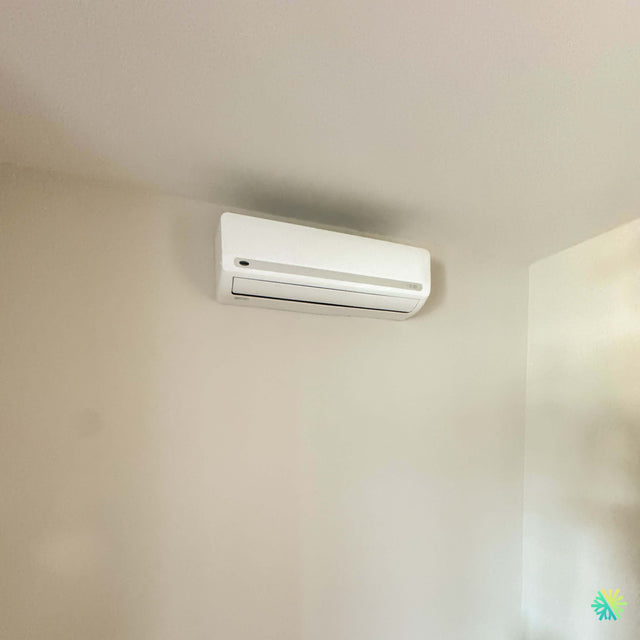
Central heat pumps require a different expertise than wall units. They are integrated into the whole house: ducts, thermostat, electric backup, indoor coil, outdoor unit, and control logic. A poor diagnosis can lead to unnecessary expenses or allow a problem to recur.
At AirGreen, we work on residential HVAC systems in Montreal, Laval, Longueuil, on the North Shore and on the South Shore with a structured approach: visual inspection, electrical testing, mechanical validation, heating cycle observation, and recommendations tailored to the actual condition of the installation.
This service call to Laval-Ouest shows that a well-executed repair can restore reliability to a Lennox central heat pump, improve indoor comfort, and extend the system's useful life. When the right components are tested, symptoms are correctly interpreted, and the outdoor environment is taken into account, the result is more durable and reassuring for the owner.
The same service at your place?
Cleaning, repair or maintenance: tell us about your unit and we schedule the visit.
- RBQ licence 5645-9605-01Subclasses 15.8, 15.10 and 16
- $5M liability insuranceOn every job
- 15+ yearsFamily-owned, based in Montréal