
Head to head · Air exchangers
Air exchanger: the HVI figures that measure performance, FANTECH HERO 150H and HERO 150H-EC
Side by side
Comparison · HRV air exchangers · same cabinet
Same cabinet, two motors: what HVI measures
What makes an air exchanger perform well? Price and brochure wording don't tell you; the HVI directory, however, publishes measurements made under CAN/CSA C439: airflow against duct pressure, watts used, heat recovered at 0 °C and at −25 °C, ventilation lost in extreme cold. Two FANTECH exchangers sold by AirGreen let you read them side by side, since they share the same cabinet and FANTECH ties the second one, the HERO 150H-EC, to its electronically commutated (EC) motors.
 FANTECH HERO 150H
HRV, 6 in, 51 lb
HVID 2505381 · 120 V- 72 cfm at 60 W at 0 °C (HVI)
- Motor type not stated in the FANTECH brochure
 FANTECH HERO 150H-EC
HRV, 6 in, 51 lb
HVID 2505258 · 120 V- 70 cfm at 23 W at 0 °C (HVI)
- EC motors per the FANTECH brochure ("-EC")
1.2 · 3.0cfm of fresh air per watt at each unit's lowest point, HVI test at 0 °C
150 · 172cfm of air supplied at 0.4 in. w.g. of duct pressure (HVI)
80% · 84%sensible recovery (SRE) at 0 °C, at 72 and 70 cfm
22.2% · 26.7%drop in fresh air supplied during the 72-hour test at −25 °C
Estimated operating cost
What the fan costs, in dollars, all year
An air exchanger often runs day and night, twelve months a year. AirGreen estimate at Hydro-Québec's Rate D, taxes included, based on the watts HVI measured at each published test point. Both units are calculated the same way; only their watts change.
Price per kWh (Rate D, April 1, 2026)
HVI test point at 0 °C
HERO 150H$0
HERO 150H-EC$0
One coin = $5 of electricity, taxes included. The airflows of the two test points are not identical; each amount is for the airflow shown.
How this amount is calculated
- Electricity. Power measured by HVI at the chosen test point (0 °C test) × hours per day × 365 days ÷ 1,000. Published points: HERO 150H 72 cfm at 60 W, 93 at 77 W, 150 at 150 W; HERO 150H-EC 70 cfm at 23 W, 106 at 37 W, 157 at 89 W.
- What is not counted. Defrost and extreme cold change the power (HVI publishes 105 W and 47 W at −25 °C), as does the actual duct pressure in the house. The heat recovered by the core is not converted into dollars.
- Price. Hydro-Québec Rate D in effect on April 1, 2026: 7.065¢ per kWh up to 40 kWh a day, 11.142¢ above; average price 9.104¢. GST and QST included (× 1.14975). Grid access charges not counted.
AirGreen method v1.1, ventilation, November 9, 2026. An estimate is used to compare units under the same conditions; this amount is not a promise.
Duct pressure
The stated airflow depends on the house's ducts
The longer, narrower or more bent the ducts, the harder the fan has to push against pressure, and the less air it delivers. HVI measures the fresh air supplied at each pressure step, in inches of water column. Move the slider: the two published curves show step by step, with no value invented between two steps.
Fresh air supplied (net supply airflow, HVI)
HERO 150H
150 cfm
HERO 150H-EC
172 cfm
The diagram illustrates the principle; the airflows come from the HVI directory's airflow tables (Section III), measured from 0.1 to 1.0 in. w.g. for both units (and 1.2 in. for the HERO 150H). The FANTECH brochure states 50 to 148 cfm and 50 to 172 cfm at 0.4 in. w.g.
The other HVI figures
Watts, heat recovered and extreme cold
Figure 1 · fan efficacy
Cfm of fresh air per watt, at 0 °C
"Rated efficacy" published by HVI: net outdoor airflow divided by measured power. The airflows of the two points are not identical; each bar says which one.
Figure 2 · sensible recovery
SRE at 0 °C, by airflow
The SRE accounts for fan electricity; the ASRE, which does not, is 86% for both at the low point.
Figure 3 · extreme cold
72-hour test at −25 °C
Test airflows: 72 and 66 cfm. Fan efficacy: 0.6 and 1.4 cfm per watt.
Figure 4 · ventilation lost to frost
Airflow drop at the end of the −25 °C test
The smaller the number, the less frost and defrost reduce the air. Here, the drop is smaller for the HERO 150H; each figure has its own meaning, none sums up the unit.
Figure 5 · airflow balance in extreme cold
Supply air compared with exhaust air, at −25 °C
Very low temperature airflow imbalance (HVI's VLTAI), averaged over the last 60 hours of the test: 100% means as much air supplied as exhausted. Above 100%, slightly more air comes in than goes out; below, the reverse.
Side-by-side sheet
The two HERO 150 units, line by line
| Value | FANTECH HERO 150H | FANTECH HERO 150H-EC |
|---|---|---|
| HVI directory (CAN/CSA C439) | ||
| Net supply airflow at 0.4 in. w.g. | 150 cfm | 172 cfm |
| Net supply airflow at 1.0 in. w.g. | 87 cfm | 106 cfm |
| Power at the low point (0 °C test) | 60 W at 72 cfm | 23 W at 70 cfm |
| SRE at the low point (0 °C test) | 80% at 72 cfm | 84% at 70 cfm |
| SRE in the extreme cold test (−25 °C) | 63% at 72 cfm | 68% at 66 cfm |
| Ventilation drop at −25 °C, supply air | 22.2% | 26.7% |
| Moisture transfer at −25 °C (NMT) | 0.03 | 0.14 |
| HVI listing (HVID) | 2505381 | 2505258 |
| FANTECH brochure (March 2026, E6128) | ||
| Unit weight | 51 lb (23 kg) | 51 lb (23 kg) |
| Dimensions H × W × D | 24 7/8 × 27 7/8 × 13 3/8 in | 24 7/8 × 27 7/8 × 13 3/8 in |
| Duct collar diameter | 6 in (152 mm) | 6 in (152 mm) |
| Power supply and maximum current | 120 V, 1.4 A | 120 V, 3.0 A |
| Defrost | Recirculation | Recirculation |
| Built-in filter | MERV 3 | MERV 3 |
"higher" marks the higher value of the same measure, under the same conditions (here, airflow at the same pressure). It is not a recommendation. Rows measured at different airflows are not marked. HVI data read on November 17, 2026.
Questions
Questions about air exchanger performance
What does "EC" mean in HERO 150H-EC?
EC stands for an electronically commutated motor. FANTECH's March 2026 brochure ties this model to its EC motors; it does not state the HERO 150H's motor type. What HVI measures is the result: 23 W versus 60 W for an airflow close to 70 cfm at 0 °C.
Is the airflow on the sheet what I will get at home?
It depends on duct pressure. HVI publishes the airflow at each step from 0.1 to 1.0 in. w.g.: 150 and 172 cfm at 0.4 in., 87 and 106 cfm at 1.0 in. The actual airflow is measured after installation, once the duct system is known.
Why does the HERO 150H-EC lose more ventilation at −25 °C?
That is what HVI's 72-hour test measures: a 26.7% drop in supply air versus 22.2%. Frost and recirculation defrost cycles are the cause. The same test gives the HERO 150H-EC an SRE of 68% and 47 W, versus 63% and 105 W for the HERO 150H. Each figure describes a different aspect.
Do both have the same cabinet?
The FANTECH brochure gives them the same dimensions (24 7/8 × 27 7/8 × 13 3/8 in), the same weight (51 lb), 6-in collars and recirculation defrost. HVI lists them under two separate listings, with different measurements.
Is the sound level published?
Neither the HVI directory (Section III) nor the FANTECH brochure consulted publishes a sound level for these two models. This page therefore does not compare noise.
Is an air exchanger covered by LogisVert?
Hydro-Québec's LogisVert participation guide (residential, version 1.10 of September 15, 2026) lists the eligible measures; air exchangers are not among them. Programs change: check the official text before counting on any help.
Both FANTECH exchangers on this page are sold by AirGreen.
An air exchanger is chosen to suit the house's ducts. An AirGreen advisor visits your home and gives you a quote.
Sources
Documents consulted
HVI Certified Products Directory, Section IIIFANTECH HERO 150H (HVID 2505381) and HERO 150H-EC (HVID 2505258): energy ratings and airflows; spreadsheets generated November 4, 2026, consulted November 17, 2026
HVI, Section III cover pagesDefinitions of SRE, ASRE, very low temperature test (VLTVR, VLTAI); rev. December 29, 2017
FANTECH, HERO and ATMO brochure (French edition)"L'air frais est notre super pouvoir" ("Fresh air is our superpower"), March 2026, E6128; consulted November 17, 2026
Hydro-Québec, Electricity RatesApril 1, 2026, Rate D, s. 2.5
Hydro-Québec, LogisVertParticipation guide, residential, version 1.10 of September 15, 2026
Data verified on November 17, 2026. The measurements come from the HVI directory (tests under CAN/CSA C439); dimensions, weight and power supply come from the FANTECH brochure. The cost is an estimate; its method is shown on the page.
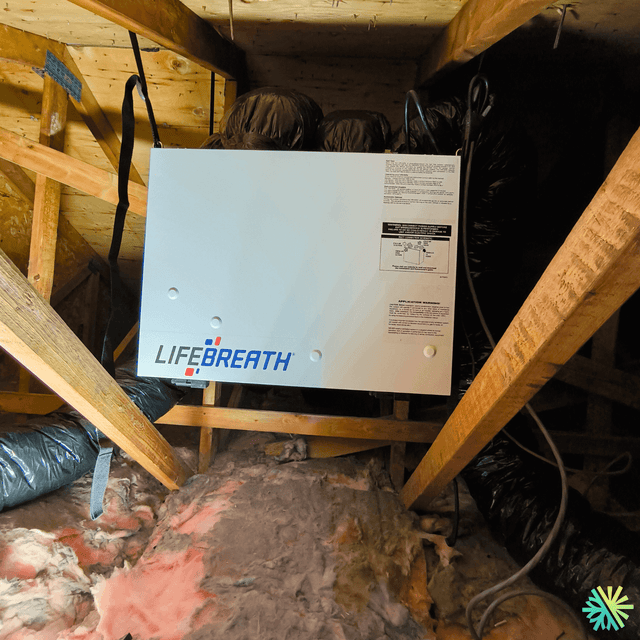
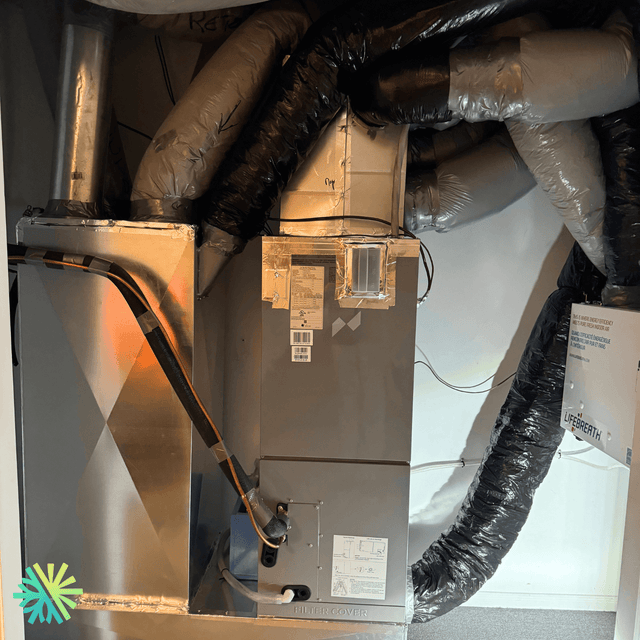
FANTECH and HERO are trademarks of their respective owners. Logos and images are used only to identify the products. AirGreen is a dealer; this page is not produced, sponsored or approved by the manufacturer. Photos: AirGreen and manufacturer, for identification.
Does a figure look wrong to you? Write to us at sales@airgreen.ca.
You made it to the end.Share it with someone it could help.
AirGreen Climatisation & Chauffage
From reading to your home.
An AirGreen advisor assesses your situation on site, free of charge, and gives you a quote within 24 hours.
- RBQ licence 5645-9605-01Subclasses 15.8, 15.10 and 16
- Free on-site estimateAn advisor assesses your needs
- Quote within 24 hoursClear and detailed
Contents
AirGreen glossary