
 ZEPHYR
Ask the technicianAn answer written by the AirGreen team ·
Question
Zephyr wall heat pump: the CB22 R-32 and CB25 R-454B series compared for the South Shore
Comparison · Wall heat pump · 12,000 BTU
ZEPHYR CB22 and ZEPHYR CB25: the same indoor unit, two different outdoor setups
The original article asked why the ZEPHYR brand appeals to so many South Shore homeowners. The useful question today is simpler: which ZEPHYR wall unit? AirGreen offers two current 12,000 BTU series, the CB22 on R-32 and the CB25 on R-454B. They share the same indoor unit in the manufacturer's brochure; what changes is outside and on their AHRI certificates.
SEER2 (cooling)20.0and23.0
HSPF2 Region V (heating)7.5and9.0
Coldest certified point−20.6 °Cand−25 °C
RefrigerantR-32andR-454B
ZEPHYR
 ZEPHYR
CB25 R-454B, 12,000 BTU
Indoor ZE-12CB25I · outdoor ZE-12CB25O · AHRI 215414830 · NEEP 418302 See the product pageWhat sets them apart, in three points
- InsideSame indoor unit in the ZEPHYR brochure: same dimensions (33 7/16 in wide) and the same sound levels except at one speed. Nothing changes on the wall between the two.
- WinterHSPF2 Region V of 7.5 for the CB22 and 9.0 for the CB25: about $407 and $340 of electricity per winter for the same zone (AirGreen estimate, heating around the clock, Rate D average price, taxes included).
- OutsideThe CB25 is stated down to −30 °C, certified down to −25 °C, ENERGY STAR cold climate, with an electronic expansion valve and 98 ft of piping. The CB22: −25 °C stated, −20.6 °C certified, capillary tube, 65 ft.
Estimated operating cost
What the electricity costs, in dollars, winter and summer
AirGreen estimate for the same 12,000 BTU/h zone in Montréal, on Hydro-Québec Rate D, taxes included. Both series are calculated exactly the same way, with the same method as on all our comparison pages; only their certified efficiencies change. Electric baseboards serve as the reference point.
How this amount is calculated
- Heat needed over the winter. A zone whose heat loss reaches 12,000 BTU/h ( kW) at −23.1 °C, Montréal's design temperature: kW × 24 h × 4,167 degree-days ÷ (18 − (−23.1)) = kWh of heat for heating around the clock, all winter. Heating degree-days (base 18 °C) and design temperature: Natural Resources Canada, HOT2000 climate data, Montréal Intl station. With fewer hours a day (“Heating” slider), the heat is reduced in the same proportion, for the heat pump and the baseboards alike: a simplification that ignores the recovery after a temperature setback.
- Electricity for heating. Heat pump: heat × 3.412 ÷ HSPF2 Region V, the AHRI certificate value published by NEEP. Region V is the coldest in the standard, and its calculation includes the backup electric heat planned for when the heat pump is no longer enough. Electric baseboards: 1 kWh of electricity for 1 kWh of heat.
- Electricity for cooling. 12,000 BTU/h ÷ SEER2 × hours a day × 60 days ÷ 1,000: the method of Hydro-Québec's air-conditioning calculator, with the seasonal SEER2 efficiency from the AHRI certificate. The number of hours is a scenario, adjustable above from 1 to 24 h. At 24 h, the calculation assumes rated capacity all day: a maximum, since a variable-speed unit slows down once the room is at the right temperature.
- Price. Hydro-Québec Rate D in effect April 1, 2026: 7.065¢ per kWh up to 40 kWh a day, 11.142¢ above; the average price, 9.104¢, is the one Hydro-Québec's calculators use. GST and QST included. The system access charge, the same with or without a heat pump, is not counted.
AirGreen method v1.1, November 9, 2026. An estimate is used to compare units under the same conditions. The actual bill depends on the house, insulation, settings and use; this amount is not a promise.
The gap comes from two numbers on the certificate: HSPF2 Region V (7.5 for the CB22, 9.0 for the CB25) in winter and SEER2 (20.0 and 23.0) in summer. Each series' purchase price is on its product page; this page does not compare prices.
Same indoor unit, two outdoor setups
Inside, nothing tells them apart; outside, almost everything does
In ZEPHYR brochure BRO_2606, the indoor unit of both series has the same dimensions, the same stated airflow within a few cubic feet and the same sound levels except at one speed. The differences are in the outdoor unit and in what NEEP certifies. Choose what you want to see.
CB22 R-32CB25 R-454B
Diagram: indoor unit and outdoor units drawn at the same scale from the dimensions in brochure BRO_2606 (width × height). The product cards show the same photo for both series; here only the published dimensions set the outdoor units apart.
Extreme cold
Below −15 °C: every published point, and the stated range beyond
NEEP certifies the CB22 down to −20.6 °C and the CB25 down to −25 °C. The brochure states heating down to −25 °C for the CB22 and down to −30 °C for the CB25, without giving a capacity for those last degrees.
Red hatched area: below −20.6 °C, the CB22's last certified point; blue hatched area: below −25 °C, the CB25's last certified point. At −15 °C, brochure BRO_2606 gives 10,600 BTU/h for the CB25 while NEEP certifies 11,000 BTU/h; the table shows the NEEP value.
Quiet
Indoor unit sound, speed by speed
Indoor unit
Values published by ZEPHYR, from the lowest speed to the highest.
dB
How to read these numbers. dB(A) is a logarithmic scale: a few more decibels are clearly audible. Each point is a published fan speed; lower is quieter.
Why the two lines look alike. The brochure gives both series the same values, except at high speed (40 and 39.5 dB(A)). It states neither the distance nor the measuring method. The outdoor unit is listed at 53 dB(A) for both.
Same manufacturer, same document, same indoor unit: indoors, the published sound difference is half a decibel, at a single speed.
Installation
Piping, electrical and size, line by line
Outdoor units drawn to scale from the published dimensions (diagram). Weights are not published in brochure BRO_2606.
| Installation | ZEPHYR CB22 R-32 | ZEPHYR CB25 R-454B |
|---|---|---|
| Maximum piping length | 65 ft (10 to 65 ft) | 98 ft (10 to 98 ft) |
| Pre-charged length | 25 ft | 25 ft |
| Maximum height difference | 50 ftindoor unit higher | 50 ftindoor unit higher |
| Liquid – gas diameters | 1/4 – 3/8 in | 1/4 – 3/8 in |
| Indoor unit W × H × D | 33 7/16 × 11 9/16 × 8 1/16 in | 33 7/16 × 11 9/16 × 8 1/16 in |
| Outdoor unit W × H × D | 28 1/8 × 21 1/4 × 9 1/2 in | 31 7/8 × 23 × 11 in |
| Electrical protection | MCA 9.5 A, MOP 15 A | MCA 10.5 A, MOP 15 A |
| Refrigerant charge | 21.87 oz of R-32 | 38.10 oz of R-454B |
| Stated heating / cooling range | −25 to 24 °C / −15 to 48 °C | −30 to 24 °C / −15 to 48 °C |
| Outdoor unit sound | 53 dB(A) | 53 dB(A) |
Source of each line: ZEPHYR brochure BRO_2606, 12K 208/230 V column of each series.
Features
What the brochure names, series by series
Both series share the same feature list in brochure BRO_2606, give or take one line. A feature missing from the document is not necessarily missing from the unit: the brochure does not mention it.
| Feature | ZEPHYR CB22 R-32 | ZEPHYR CB25 R-454B |
|---|---|---|
| Outdoor unit heated base pan | Yes, 150 WNEEP: based on outdoor temperature and defrost | Yes, 150 WNEEP: based on outdoor temperature and defrost |
| Compressor heater | Yes | Yes |
| Automatic defrost | Yes | Yes |
| Minimum heat at 8 °C (freeze protection) | Yes | Yes |
| Indoor fan speeds | 5 speeds | 5 speeds |
| Night, quiet, ifeel, 4D and Turbo modes | Yes | Yes |
| “Optimal comfort” mode | Not stated by the manufacturer | Yes |
| Expansion device | Capillary tube | Electronic expansion valve (EEV) |
| Compressor | Rotary, GMCC | Rotary, GMCC |
| Wi-Fi and app | Not stated by the manufacturer | Not stated by the manufacturer |
| Automatic restart | Not stated by the manufacturer | Not stated by the manufacturer |
Questions
What people ask us about ZEPHYR wall units
Why compare two ZEPHYR series rather than ZEPHYR and another brand?
The original article was about the ZEPHYR brand. AirGreen offers two current ZEPHYR wall series at 12,000 BTU, both on newer refrigerants; comparing them answers the question that follows choosing the brand: which of the two.
Do the two series really have the same indoor unit?
Brochure BRO_2606 gives them the same dimensions (33 7/16 × 11 9/16 × 8 1/16 in) and almost the same sound levels. The model numbers differ (ZE-12CB22AI in the CB22's NEEP record, ZE-12CB25I for the CB25). We claim nothing beyond what these documents publish.
What sets R-32 apart from R-454B?
Both are newer A2L-class refrigerants replacing R-410A. Their global warming potential, per the IPCC (AR4), is 675 for R-32 and 466 for R-454B. The refrigerant comes with the series: it is not chosen separately.
Are these models eligible for LogisVert?
The conditions are in Hydro-Québec's LogisVert participant guide, which can change. To help you sort it out: the NEEP record of the CB25 12,000 says ENERGY STAR and cold climate; the CB22 12,000 record says no to both. Check Hydro-Québec's official list before buying; we do not quote any amount.
What does “turndown” mean in the NEEP record?
NEEP divides the maximum capacity at −15 °C by the minimum capacity at 8.3 °C. The larger the ratio, the more the unit can slow down in mild weather and speed up in extreme cold. It is 1.88 for the CB22 and 3.67 for the CB25.
What happened to the case study and customer reviews in the original article?
This version sticks to certificates and the manufacturer's brochure, which anyone can check. The references are in the sources.
Does AirGreen offer both?
Yes, both series are on AirGreen's site, also in 9,000, 18,000 and 24,000 BTU; the links to the 12,000 BTU product pages are at the beginning of this page.
Certified data
The certificate values, line by line
| Certified value | ZEPHYR CB22 R-32 | ZEPHYR CB25 R-454B |
|---|---|---|
| Certification | ||
| AHRI certificate · NEEP record | 218325270 · 418044 | 215414830 · 418302 |
| Refrigerant | R-32 | R-454B |
| ENERGY STAR · cold climate | No · no | Yes · yes |
| Seasonal efficiency | ||
| SEER2 | 20.0 | 23.0 |
| EER2 | 10.0 | 12.25 |
| HSPF2 Region IV | 9.0 | 10.0 |
| HSPF2 Region V | 7.5 | 9.0 |
| Heating, BTU/h and COP | ||
| Capacity at 8.3 °C, min. / rated / max. | 4,000 / 12,000 / 12,600 | 3,000 / 12,000 / 13,000 |
| COP at 8.3 °C, min. / rated / max. | 2.06 / 3.52 / 3.36 | 4.00 / 3.91 / 3.17 |
| Capacity at −8.3 °C, min. / rated / max. | 3,400 / 9,000 / 9,550 | 2,550 / 10,800 / 12,000 |
| COP at −8.3 °C, min. / rated / max. | 1.95 / 2.29 / 2.15 | 3.74 / 2.40 / 2.51 |
| Capacity at −15 °C, min. / rated / max. | 2,900 / 7,500 / 7,500 | 2,000 / 11,000 / 11,000 |
| COP at −15 °C, min. / rated / max. | 1.85 / 2.00 / 1.83 | 1.47 / 2.00 / 2.00 |
| Coldest certified point | ||
| Test temperature | −20.6 °C (−5 °F) | −25 °C (−13 °F) |
| Maximum capacity at this point | 6,000 BTU/h | 6,100 BTU/h |
| Maximum COP at this point | 1.53 | 1.38 |
| Cooling | ||
| Rated capacity at 35 °C, min. / rated / max. | 4,000 / 12,000 / 12,600 | 3,000 / 12,000 / 13,000 |
“higher” marks the higher value of the same measurement, under the same conditions. It is not a recommendation. The coldest-point rows are not marked: the two series are not tested at the same temperature there. Brochure BRO_2606 prints an EER2 of 10.5 for the CB22 and an HSPF2 Region IV of 9.5 for the CB25; the table gives the NEEP values.
Both series are on AirGreen's site.
A question about the CB22 or the CB25 for your South Shore home? Call us or ask for an estimate visit.
Sources
Documents consulted
NEEP, record 418044 (ZEPHYR CB22 12,000)AHRI 218325270, ZE-12CB22AI / ZE-12CB22O, registered by TTI Climatisation Chauffage (2005) Inc.; consulted November 17, 2026.
NEEP, record 418302 (ZEPHYR CB25 12,000)AHRI 215414830, ZE-12CB25I / ZE-12CB25O, HiULTRA series; consulted November 17, 2026.
ZEPHYR, CB22 brochure (BRO_2606)CB22 wall heat pump, 12K 208/230 V column: ranges, sound, piping, electrical, features.
ZEPHYR, CB25 brochure (BRO_2606)CB25 wall heat pump, 12K 208/230 V column: capacities at −15, −20 and −25 °C, ranges, sound, piping, features.
Hydro-Québec, Electricity RatesApril 1, 2026, Rate D, sec. 2.5.
NRCan, HOT2000 climate map, Montréal Intl4,167 degree-days base 18 °C; design temperature −23.1 °C.
IPCC, Fourth Assessment Report (AR4)100-year global warming potential: R-32 675, R-454B 466.
Data verified November 17, 2026. Certified values: AHRI certificates published by NEEP. Declared values: the manufacturer's brochure, cited in each section.
ZEPHYR is a trademark of its owner. Logos and images are used to identify the products. AirGreen is a retailer; this page is not produced, sponsored or endorsed by the manufacturer.
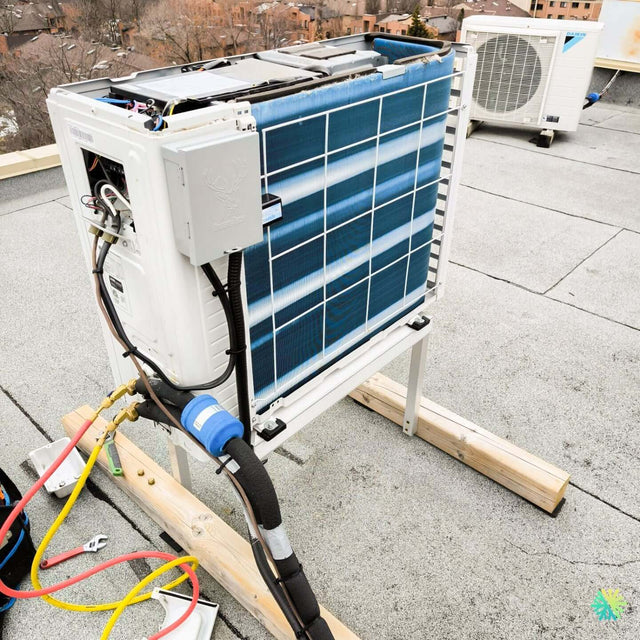
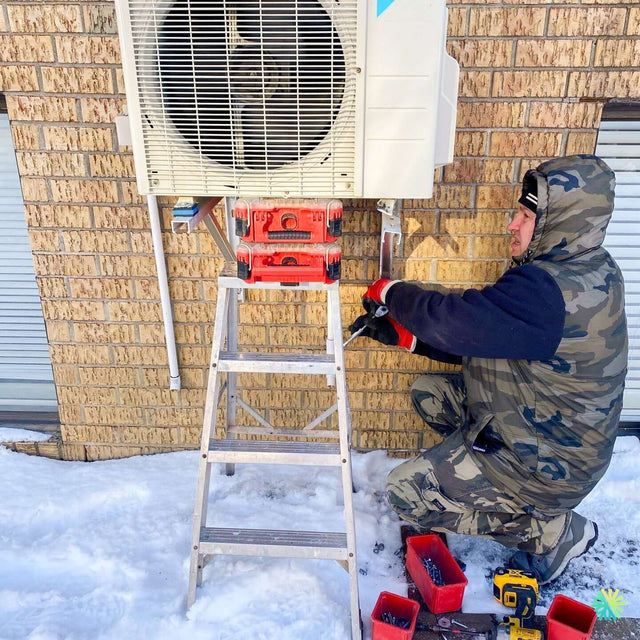
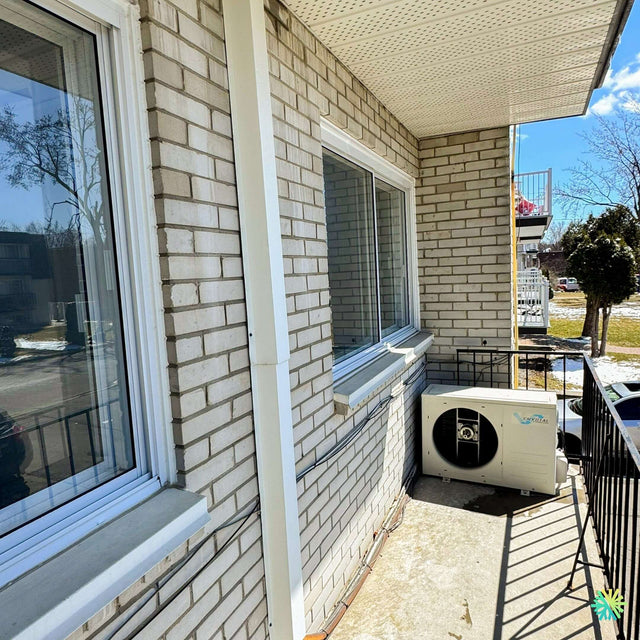
Photos: AirGreen and manufacturer, for identification.
Does a figure look wrong? Write to us at sales@airgreen.ca and we will correct it.
Another question about your unit?
AirGreen Climatisation & Chauffage
From reading to your home.
An AirGreen advisor assesses your situation on site, free of charge, and gives you a quote within 24 hours.
- RBQ licence 5645-9605-01Subclasses 15.8, 15.10 and 16
- Free on-site estimateAn advisor assesses your needs
- Quote within 24 hoursClear and detailed
Contents
AirGreen glossary