Repair of a wall-mounted heat pump in Montreal
| Service | Repair | Unit | Wall-mounted heat pump |
|---|---|---|---|
| Area | Montréal | Published | November 11, 2026 |
| Reading | 11 min | ||
Attachment 1 · job photo

An aging wall unit that required a precise diagnosis, not just a simple cleaning
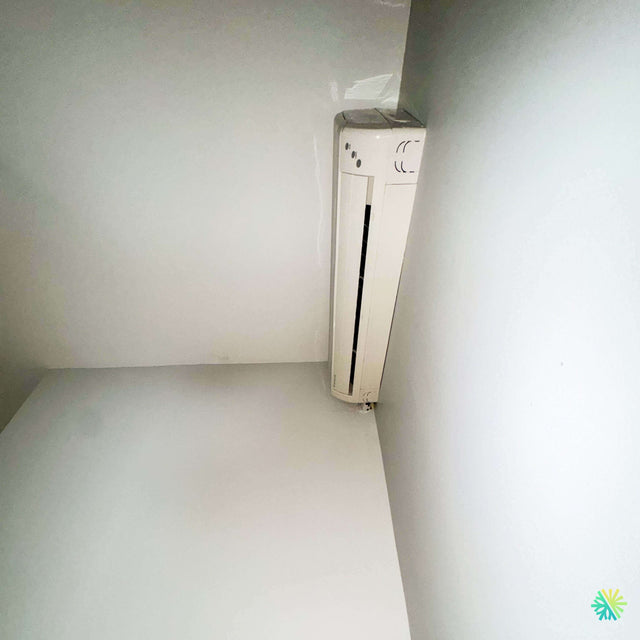
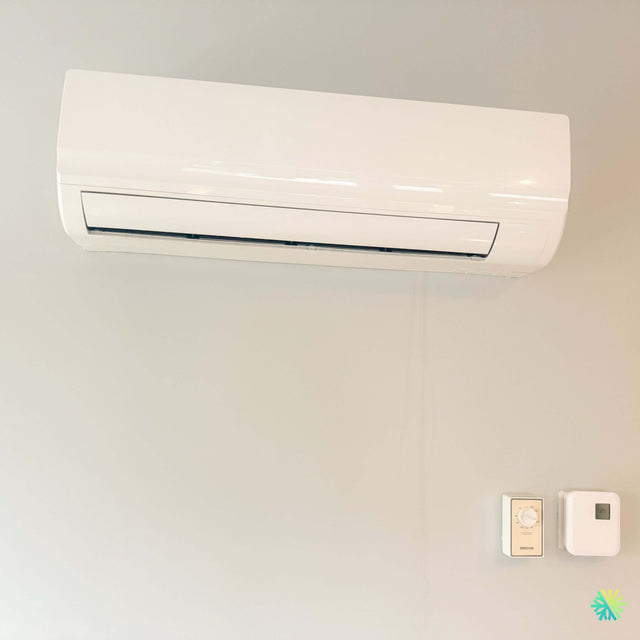
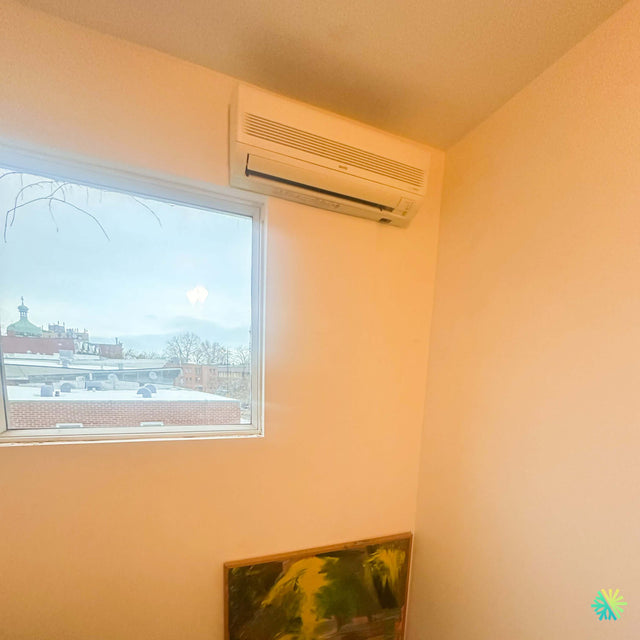
During this service call in Montreal, our AirGreen team was called for a wall-mounted heat pump installed in a residential living room, above a decorative space and between two window openings. At first glance, the indoor unit showed characteristics of an older wall system: elongated body, upper front grille, horizontal air flap at the bottom, and central control panel with indicator lights. The exact brand and model were not clearly visible on the front, but the device matched a residential capacity mini-split wall-mounted heat pump, probably used both for summer air conditioning and supplemental heating during colder periods.
The client had noticed several worrying symptoms: uneven performance, reduced airflow, longer operating periods than usual, and a less stable comfort feeling in the room. The unit still started, but its behavior was no longer consistent. This type of situation is common with older wall-mounted systems: the device seems to work, but it no longer efficiently transfers heat or cold, leading to unnecessarily high consumption and irregular comfort.
At AirGreen, we approach this type of intervention methodically. An effective HVAC repair rarely starts with the immediate replacement of a part. It begins with a complete system reading: condition of the indoor unit, air circulation, cleanliness of the heat exchanger, condensate drainage, electrical behavior, communication with the outdoor unit, and consistency of measured temperatures.
An installation context that required caution
The unit was installed very close to the ceiling molding, with little space above the casing. This configuration is common in houses and condos in Montreal, Laval, Longueuil, the North Shore, and the South Shore, especially when the heat pump was installed several years ago in an already finished space.
This proximity to the ceiling can complicate access to the filters, the heat exchanger, and some internal components. It can also affect air intake if the upper part of the unit is too close to an obstacle. In this specific case, our technician paid special attention to three elements:
- the unit’s ability to draw in enough air from the top;
- the condition of the grille and internal filters;
- the possible presence of dust accumulation in the evaporator.
A wall-mounted heat pump installed in a decorated or narrow area must be handled carefully. The plastic panels of older models sometimes become fragile over time, especially when exposed for several years to temperature variations and dry air in winter. The disassembly was therefore done gradually, without forcing the clips or twisting the front panel.
Symptoms observed before the intervention
The customer described a gradual loss of performance. The unit was not completely stopped, but it no longer delivered the same efficiency as before. This type of complaint is particularly important because it can stem from several different causes:
Reduced airflow
Low airflow can be caused by clogged filters, a dirty fan, an indoor heat exchanger saturated with dust, or a worn-out ventilation motor. In many cases, the user raises the requested temperature or lowers the air conditioning setpoint further, but the problem actually comes from a lack of air circulation.
Unstable temperature
A wall-mounted heat pump that sometimes blows cool air, sometimes warm air, may indicate a sensor problem, lack of maintenance, incorrect ambient temperature reading, or a refrigeration issue. The diagnosis must then distinguish between a control problem and an actual capacity problem.
Extended operation
When the device runs for a long time without quickly reaching the requested temperature, it can consume more energy without improving comfort. This symptom is often observed in systems that have lost efficiency due to a dirty exchanger, a clogged fan, or an incorrect refrigerant charge.
Noise or slight vibrations
Even if no major noise was reported as the main failure, our technician checked the stability of the indoor fan, the body fastenings, and the movement of the lower flap. On older wall units, slight vibration can reveal an unbalanced turbine due to dust accumulation.
HVAC diagnosis: a step-by-step inspection
Our diagnosis began with a visual inspection of the indoor unit. The central panel indicators were active, indicating that the basic power supply was present and the unit was receiving a command. However, this step alone is not enough to conclude that the device is working properly. A heat pump can turn on while having very reduced performance.
We then proceeded to check the following elements:
1. Inspection of filters and air return
The filters were loaded with fine dust, which reduced air circulation. In a wall installation located near the ceiling, dust often accumulates on the upper grille and in the filters, especially when the device runs for several hours a day during hot periods.
A clogged filter forces the fan to work harder, reduces heat exchange, and can cause a weak air conditioning sensation. In some cases, it can also promote ice formation on the evaporator.
2. Indoor heat exchanger check
The evaporator showed signs of clogging. Even when filters are cleaned regularly, some fine particles can pass through and accumulate on the fins. When these fins are dirty, air no longer circulates properly through the exchanger. The result is simple: the device runs, but it exchanges heat less effectively.
In the context of wall-mounted heat pump repair, this step is essential. A device may seem to have a mechanical failure when the main problem is actually a loss of heat transfer caused by insufficient maintenance or internal clogging.
3. Indoor fan motor test
We checked the different fan speeds. The motor responded, but the actual airflow was lower than expected for a unit of this size. Part of the restriction was due to dust buildup, but the motor check confirmed that replacement was not necessary at this stage.
This distinction is important for the client: replacing a motor without properly cleaning and testing the unit would have unnecessarily increased the intervention cost.
4. Condensate drainage check
A wall-mounted heat pump used for air conditioning produces condensation water. If the drain is partially blocked, water can accumulate in the internal tray, cause odors, create leak risks, and affect room humidity.
Our technician inspected the condensate tray and drainage outlet. A slight buildup was present, without major overflow. Preventive cleaning was done to avoid future leaks, especially during high humidity periods in Montreal.
5. Cooling performance check
After partial cleaning and controlled restart, we measured the temperature difference between the return air and the supply air. This reading helps assess whether the unit is actually producing a cooling effect. A difference that is too small may indicate a refrigerant issue, significant air restriction, or a less efficient compressor.
In this case, performance improved after work on the indoor unit, confirming that dirt buildup and air circulation were a major cause of the problem.
The work performed: technical cleaning and functional restoration
The goal was not just to make the device cleaner, but to restore its operation. A successful HVAC repair must produce a measurable result: better airflow, more stable operation, reduced risk of leaks, and improved comfort.
Our work included:
- careful removal of the front panel;
- removal and cleaning of filters;
- cleaning of the return grille;
- inspection of the indoor heat exchanger;
- targeted cleaning of accessible fins;
- turbine check;
- inspection of the air outlet flap;
- cleaning of the condensate tray;
- drain flow check;
- operation test in air conditioning mode;
- checking the response of indicator lights and basic controls;
- airflow check after reassembly.
We also explained to the customer that the apparent age of the unit justifies more regular monitoring. An older wall heat pump can still be useful for several years if properly maintained, but certain signs must be taken seriously: rapid performance drop, ice on the indoor unit, frequent shutdowns, persistent odor, motor noise, or water leakage.
What this repair reveals about older wall heat pumps
Older wall heat pumps are often robust, but they become more sensitive to dirt buildup, airflow restrictions, and minor drainage issues. On this type of unit, a simple dirty filter can trigger a chain of problems: less air, less heat exchange, prolonged operation, discomfort, poorly controlled humidity, and increased wear.
A common mistake: waiting for the unit to stop completely
Many customers wait for a total breakdown before calling an HVAC service specialist. Yet, warning signs are often visible well before a complete stop. In this case, the unit was still running, but its performance had decreased. Intervening at this stage helped prevent the problem from worsening.
A unit that is overworked for weeks can lead to:
Higher electricity consumption
When the heat pump struggles to reach the requested temperature, it runs longer. Even if it still blows air, its actual efficiency decreases.
Premature wear of components
The ventilation motor, electronic boards, and compressor can be more heavily stressed when heat exchange is poor.
A risk of water leakage
A partially blocked drain does not always cause an immediate leak. But on a very humid day, the buildup can exceed the drainage capacity and cause damage.
A loss of comfort throughout the room
In an open area or main room, a single wall unit can play a central role. If the airflow decreases, distant areas become less comfortable.
Practical advice given to the customer after the repair
At the end of the service call, we recommended a few simple habits to extend the life of the unit:
Clean the filters regularly
For normal use, monthly cleaning during the air conditioning season is often recommended. In a home with pets, dust, or heavy use, a higher frequency may be necessary.
Monitor the airflow
If the airflow weakens, do not just increase the ventilation power. Check the cleanliness of the filters and have the unit inspected if the problem persists.
Do not ignore odors
A musty smell can indicate accumulation in the condensate tray, on the heat exchanger, or in the drain.
Avoid blocking the air intake
Decorations, moldings, curtains, or furniture placed too close to the unit can hinder air circulation. In this installation, the space around the device was limited, making maintenance even more important.
Schedule professional maintenance
Professional maintenance goes beyond simple filter cleaning. It allows checking the internal condition of the unit, the drain, the turbine, the heat exchanger, the blowing temperatures, and the overall system behavior.
Why AirGreen approaches this type of call differently
Our work is not about applying a generic solution. Each wall heat pump repair requires understanding the context: unit location, apparent age, symptoms, usage habits, accessibility, level of dirt buildup, and customer expectations.
On this call in Montreal, the main challenge was to work on an old wall unit installed near decorative elements and the ceiling, without damaging the casing or neglecting the root causes of the performance loss. The solution was a targeted intervention, combining technical cleaning, functionality checks, and clear recommendations.
Our teams regularly respond to calls similar to those in Laval, Longueuil, on the North Shore and on the South Shore, both in single-family homes and condos. Problems may vary, but the method remains the same: complete diagnosis, transparent explanation, repair when possible, and useful advice to prevent recurrence.
Final result: improved comfort and reassured customer
After the technical cleaning and tests, the unit regained a more stable airflow. The blowing was more consistent, the device responded properly to commands, and the risk of condensate problems was reduced thanks to the cleaning of the tray and drain.
The client was especially reassured to know that the system did not immediately require a full replacement. In some cases, an old heat pump does need to be replaced, especially if the compressor, electronic board, or refrigerant circuit has a major failure. But in this situation, a well-targeted intervention extended the unit’s use and restored a satisfactory level of comfort.
The importance of an honest diagnosis before replacing
The HVAC market today offers wall-mounted heat pumps that are much more efficient, quiet, and high-performing than older models. However, replacing a unit is not always the first step. A thorough inspection helps determine whether a repair is cost-effective or if replacement would be more logical.
At AirGreen, we prioritize a transparent approach. If a system can be reasonably repaired, we explain it clearly. If the age, cost of parts, or overall condition of the unit make replacement preferable, we present options suited to the client’s reality, space, and budget.
In this case, the HVAC repair resolved the main symptoms without committing the client to a premature replacement. This is exactly the type of intervention that demonstrates the importance of thorough technical service.
A service call representative of residential needs in Montreal
This intervention illustrates a very common reality in the greater Montreal area: many owners still have wall-mounted heat pumps installed several years ago, sometimes in spaces with limited access. These units can continue to operate properly if signs of wear are addressed in time.
Good HVAC service is not limited to fixing a visible breakdown. It also helps prevent problems that develop slowly: reduced performance, dust buildup, less effective drainage, gradual noise, increased consumption, and seasonal discomfort.
For owners in Montreal, Laval, Longueuil, on the North Shore or on the South Shore, this type of maintenance and repair often represents the best way to extend the lifespan of a wall-mounted heat pump while maintaining reliable comfort.