


Dry Nitrogen – Cylinder
The technician’s dry nitrogen: it pressure-tests the lines and keeps the inside of joints clean while brazing.
AirGreen codeAG-RF-004
514 316-2973 · sales@airgreen.ca
Quick facts
Dry nitrogen is an inert, moisture-free gas that refrigeration technicians use at two key stages of an installation: while brazing the refrigerant lines, then for the pressure test before pulling a vacuum. It is always used with a pressure regulator.
Braze under nitrogen, then pressure test
When you heat a copper tube full of air, the inside gets coated with oxide. Those particles break loose later and can clog a filter or an expansion valve. A light flow of dry nitrogen during brazing pushes the air out of the tubes and keeps the inside of the joints clean. Once the lines are connected, the circuit is pressurized with nitrogen: if it holds pressure, it is tight; if it loses pressure, you find the leak before charging the refrigerant.
Basic rules
- Always connect the cylinder through a regulator, never directly to a line.
- Set the test pressure according to the unit manufacturer’s manual, without exceeding it.
- Never use oxygen or compressed air for a test: oxygen in contact with oil is an explosion hazard, and air brings in moisture.
- Nitrogen displaces the oxygen in the air: work in a ventilated area.
- Secure the cylinder upright and put the valve protection cap back on before moving it.
The safety data sheet is supplied with the cylinder by its manufacturer. The cylinder size is confirmed with the quote.
Available from AirGreen across Greater Montréal
Our refrigeration technicians braze under nitrogen and pressure test every installation in Montréal, Laval, Longueuil, the South Shore and the North Shore. RBQ licence 5645-9605-01. To check availability or get a quote, call us at 514 316-2973 or email sales@airgreen.ca with the quantity.
Two jobs on every installation
Dry nitrogen comes in twice: while brazing, then for the pressure test before the vacuum.
- Purging lines while brazing, to keep oxide out of the joints
- Pressure-testing a new installation before pulling the vacuum
- Leak checking after a repair
- Blowing lines out to clear moisture and debris
Specifications
From the manufacturer’s documentation. A value the manufacturer does not publish is not listed.
What to know before installing
- Always use a regulator; never connect a cylinder straight to a line.
- Do not exceed the test pressure given by the equipment maker.
- Never use oxygen or compressed air for a pressure test.
- Nitrogen displaces the oxygen in the air: work in a ventilated area and secure the cylinder upright.
You may also need
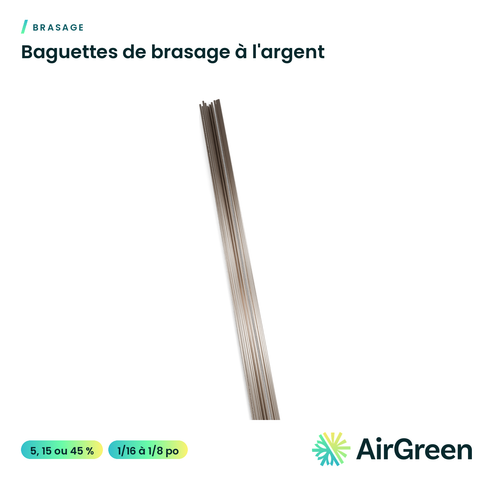 Silver Brazing Rods
 Oxygen – Cylinder
 Acetylene – Cylinder
 R-32 Refrigerant – Cylinder
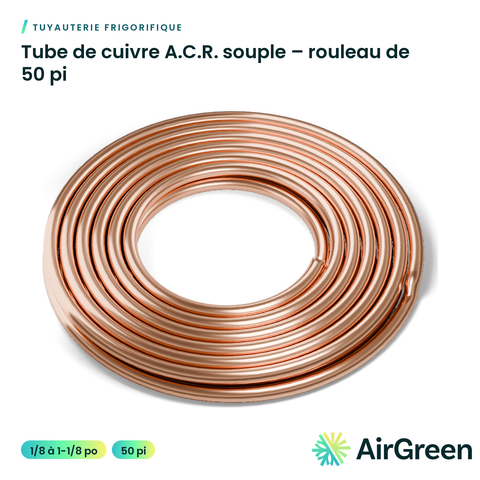 A.C.R. Soft Copper Tube – 50 ft Coil
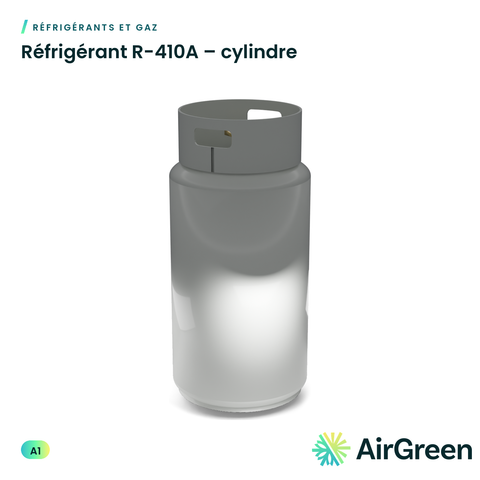 R-410A Refrigerant – Cylinder
 R-454B Refrigerant – Cylinder
Refrigerants and gasesSee all
Frequently asked questions
Why braze under nitrogen?
Heated in air, the inside of the copper scales with oxide. Those flakes later break loose and can plug a filter or a metering device. A light flow of dry nitrogen while brazing keeps the inside of the joint clean.
What pressure should the test use?
The pressure given by the equipment maker in the installation manual, always set at the regulator.
Can compressed air or oxygen be used?
No. Compressed air brings in moisture, and oxygen in contact with oil is an explosion hazard. The test is done with dry nitrogen.
Do you pressure-test during installation?
Yes. Our technicians braze under nitrogen, pressure-test and pull the vacuum on every installation in Greater Montréal.
Dry nitrogen for clean, leak-tight lines
Tell us the size and the quantity: we confirm availability and send you a quote. Or let our technicians install it for you.
Specifications from the manufacturer’s documentation, checked on October 7, 2026.