
Repair of a central heat pump in Terrebonne
Beforewhat the article reports

Afterresults described
A central heat pump that was running but no longer cooling effectively
During this service call for a central heat pump in Terrebonne, our AirGreen team was called for a common situation in residences on the North Shore: the system seemed to start normally, the outdoor fan ran intermittently, but the house no longer regained the expected comfort. The client noticed a progressive drop in performance, especially on hotter days, with prolonged operation of the heat pump without real results inside.
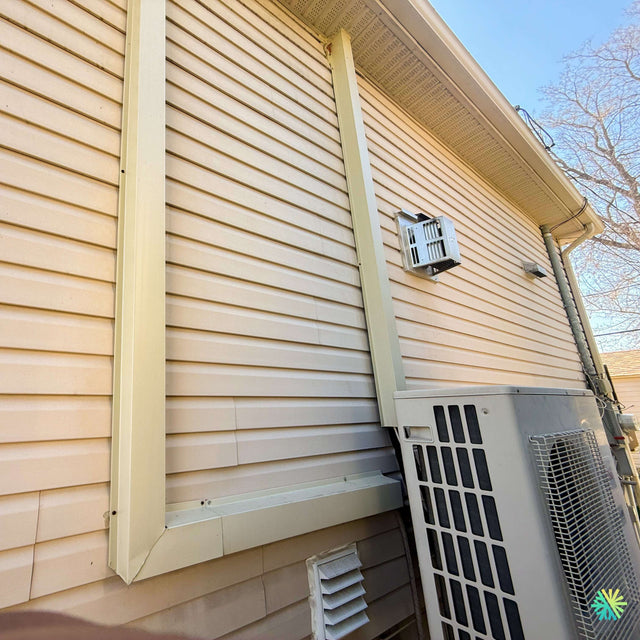
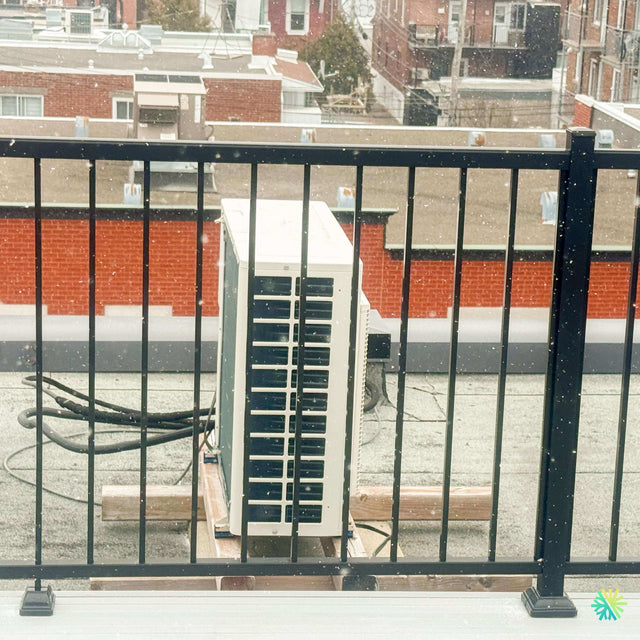
On site, the outdoor unit showed several important signs: a central condenser installed on a wall mount, existing insulated refrigeration piping, a recent outdoor electrical box, and an installation exposed to weather, dust, leaves, and plant debris. This type of environment can affect the performance of a central heat pump, especially when maintenance has been delayed or when some electrical components begin to wear out.
Our intervention had three objectives: identify the real cause of the loss of efficiency, secure the electrical operation of the equipment, and restore stable performance without unnecessarily replacing the entire unit.
Complete HVAC diagnosis on a residential central heat pump
Initial operation check
The first step was to observe the behavior of the heat pump when cooling was requested. The outdoor unit started, but the cycle was irregular. The compressor did not always maintain stable operation, and the outdoor fan showed a slower start than expected. In a central system, this detail is important: even if air circulates through the ducts, a problem with the outdoor condenser can quickly reduce the cooling capacity of the entire house.
We then checked the following elements:
- the electrical supply to the outdoor disconnect switch;
- the condition of the contactor;
- the capacity of the start capacitor;
- the amperage of the fan motor and the compressor;
- the cleanliness of the outdoor coil;
- the pressure of the refrigeration circuit;
- the temperature difference between the return air and the supply air;
- the condition of the insulation on the refrigerant lines;
- the stability of the control from the indoor thermostat.
This method helps avoid premature conclusions. A central heat pump can lose efficiency for several reasons: lack of refrigerant, clogged coil, weakened capacitor, faulty control board, unstable outdoor fan, air restriction in ducts, or thermostat problem. In this specific case, several factors contributed to the performance drop.
A weakened capacitor and a dirty outdoor coil
The diagnosis revealed a running capacitor below its nominal value. This component is essential to help the fan motor and sometimes the compressor start properly. When it loses capacity, the system can still operate, but with more difficult starts, less efficient electricity consumption, and an increased risk of complete failure.
We also found that the outdoor coil was partially clogged with dust, pollen, and organic debris. The unit being installed near the ground, under a roof edge, and close to vegetation, the accumulation was logical. A dirty coil limits heat transfer: the heat pump then has to work longer to produce the same result, which increases compressor wear.
The combination of a weak capacitor and a less breathable coil clearly explained the reported symptoms: long cycles, insufficient comfort, hesitant starts, and reduced efficiency.
Inspection of piping and outdoor installation
The site image shows a central installation with refrigerant lines coming out of the brick wall, connected to the outdoor unit. We paid special attention to the insulation of the suction line, as degraded insulation can cause thermal losses, condensation, and less stable readings of the system’s actual operation.
We also checked the wall mount. On a central heat pump, mechanical stability is important to limit vibrations transmitted to the structure. A weakened or poorly leveled mount can cause noise, strain certain connections, and accelerate component wear. In this case, the mount was still functional, but we recommended monitoring during future maintenance, especially given the apparent age of the installation.
Repair completed and system put back into service
After validating the electrical measurements, we replaced the defective capacitor with a part compatible with the equipment specifications. The replacement was done with the power off, the component safely discharged, and the connections checked one by one.
We then performed a thorough cleaning of the outdoor coil. This step must be done carefully: a jet that is too strong or at the wrong angle can damage the condenser fins. Our method aims to clear the heat exchange surfaces without damaging the coil. Debris around the base of the unit was also removed to improve air circulation around the machine.
Once the repair was completed, we restarted the central heat pump and took measurements again:
- clearer start of the fan motor;
- more stable compressor operation;
- better heat dissipation at the condenser;
- improved indoor temperature difference;
- more consistent cycles;
- no abnormal noise at restart;
- stable electrical supply at the disconnect switch.
The customer immediately noticed an improvement in indoor comfort. The heat pump no longer needed to run continuously to achieve a noticeable temperature drop.
Why this failure is common in central systems
The central heat pumps installed in Terrebonne, Montreal, Laval, Longueuil, on the North Shore and the South Shore are exposed to demanding conditions: large temperature swings, humidity, pollen, snow, leaves, freeze-thaw cycles, electrical variations, and long periods of use for both heating and cooling.
A weakened capacitor does not always fail suddenly. It can gradually lose its capacity, making the problem harder to detect. The system still works, but less efficiently. Owners often notice:
- slower air conditioning;
- an outdoor fan that starts with difficulty;
- a buzzing sound at startup;
- longer cycles;
- a higher electricity bill;
- a house that remains humid;
- an intermittent shutdown of the outdoor unit.
A dirty outdoor coil produces a similar effect. Even a good central heat pump cannot deliver full performance if air does not circulate properly through the condenser.
Mistakes to avoid before calling for service
When a central heat pump loses performance, some actions can worsen the situation. It is important to avoid running the equipment for several days if the compressor is straining or if the outdoor fan does not start properly. The compressor is one of the most expensive system components; protecting it must be a priority.
It is also important to avoid washing the unit with excessive pressure. The condenser fins are fragile. When bent, airflow decreases and performance drops further. Professional cleaning allows intervention without causing damage.
Refrigerant should not be added without a complete diagnosis. A lack of performance is not automatically a leak. In this case in Terrebonne, the main problem was electrical and mechanical, combined with poor airflow at the condenser. Adding refrigerant would have been useless and could have harmed system operation.
The importance of an accurate diagnosis before replacing equipment
An older central system can sometimes seem like it needs to be replaced. However, some failures can be effectively fixed when the compressor is still in good condition and the refrigerant circuit remains stable. Our role is to clearly distinguish between a cost-effective repair and a necessary replacement.
In this case, the HVAC repair was relevant. Replacing the capacitor, cleaning the coil, electrical inspection, and restarting allowed the central heat pump to continue operating without immediately committing the client to a full replacement project.
When we work on residential central systems, we always assess:
- the approximate age of the machine;
- the condition of the compressor;
- the availability of parts;
- the condition of the ducts;
- the actual performance after repair;
- the predictable short-term costs;
- the potential interest of a more efficient central heat pump.
This approach helps owners make a rational decision based on the actual condition of the equipment.
Final result: comfort restored and system stabilized
At the end of the service, the central heat pump operated more consistently, with better heat transfer and more reliable startup. The client was informed of signs to watch for in the coming weeks, including any unusual noise, intermittent shutdowns, or sudden drops in performance.
We also recommended periodic preventive maintenance, especially for an outdoor unit installed near vegetation and exposed to debris. Well-executed maintenance helps prevent many costly service calls, particularly before periods of high demand for air conditioning or heating.
This service call in Terrebonne clearly illustrates the importance of a structured technical service: observe, measure, confirm, repair, test. For owners of central heat pumps in Montreal, Laval, Longueuil, on the North Shore or the South Shore, a drop in performance should never be ignored. A small weakened electrical component can cause much greater wear if not corrected quickly.
What this repair demonstrates about central HVAC systems
A central heat pump is a complete system. The outdoor unit, ducts, thermostat, indoor fan, indoor coil, refrigerant lines, and electrical components must all work together. A single weakness can reduce the comfort of the entire home.
In this project, the solution was not spectacular, but it was essential: replacing the right part, cleaning the right area, checking the correct parameters, and confirming the result. It is often this precision that makes the difference between a lasting repair and a problem that returns a few days later.
For AirGreen, each HVAC service call is treated as a complete system analysis, not just a simple repair of an isolated part. This is especially important for central equipment, where a diagnostic error can be costly for the owner.

The same service at your place?
Cleaning, repair or maintenance: tell us about your unit and we schedule the visit.
- RBQ licence 5645-9605-01Subclasses 15.8, 15.10 and 16
- $5M liability insuranceOn every job
- 15+ yearsFamily-owned, based in Montréal