
Repair of a Trane Central Heat Pump in Montreal
The signs described in this article
Is it urgent?
Tick what you notice at home. This does not replace a diagnosis.
Your result appears here.
A Trane central heat pump choked by leaves, dust, and unstable electrical startup
In Montreal, our AirGreen team was called for a HVAC repair on a Trane central heat pump installed outside a residence. The customer contacted us after noticing a marked drop in cooling performance: the system started, air circulated through the ducts, but the house remained uncomfortable, especially late in the afternoon. The thermostat called for continuous cooling, the machine ran longer than usual, and the outdoor unit produced an irregular fan noise.
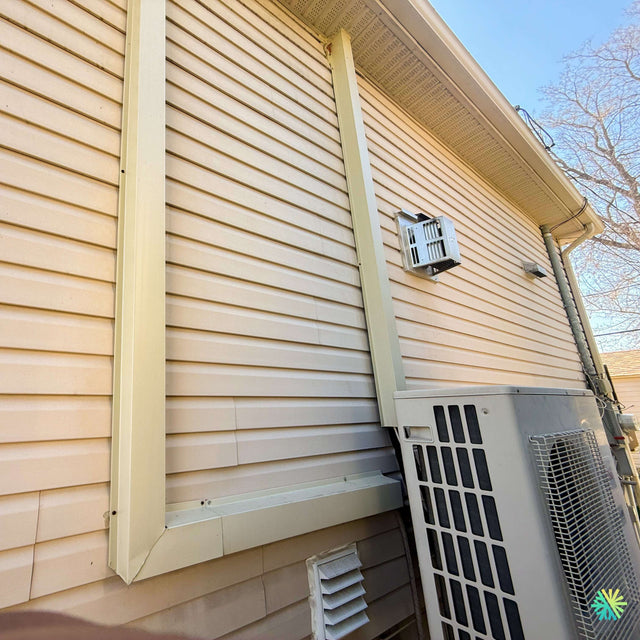
The Trane outdoor unit was installed near the foundation wall, on a paved surface, in an area where several dead leaves had accumulated around the base. Visually, the unit still looked solid, but its immediate environment showed a common problem with central systems: airflow was compromised by seasonal debris, and the condenser fins were partially blocked by dust, dry leaves, and particles accumulated over the years.
A central heat pump needs to breathe freely. It extracts heat from the house in cooling mode, then releases it outside through the condenser. When the coils are dirty or the base of the unit is surrounded by leaves, the machine works harder, operating pressure increases, the compressor works more, and indoor comfort becomes unstable.
A typical service call for a central system that works but is overworking
The customer was not reporting a complete breakdown. That’s exactly what made the diagnosis important. The Trane central heat pump was still starting, the outdoor fan was running, and the system was producing some cooling. However, the result no longer met expectations: the temperature dropped slowly, some areas remained warm, and the cycles seemed much too long.
This type of symptom can have several causes:
- a dirty outdoor condenser;
- a weakened run capacitor;
- a worn electrical contactor;
- an airflow restriction at the indoor coil;
- a filter that is too dirty;
- an inadequate refrigerant charge;
- a slow leak in the refrigerant circuit;
- an outdoor fan motor losing power;
- poor clearance around the unit.
Our technicians therefore started with a complete inspection, not limited to the most visible element. On a central HVAC installation, each component influences the other: outdoor unit, indoor coil, furnace or air handling unit, thermostat, ducts, electrical supply, and condensate drainage.
Visual inspection: leaves at the base of the condenser and a dirty top grille
The first important observation concerned the outdoor unit's environment. Dry leaves had accumulated around the machine, especially near the base and around the side panels. This detail may seem trivial, but it has a direct impact on the efficiency of a central heat pump.
The upper fan of the Trane unit exhausts air upwards. For this discharge to be effective, air must enter properly through the sides of the condenser. When the side panels are surrounded by leaves, dust, or debris, air flows less efficiently through the coils. The machine may then run longer to produce the same result.
The top grille also showed a buildup of dust. We checked the fan blades, mounting screws, motor condition, and for any abnormal vibrations. No major mechanical damage was observed, but the fan was operating in an unfavorable environment, which partly explained the more irregular noise heard by the customer.
Electrical diagnosis: a weak capacitor and a contactor worn by use
After the visual inspection, we safely cut the power to proceed with electrical tests. On this type of central heat pump, the run capacitor plays a crucial role in starting and operating the fan motor as well as the compressor, depending on the device's configuration.
Measurements showed that the capacitor was weakened. It was not completely dead, but its value was no longer within the optimal range. This is a common situation: the machine still starts, but it strains more, startups become less smooth, the motor may lose power, and the compressor undergoes additional stress.
We also inspected the contactor. The contact points showed signs of wear and electrical pitting. A worn contactor can cause unstable power supply, intermittent startups, or localized overheating. In some cases, it may stick or fail to properly power the compressor.
After approval from the client, we replaced the run capacitor and the electrical contactor with parts compatible with the Trane unit’s specifications. This intervention stabilized startup and reduced the risk of a complete breakdown during periods of high demand.
Complete cleaning, targeted parts replacement, and performance validation after repair
Technical cleaning of the Trane outdoor condenser
Once the electrical parts were replaced, we performed a thorough cleaning of the outdoor condenser. We first removed leaves, small debris, and buildup around the base of the unit. Then, we cleaned the side panels and coils using a method designed to avoid damaging the fins.
Poor cleaning can create a new problem. Excessive pressure can bend the condenser fins, reduce airflow, and further harm performance. Our technicians therefore worked with the correct pressure, at the right angle, ensuring that water and dirt were properly drained.
The cleaning cleared the coils and immediately improved air circulation. The central heat pump could once again reject heat more efficiently, which is essential to maintain a stable temperature throughout the house.
Checking the refrigeration circuit and temperatures
After cleaning and replacing the electrical parts, we restarted the system to observe its actual behavior. The tests focused on temperatures, operating pressures, the noise of the outdoor unit, compressor startup, and fan stability.
We also checked the suction line and liquid line, visible insulation, accessible refrigerant connections, and possible signs of leaks. No obvious leaks were detected during the intervention. The main problem was therefore not a significant refrigerant loss but rather a combination of dirt, air restriction, and electrical weakness.
Inside, we checked the return air, filter, supply air temperature, and thermostat response. The filter was due for replacement, and we recommended the customer change it more regularly during the cooling season. A filter that is too dirty can reduce airflow through the indoor coil, lower efficiency, and create longer cycles.
Why leaves around a central heat pump can cause real problems
In Montreal, especially in residential neighborhoods with mature trees, outdoor units are often exposed to leaves, samaras, alley dust, pollen, and garden debris. These elements accumulate around condensers, particularly when the unit is installed near a wall or basement window.
An accumulation of leaves can cause several problems:
- reduced airflow around the condenser;
- unit overheating during hot weather;
- extended air conditioning cycles;
- higher pressure in the system;
- premature compressor wear;
- more noticeable fan noise;
- reduced comfort in distant rooms.
In this particular case, leaves were not the only factor, but they clearly contributed to the loss of efficiency. Combined with a weakened capacitor and a worn contactor, they created a situation where the heat pump still worked but with too much effort.
Result after the intervention: a more stable, quieter, and more efficient system
After cleaning, replacing the capacitor and contactor, and then a full operational check, the Trane central heat pump returned to much more stable behavior. The start was more decisive, the outdoor fan ran steadily, and the abnormal noise had decreased.
Inside, the blown air was more consistent, and the system responded better to thermostat demands. The customer noticed improved comfort in the main rooms after the test cycle. The machine no longer needed to run as long to produce a noticeable effect.
We also took the time to explain to the client what had been fixed and why these elements were important. An effective HVAC repair is not just about changing a part: it must restore normal operating conditions and reduce the risk of recurrence.
Practical advice given to the client after the repair
At the end of the intervention, we recommended a few simple actions to maintain the performance of the central heat pump:
- keep a clean clearance around the outdoor unit;
- regularly remove leaves in spring and fall;
- avoid placing objects, pots, or materials against the side panels;
- replace the indoor filter according to the actual system usage;
- schedule maintenance before periods of high heat;
- do not ignore new noises or difficult startups.
These tips are especially important for central systems installed near a foundation wall, as was the case here. The space can be functional, but it must remain clear to allow the condenser to work properly.
An AirGreen intervention tailored to central systems in Montreal
This repair of a Trane central heat pump in Montreal clearly illustrates our working method. We identified several interconnected causes: obstructed outdoor environment, dirty condenser, weakened capacitor, and worn contactor. Rather than treating only the symptom, we corrected all the factors that were harming performance.
AirGreen services central heat pumps, central air conditioners, electric furnaces, wall systems, MultiZone heat pumps, and HVAC accessories in Greater Montreal. Our teams serve Montreal, Laval, Longueuil, the North Shore, and the South Shore, with a rigorous technical approach and clear recommendations.
When a central heat pump is still working but cools less effectively, makes more noise, or takes too long to reach the requested temperature, it is best to act before a complete breakdown. In this case, the intervention restored comfort, stabilized the system, and extended the lifespan of the Trane equipment.

From reading to your home.
An AirGreen advisor assesses your situation on site, free of charge, and gives you a quote within 24 hours.
- RBQ licence 5645-9605-01Subclasses 15.8, 15.10 and 16
- Free on-site estimateAn advisor assesses your needs
- Quote within 24 hoursClear and detailed